




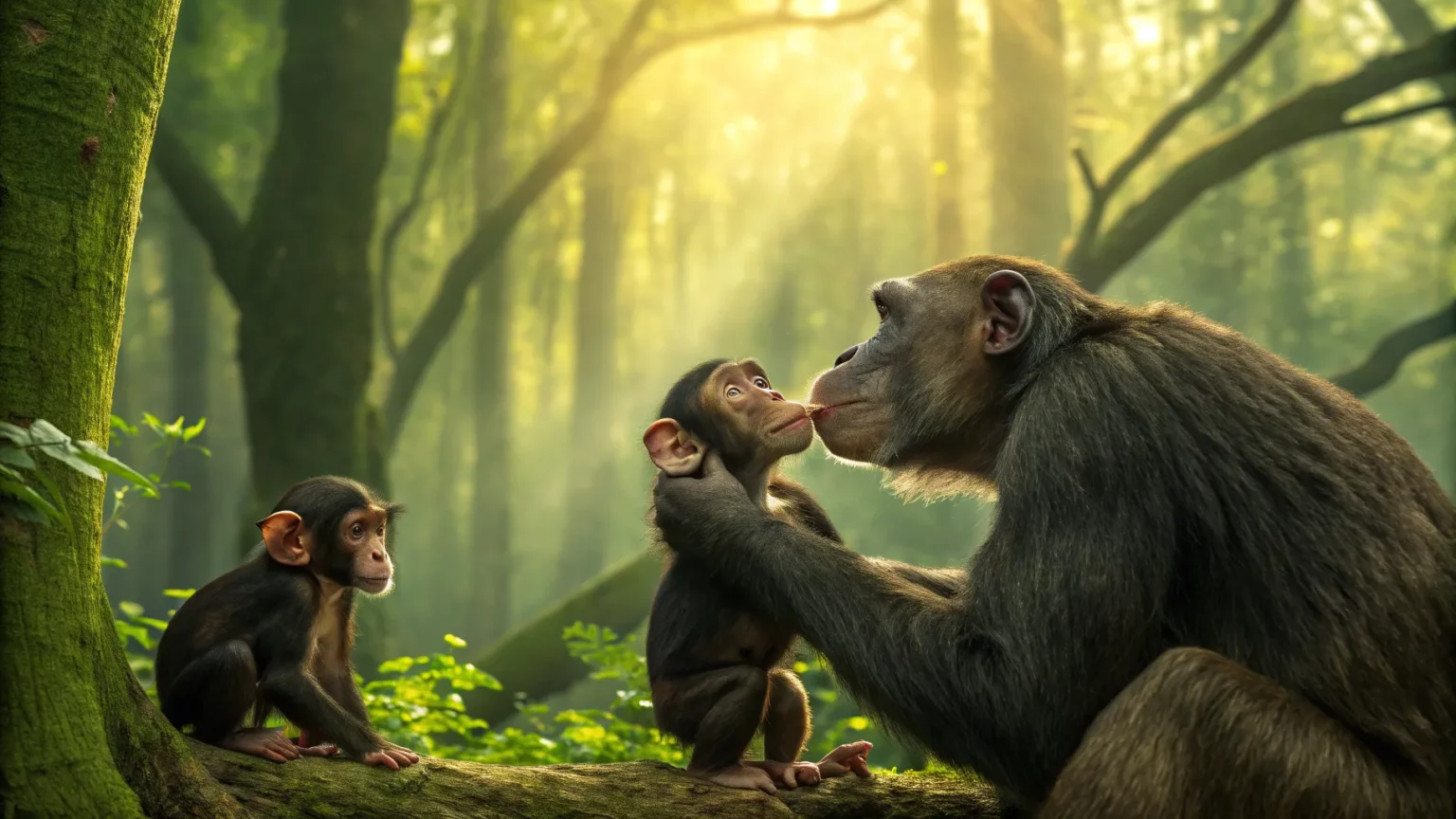
New research suggests kissing did not start with humans but has roots in early primates, stretching back millions of years. Scientists say forms of kissing likely appeared among great apes and even Neanderthals, and then persisted as a way to strengthen social ties. The findings arrive as scholars continue to debate why some societies kiss and others do not, raising fresh questions about the mix of biology and culture behind this intimate act.
Ancient Behavior With Deep Roots
Researchers argue that kissing is older than modern humans. They point to evidence among great apes, which share close social behaviors. One key claim is that kissing or kiss-like contact may have been common in ancestral groups long before Homo sapiens spread across the globe.
“Scientists have traced kissing back to early primates, suggesting it began long before humans evolved.”
Reports of kiss-like contact among bonobos and chimpanzees have long fueled this idea. Bonobos, for example, are known for face-to-face contact that can resemble a kiss. While exact behaviors differ by species, the pattern supports a deep evolutionary thread.
Signals From Great Apes And Neanderthals
Great apes share many social cues with humans, from grooming to reconciliation gestures. The new analysis argues that similar cues may include kissing. It also points to Neanderthals, whose close relation to modern humans suggests shared behavioral traits.
“Their analysis points to great apes and even Neanderthals sharing forms of kissing millions of years ago.”
Direct proof from ancient species is rare, but researchers note that facial contact, food sharing mouth-to-mouth, and soothing touch are seen across primates. These could be building blocks of what humans now call kissing.
Cultural Variation Complicates The Story
Even if the behavior has deep roots, it is not universal today. Anthropologists report that romantic or sexual kissing is absent in many cultures. A 2015 survey led by William Jankowiak found that only about 46 percent of 168 cultures studied practiced romantic kissing. This patchy distribution challenges any single explanation.
“Yet its patchy presence across human cultures hints at a mix of biology and cultural invention.”
Some societies focus on other ways to express affection, such as touch, gifts, or shared tasks. In many places, public intimacy carries strong rules. These differences suggest that kissing can be learned, shaped, or limited by local norms, even if an inherited bias for face-to-face bonding exists.
Why Kissing Might Persist
Scientists propose several functions for kissing and kiss-like contact:

- Bonding: It may calm partners and reinforce social ties through touch and shared scent.
- Mate assessment: Close contact can provide chemical and behavioral cues during courtship.
- Conflict repair: In some primates, gentle contact helps reduce tension after disputes.
These functions could make the behavior useful across social groups. If it helps partners pair, soothe stress, or keep peace, it would be likely to persist even as cultures change.
Balancing Biology And Culture
Experts caution that both nature and learning play roles. Biology may prepare humans to value close contact. Culture then decides when, how, and with whom it is expressed. Religious rules, privacy norms, and media all shape kissing’s meanings and settings.
Comparisons across species and societies help test these ideas. Primates highlight continuity in social touch. Ethnographic records show how flexible the behavior can be. Together they offer a fuller view than either line of evidence alone.
What Researchers Are Watching
Future work may focus on chemical signals and stress responses during kissing. Studies of saliva, hormones, and heart rate could link the behavior to health and bonding. Archaeology and genetics may also clarify what traits humans shared with Neanderthals and great apes.
For now, the core claim is clear:
“The behavior appears to have persisted through evolution as a social or bonding tool.”
That view fits with growing evidence that social touch supports trust and cooperation in many species.
The latest findings push the story of kissing back into deep time while keeping the role of culture front and center. If early primates laid the groundwork, human societies edited the script. Researchers say the next step is to test how biology and local norms interact, and to watch for new data that could confirm or challenge the primate link.