



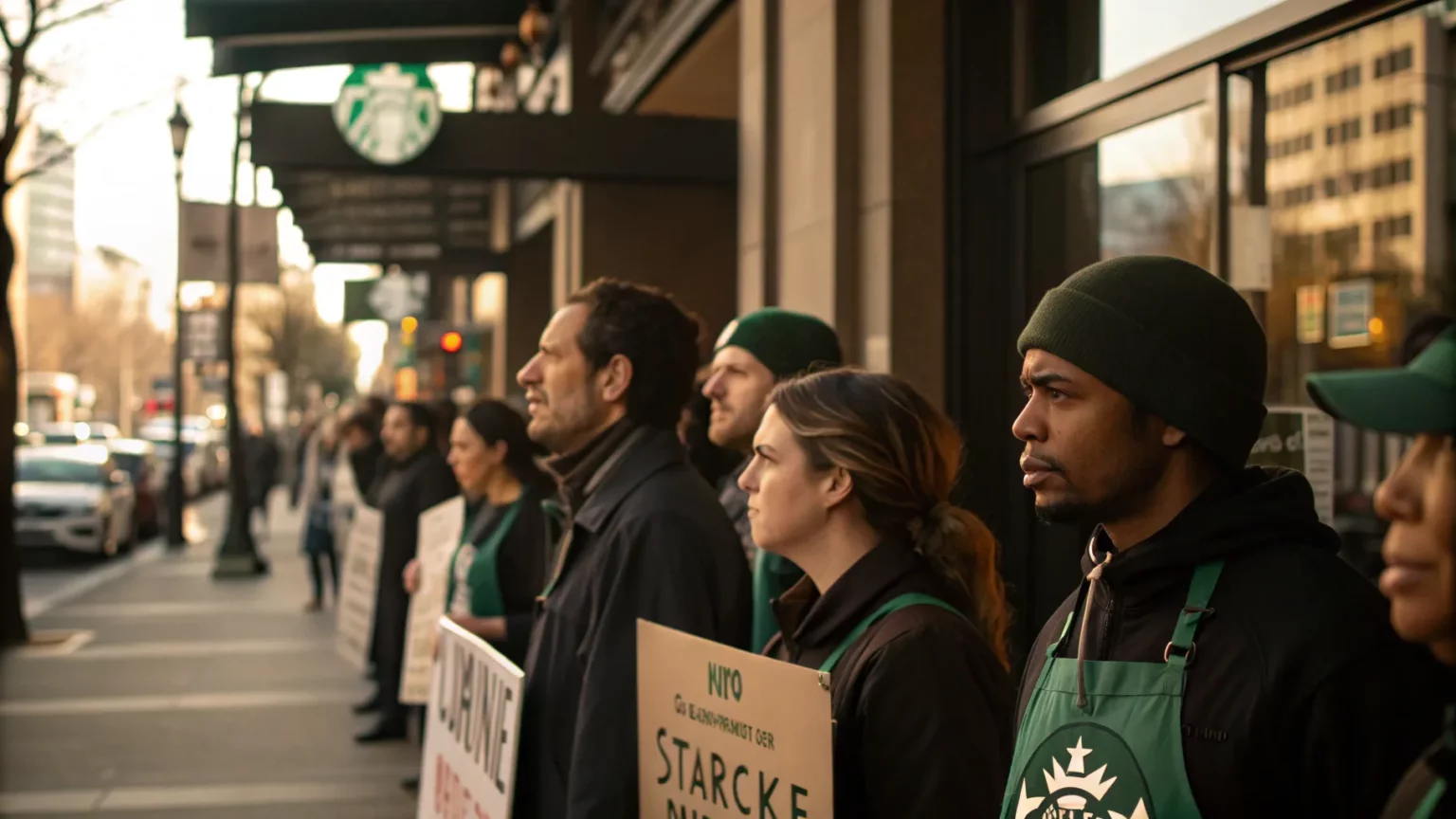
Workers at 65 unionised Starbucks stores across the United States walked off the job, protesting pay and staffing practices that they say have strained baristas and disrupted service. The action, organized on short notice, signals growing frustration inside union shops and attempts to force management to address workplace concerns during a busy period for the coffee chain.
Participants said they want higher wages that keep pace with prices and more reliable staffing to handle morning and afternoon rushes. The dispute reflects a broader fight over labor standards in retail and food service. It also highlights how the union effort at the company has shifted from store-by-store elections to coordinated work stoppages.
“Starbucks workers at 65 unionised US stores walk off the job in protest over pay and staffing.”
What Sparked the Walkout
Workers said short staffing has forced smaller teams to handle heavy foot traffic, mobile orders, and delivery at the same time. Many baristas report skipped breaks, inconsistent schedules, and pressure to work faster while maintaining customer service standards. They also point to rising living costs and competition for hourly workers as key motivations.
Pay remains a central issue. Employees say posted wages do not match local housing and transportation costs. Benefits like shift differentials or guaranteed hours, they argue, would help stabilize income.
Pay, Staffing, and Store Operations
Baristas describe stores where peak periods stretch far longer than scheduled. When staffing runs thin, drink times slip, customer lines grow, and order accuracy falls. Workers say this cycle drives turnover and makes training harder.
- Workers want higher base pay tied to local costs.
- They seek predictable schedules and enough staff on peak shifts.
- They argue better staffing would reduce errors and improve service.
Some employees say the company’s mobile and delivery growth has reshaped the job. A single shift must manage walk-in customers, drive-thru orders, mobile tickets, and delivery workflows. Without added staff, they say the load becomes unmanageable.
The State of Unionisation at the Coffee Chain
Hundreds of stores in several states have voted to unionise since the first wins at U.S. locations. The movement has spread through urban markets and college towns, as well as some suburban areas. Organizers often start with safety and staffing issues, then focus on pay, hours, and training.
The campaign has relied on small, coordinated actions to apply pressure. Walkouts, one-day strikes, and petition drives have become common tools. As more stores organize, synchronized actions like the latest walkout have become easier to stage across regions.


Company Response and Legal Backdrop
The company has previously said it prefers working directly with employees, and that it has raised wages and expanded benefits in recent years. Management has argued that staffing varies by location and that store leaders adjust schedules to meet demand. It also says training investments and updated equipment help teams work more efficiently.
Government labor cases, scheduling laws in some cities, and public attention to service jobs have shaped the debate. While specific legal outcomes vary by case and region, the disputes have kept workplace conditions in the news and pushed companies to defend their practices.
What Comes Next
Workers want talks that lead to binding agreements on pay scales, staffing minimums, and scheduling rules. They also seek clear processes for handling safety concerns and equipment issues. Without movement, union shops may stage more actions tied to high-traffic days.
For the company, the immediate task is keeping stores open and customers served while addressing workforce concerns. Longer term, it faces the question of how to balance mobile growth with in-store staffing levels, and how to recruit and retain workers in tight labor markets.
The walkout at 65 stores suggests growing coordination among union locations and renewed pressure for formal agreements. Customers may see temporary disruptions, but the larger issue is whether both sides can reach a framework that stabilizes staffing and pay. The next few weeks will show if negotiations gain traction or if more stores join future actions.
The outcome could influence labor strategies across food service. If a deal emerges that ties wages and staffing to traffic patterns and local costs, other chains may follow. If not, more walkouts and legal fights are likely as workers seek changes on the shop floor.