




A new study reports that a small fold in skin architecture can change how tissue behaves, opening a path to new ideas in skin repair and disease. Published in Nature, the work explains how a structure called a rete ridge can redirect forces and cell signals to produce a different kind of skin.
The research centers on when and how this fold forms, and why it matters. The finding suggests that the physical layout of skin is not just a scaffold. It also acts like a guide for cell communication and function. That insight could inform treatments for wounds, aging skin, and chronic conditions.
“The formation of a skin fold named a rete ridge reveals how simple architectural changes reshape tissue mechanics and signalling routes to make a different type of skin structure.”
What Rete Ridges Are and Why They Matter
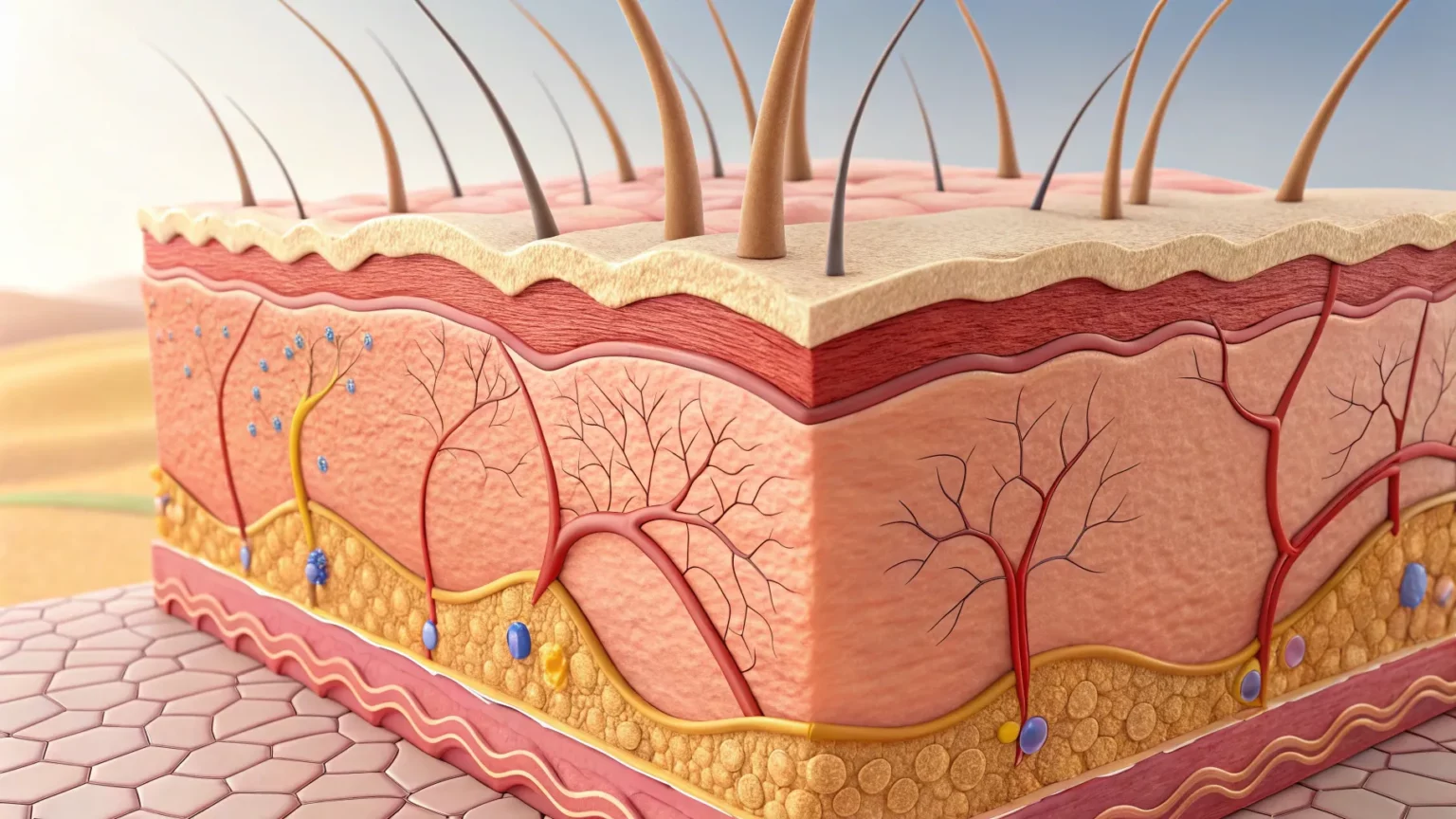
Rete ridges are downward projections of the outer skin layer. They interlock with upward projections from the layer below. This interlocking increases contact between layers. It helps anchor the skin and spread mechanical load.
These folds are common in areas that face friction and pressure, such as palms and soles. They also vary with age and health. Flatter ridges are linked with fragile skin. Deeper ridges often appear where grip and durability are needed.
By altering the geometry at the boundary of the layers, rete ridges change how cells sense push and pull. This can shift growth patterns, barrier strength, and the way cells talk to each other.
Mechanics Meets Signalling
The study’s central message is that form influences function. When the fold forms, it redistributes stress in the tissue. That change affects pathways that guide cell decisions, like when to divide or mature.
Scientists have long known that cells respond to force. Skin is a prime example of that rule. As the fold deepens or flattens, the signals that travel through the tissue can change speed and intensity. Those shifts may alter thickness, stiffness, and resilience.
- Architecture steers mechanical forces in the epidermis and dermis.
- Mechanical forces adjust cell signalling routes.
- Signalling changes lead to distinct skin structures and functions.
Implications for Disease and Repair
Small architectural shifts may help explain why some skin conditions cluster in high-stress sites. In thickened skin, deeper folds could drive extra cell growth. In thin, aging skin, flatter folds may weaken support and healing.



For wound care, guiding fold formation might improve graft take and scar quality. Engineers designing skin substitutes could use micro-patterns that mimic rete ridges. The aim would be to tune mechanics and encourage healthy signalling.
Cosmetic science may also take note. If ridge geometry affects barrier function, targeted treatments could restore pattern and improve moisture balance or protection.
A Closer Look at Method and Scope
Although the summary focuses on the fold itself, the approach points to a broader idea. Structural design can control biology. That idea spans tissue engineering, regenerative medicine, and even cancer research, where force and shape guide cell behavior.
Direct measurements of stress, cell motion, and signal flow will matter in the next steps. So will models that test how changing ridge depth alters outcomes. Cross-species studies could reveal which features are shared and which are unique to humans.
Balancing Promise and Limits
The result links a clear structural feature to skin behavior. Still, many questions remain. How do nutrition, hormones, or chronic injury affect ridge formation? Can drugs or physical therapy adjust ridge geometry in adults?
Any clinical use will need careful testing. Skin varies by body site, ancestry, and age. What helps in one region may not help in another. Safety and long-term stability will be key tests.
What Experts Are Watching Next
Researchers will look for direct ties between ridge patterns and measurable outcomes, such as healing time or barrier strength. They will also probe which signalling routes matter most when the fold forms.
Digital imaging and 3D printing may speed progress. Imaging can map ridges in living skin. Printing can create test beds that mimic ridge shapes, letting teams measure forces and responses in detail.
Together, these tools could turn a structural insight into practical guides for care and design.
The new findings suggest that changing a small piece of skin architecture can shift mechanics and messages across the tissue. That shift can build a different type of skin. For doctors and engineers, the take-away is clear: shape is not just appearance. It is a control handle. Watch for studies that map ridge patterns to outcomes in patients and trials that test ridge-inspired grafts or dressings. Those results will show how far this idea can go in clinics and labs.