




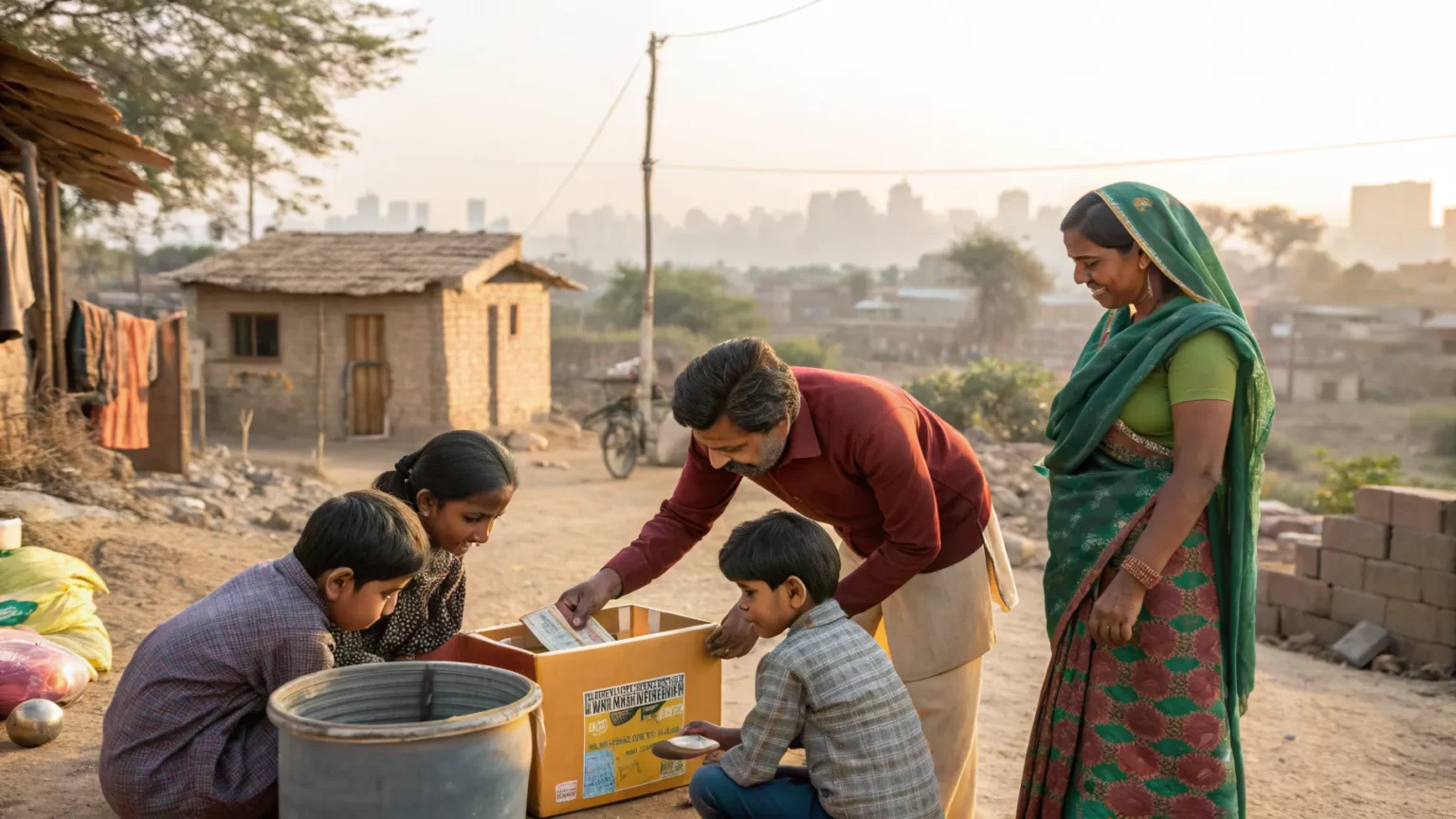
A new survey points to a quiet force behind India’s philanthropy: ordinary families. While big donations by tycoons grab headlines, the country’s charity engine is powered by small, regular gifts from homes across cities and villages.
The finding lands as charities navigate post-pandemic needs, rising costs, and growing use of digital platforms. It suggests where the money really comes from, how it flows, and what policy shifts could unlock more support.
A Shift In Focus From Billionaires To Families
India’s real philanthropy engine isn’t billionaires – it’s everyday household giving, a new survey finds.
Mass giving in India is not new. Festivals, community drives, and neighborhood funds have long supported schools, clinics, and relief work. But recent studies have begun to measure it at national scale. Over the past decade, reports by Bain & Company with Dasra and research by Ashoka University’s Centre for Social Impact and Philanthropy (CSIP) have shown that small donations from millions of people rival, and in some years exceed, contributions from high-net-worth individuals and companies.
These gifts often go to local causes, religious institutions, education fees, and medical care. Many are in cash or in-kind, and many are made outside formal channels, making them hard to track in tax data.
What Drives Household Giving
Donors often give close to home. Families respond to requests from community leaders, teachers, and neighbors. Health emergencies and school expenses draw quick support. During the pandemic, digital fundraisers and UPI made it easier to send small sums fast, reinforcing a habit many already had.
- Proximity: Donors prefer causes they can see and trust.
- Relief and welfare: Medical aid and food support draw steady contributions.
- Religious giving: Temples, mosques, churches, and gurdwaras remain major recipients.
- Digital ease: QR codes, UPI, and crowdfunding widened access for small donors.
Researchers have also noted that women often manage household charity decisions, and that rural giving rates can match or exceed urban rates once in-kind support is counted.
Why The Numbers Are Hard To See
Formal philanthropy—corporate social responsibility and large pledges—comes with audited reports. Household giving is different. Many small gifts do not claim tax deductions under Section 80G, either because the recipient is informal or the donor does not file a claim.
This gap can understate the real scale. Surveys that ask families about both cash and in-kind support tend to show far higher participation than tax data suggests.



Implications For Nonprofits And Policy
The survey’s message calls for a reset in fundraising strategies. Nonprofits that focus only on large cheques may miss the backbone of their donor base. Building trust with small donors can bring steady, repeat funding.
Policy changes could also help:
- Simple digital receipts for small UPI donations to improve transparency.
- Clearer guidance for tax-deductible giving, including regional languages.
- Support for measuring in-kind contributions, not just cash.
Charities that share impact updates—short messages, photos with consent, and cost breakdowns—often see stronger retention from small donors. Communities respond when they see results.
How India Compares And What Comes Next
Other countries with large populations, such as Indonesia and Brazil, also rely on mass giving. India’s mix of religious donations, local mutual aid, and fast digital payments gives it a distinct profile. As more platforms enable micro-donations of even ten or twenty rupees, the donor base could expand further.
Experts expect three trends to shape the next few years: better data on household giving, larger use of recurring small payments, and closer links between local causes and national campaigns. If charities make it easy to give and easy to see outcomes, families are likely to keep carrying the load.
The latest finding confirms what many on the ground already know: everyday donors keep India’s social sector running. The next test is turning that quiet strength into reliable, traceable support. Watch for simpler receipts, more regional-language appeals, and a push to count in-kind help. These steps could turn millions of small acts into a clearer, stronger stream of funding.