




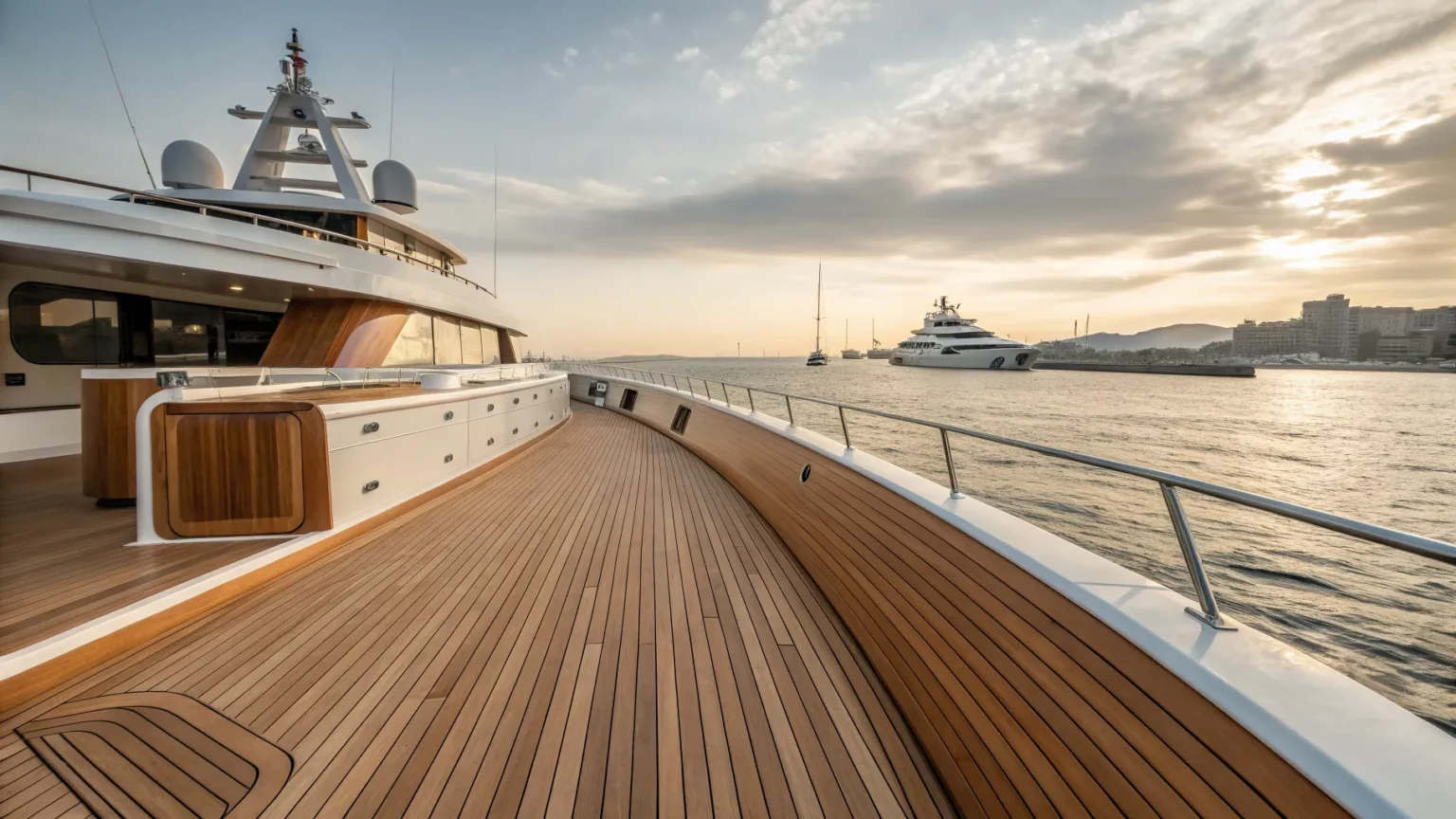
Yacht makers are confronting a material crisis as supplies of teak tighten and prices rise. Designers and shipyards say the shortage is reshaping decisions on new builds and refits. The squeeze is being felt across Europe, Asia, and North America, where the boating season and order books often depend on dependable deliveries. The shift may alter the look and feel of luxury decks, long associated with teak’s grain and warmth.
“Prized for its beauty, teak is in short supply, forcing the yacht industry to look for alternatives.”
The scarcity comes as demand for leisure boats has stayed high in recent years. It is also tied to limits on legal harvesting, tighter trade rules, and concerns about illegal logging. Suppliers say backlogs are growing. Some shipyards now plan projects around what timber they can secure rather than what they prefer.
Why Teak Is Scarce
Teak grows slowly and thrives in specific climates, which limits global output. Plantation harvest cycles can span decades. That makes supply less flexible when demand surges. Trade restrictions and certification requirements also narrow the pool of acceptable sources. Many builders require proof of legal origin and sustainable management. This further lengthens lead times.
Industry buyers report more frequent partial shipments. They also face higher grading thresholds to meet deck standards. Offcuts and lower grades do not meet luxury yacht needs. As a result, waste increases and costs rise per usable plank.
Impact on Yacht Design and Costs
Teak decks have long signaled luxury, durability, and grip underfoot. The material resists rot and weather. It also weathers to a silver tone that many owners value. As supplies shrink, builders must adjust designs and budgets. Some reduce teak surface areas. Others switch to inlays or thinner veneers over substrates.
Project managers say substitutions affect schedules. Engineering teams must verify weight, expansion, and fastening methods for new materials. Warranty terms and maintenance plans may change as well. Owners face higher quotes and longer waits for refits, especially during peak yard seasons.
The Search for Alternatives
With classic decks harder to source, yards are testing options. Each choice carries trade-offs in look, performance, maintenance, and cost. Material trials now form a larger part of early project planning.
- High-quality synthetic decking that mimics teak’s color and caulking lines
- Cork-based composites with lower weight and good grip
- Thermally modified or acetylated woods for improved durability
- Other hardwoods with similar grain and oil content
- Textured composite or aluminum panels for working decks
Captains and crew value ease of cleaning and resistance to heat. Some synthetic products run hotter under sun. Natural substitutes can vary in color and grain, which affects aesthetics. Suppliers now offer broader color ranges and surface finishes to close the gap.



Environmental and Ethical Concerns
Pressure on teak has sharpened scrutiny of sourcing. Conservation groups warn that illegal logging threatens forests and local communities. Builders increasingly demand certification and full chain-of-custody records. Owners ask for documentation to match their values and to protect resale value.
Alternatives can lower environmental impact if they reduce logging pressure. Yet they raise other questions. Petrochemical content, recyclability, and end-of-life disposal are part of the equation. Some engineered woods use fewer chemicals and have better recycling profiles. The industry is weighing these factors along with cost and performance.
What Comes Next
Analysts expect teak to remain scarce while plantations mature and oversight tightens. Yards will likely standardize around a few proven substitutes. This could speed approvals, warranties, and maintenance guides. Training for installers and crew will also expand to address new materials and cleaning methods.
Owners may see more choice during specification. Deck packages could offer tiered options by cost, weight, and sustainability rating. Charter operators might prioritize durability and quick cleaning. Private owners may still select limited teak for key areas while using substitutes elsewhere.
The shift is already changing the look of decks at boat shows and marinas. It may also cut maintenance time and reduce weight on some models. For now, scarcity remains a planning risk. Builders are hedging with early purchases, flexible designs, and stronger supplier ties.
Teak’s status is unlikely to fade, but the era of default full-teak decks is ending. Watch for hybrid approaches, clearer sourcing rules, and more transparent material data sheets. Those steps could stabilize supply, align with buyer values, and keep projects on schedule.