




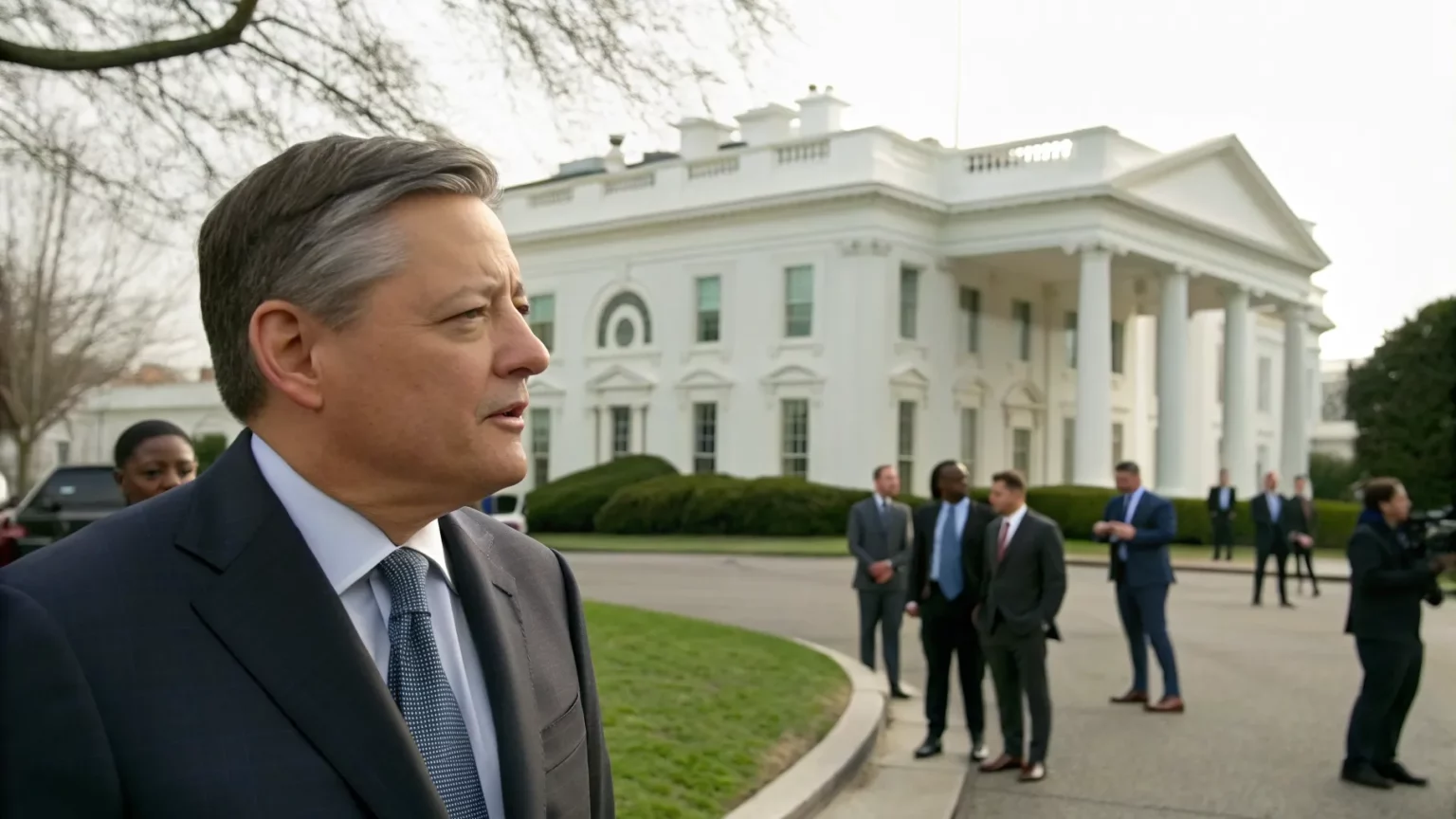
Ted Sarandos returned to the White House this week, seeking support for a proposed merger with Warner Bros. Discovery and addressing the role of Netflix board member Susan Rice. The visit places the streaming giant in the center of America’s policy and politics debate as antitrust scrutiny of media consolidation intensifies.
People close to the talks describe a push to build support in Washington while regulators weigh market power, jobs, and consumer prices. The meeting suggests urgency as streaming growth slows and companies look to scale.
“Ted Sarandos returns to the White House in an effort to win approval for its merger with Warner Bros. Discovery. While also arguing the future of board member Susan Rice.”
Why This Meeting Matters Now
Federal merger reviews are handled by the Justice Department and the Federal Trade Commission, not the White House. Still, industry leaders often engage with administration officials to explain their case, outline public benefits, and anticipate policy concerns.
Any merger combining a top global streamer with a major studio would rank among the largest media deals since the 2022 union of WarnerMedia and Discovery. That deal reshaped film and television pipelines, sports rights strategies, and programming budgets.
Analysts say a tie-up could unify a vast film library, marquee TV franchises, and a dominant streaming platform. Critics warn it could reduce choice and bargaining power for talent, distributors, and consumers.
Antitrust and Consumer Impact
Regulators are likely to focus on whether a combined company could raise prices, restrict licensing to rivals, or favor its own content in ways that disadvantage smaller services. They may also examine effects on labor markets, including writers, actors, and behind-the-scenes crews, after last year’s strikes highlighted concerns over pay and residuals in streaming.
Consumer groups often argue that fewer large players lead to higher subscription costs and reduced diversity of content. Supporters of consolidation say scale can stabilize finances and fund ambitious films, series, and live events.
- Key questions: pricing power, content access, and labor impact.
- Possible remedies: content licensing commitments, divestitures, or conduct restrictions.
Susan Rice’s Role and Governance Questions
Sarandos also addressed the future of board member Susan Rice, a former national security adviser and domestic policy chief in the Biden administration. Her presence on the board brings policy expertise and crisis-management experience at a time of intense change in media.

The White House meeting, however, places corporate governance under a brighter light. Ethics experts say companies often review board composition during major transactions to anticipate political optics and manage potential conflicts, even when no rules are breached.
Investors will watch whether any board changes emerge as part of a broader strategy to navigate public scrutiny and regulatory review.
Industry Pressures Driving the Push
Streaming growth has slowed in North America. Content costs remain high while advertising markets are uneven. Warner Bros. Discovery carries significant debt from past deals, and studios have pulled back on expensive projects after mixed box-office returns.
Amid these pressures, companies seek scale to spread costs across bigger subscriber bases and to bundle services for retention. A combined catalog could strengthen negotiating power in sports rights, international distribution, and device partnerships.
But consolidation can sideline independent producers and limit licensing revenue for competing platforms if large libraries turn exclusive. That trade-off is central to the review ahead.
What Comes Next
Any formal filing would set off months of document requests, economic modeling, and potential negotiations over remedies. Lawmakers on both sides of the aisle have signaled tougher scrutiny of large media and tech deals, increasing the odds of a hard look by regulators.
For viewers, the stakes are simple: price, choice, and quality. For Hollywood, the stakes are control of franchises, production leverage, and the future of bundled streaming.
Sarandos’s outreach shows the high bar the merger could face and the care companies must take with board governance during sensitive talks. The outcome will help define the next phase of streaming. Watch for formal regulatory steps, any commitments on pricing or licensing, and whether leadership or board shifts signal how the companies plan to win approval.