




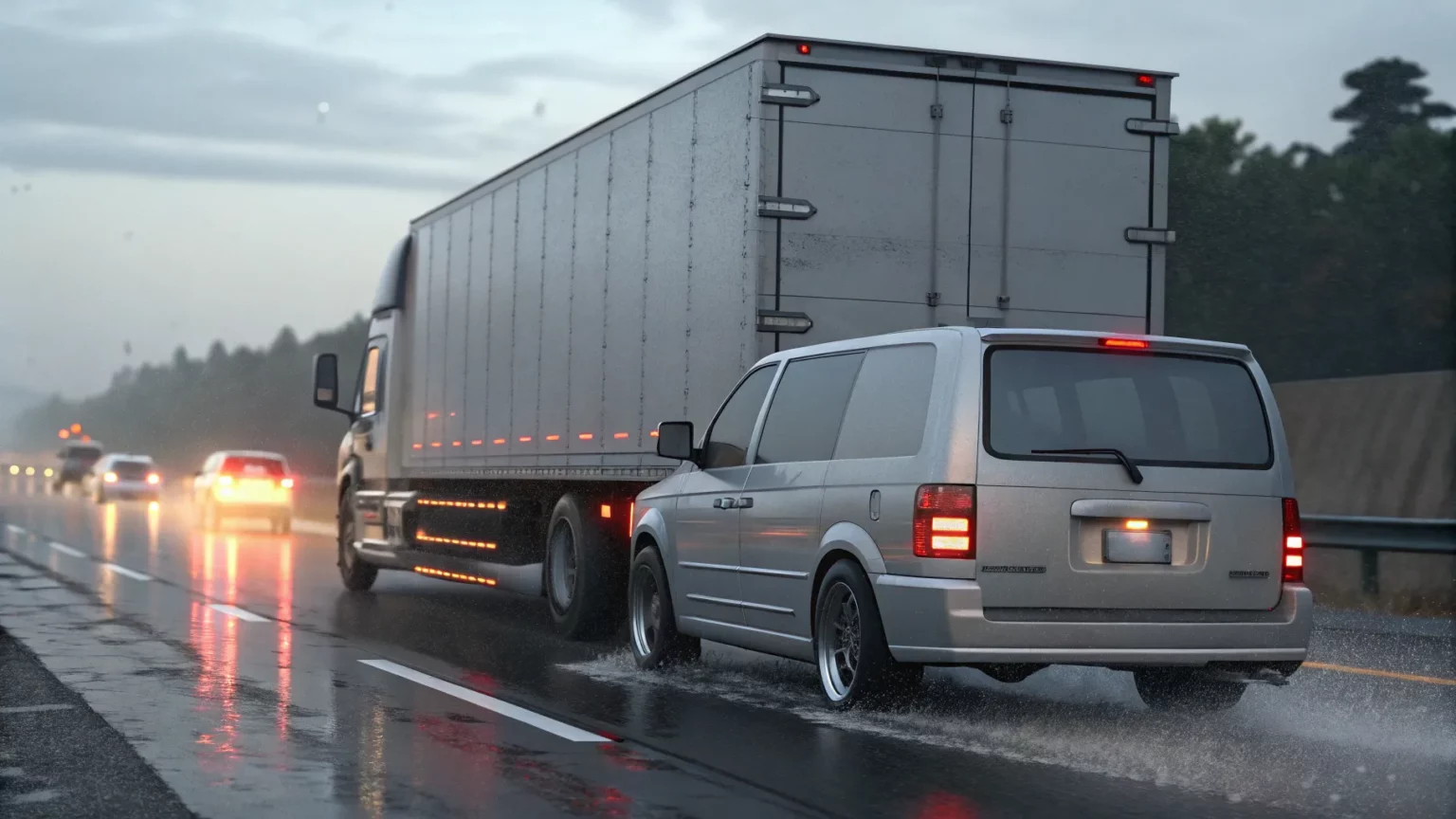
Authorities in Jackson County say a semi-trailer following too closely behind a Dodge van sparked a crash on Interstate 85, raising fresh concerns about truck spacing and driver safety on busy corridors. The incident occurred on I-85 in Jackson County and, according to officials, began when the larger vehicle did not leave enough room to stop. Investigators are working to determine the chain of events and whether citations will follow.
What Authorities Say Happened
The semi-trailer was following too close to a Dodge van on Interstate 85 in Jackson County, when the crash happened, authorities said.
Officials did not immediately release details about injuries or the number of vehicles ultimately involved. Traffic slowed in both directions as crews responded and cleared the scene. The report centers on tailgating, a common factor in rear-end crashes on high-speed roads.
Rules On Following Distance
Georgia law requires drivers to keep a “reasonable and prudent” distance based on speed, traffic, and road conditions. That standard applies to every vehicle and is stricter for heavy trucks because of longer stopping distances. On interstates, safe spacing is critical. A fully loaded tractor-trailer needs far more room to stop than a passenger vehicle, especially at highway speeds.
Safety trainers often teach a time-based rule of at least four seconds of following distance for passenger cars in good conditions, with more time for larger vehicles and at higher speeds. In rain, darkness, or heavy traffic, drivers are advised to expand that buffer.
- Heavier vehicles require longer stopping distances.
- Higher speeds increase the space needed to stop safely.
- Poor weather and low visibility call for more distance.
Crash Trends Involving Large Trucks
National data show that traffic deaths remain high. Federal figures indicate more than 40,000 people die on U.S. roads each year, and crashes involving large trucks have increased compared with a decade ago. Many of those cases occur on interstates and other high-speed routes, where small mistakes can quickly turn serious.
Safety researchers note that tailgating, speeding, and distraction are frequent contributors to severe crashes. For large trucks, even a brief lapse can be costly because of momentum and limited maneuverability. Advocates say better spacing, consistent speed control, and attentive driving could prevent many rear-end collisions.
Voices From The Road
Traffic officers commonly warn that stack-ups and sudden braking are daily risks on I-85. Commuters describe frequent stop-and-go patterns, lane changes, and ramps that can surprise drivers who are too close to the vehicle ahead. Trucking safety groups often urge drivers, both professional and personal, to plan for congestion and leave room to react.
Driver education specialists add that newer trucks may include collision warnings and automatic emergency braking. Those tools can help but do not replace safe spacing. Human judgment about distance and speed remains central to crash prevention.



Implications For I-85 And Beyond
I-85 is a major freight and commuter artery. Even one crash can ripple for miles, delaying deliveries and stranding drivers. A single rear-end collision during peak hours can trigger secondary crashes and extended backups. Local officials say consistent enforcement of following-distance rules and targeted patrols can deter tailgating in problem zones.
Trucking companies are also watching insurance costs and downtime. Preventable crashes pull vehicles out of service, raise premiums, and disrupt schedules. Many carriers now use in-cab cameras and telematics to coach drivers on maintaining distance, easing off the throttle, and anticipating slowdowns.
What Comes Next
Authorities will review dashcam footage, witness statements, and any available data to determine fault. If the investigation confirms tailgating by the semi-trailer, citations could follow. Road crews and responders will examine whether signage, ramp design, or work zones played a role in sudden braking.
The incident is a reminder that safe spacing is not just a rule; it is a lifesaving habit. On high-speed corridors like I-85, leaving extra room gives every driver—especially those in heavy trucks—the time they need to stop.
As the investigation proceeds, drivers can expect stepped-up patrols targeting tailgating and speeding in the corridor. The key takeaway is simple: slow down, watch the flow of traffic, and leave enough space. Those choices can prevent the next crash and keep freight and families moving.