




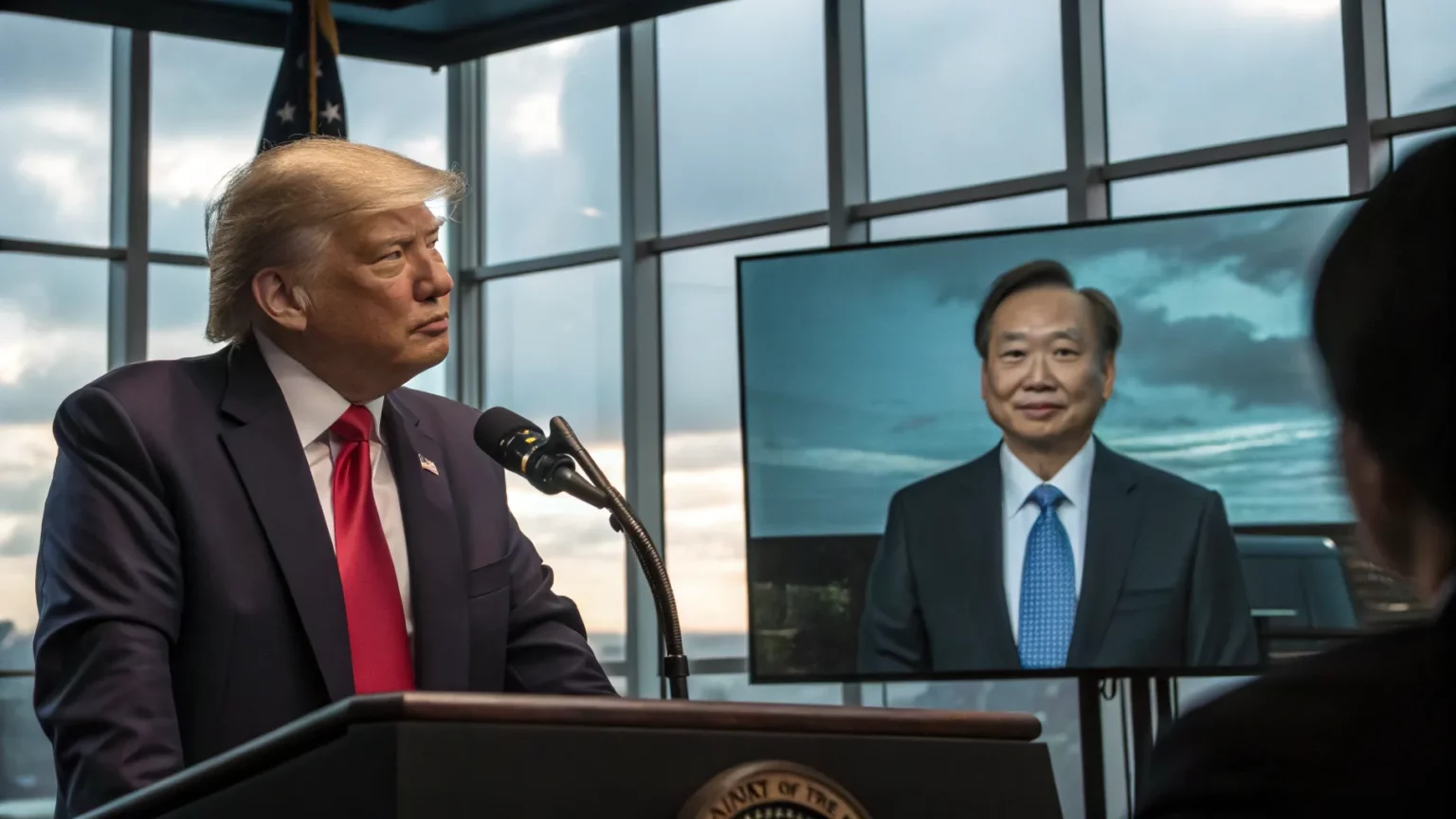
Former President Donald Trump has publicly demanded the resignation of Intel CEO Lip-Bu Tan, claiming the executive has conflicts of interest that make his position untenable. In response, Tan defended his record, stating he has “always operated within the highest legal and ethical standards.”
The confrontation began Thursday when Trump posted on his Truth Social platform that “The CEO of Intel is highly CONFLICTED and must resign, immediately. There is no other solution to…” The former president did not complete his thought or provide specific details about the alleged conflicts in the portion of the post that was available.
Intel Leadership Under Scrutiny
Tan, who took over as Intel’s chief executive in January 2024, faces this public challenge from Trump at a critical time for the semiconductor giant. The company has been working to regain its competitive edge in the chip manufacturing industry while also positioning itself to benefit from federal funding through the CHIPS and Science Act.
The former president’s call for Tan’s resignation represents an unusual direct attack on the leadership of one of America’s most strategically important technology companies. Intel remains a key player in U.S. semiconductor manufacturing, an industry deemed vital to national security and economic competitiveness.
Tan’s Defense and Background
In his response to Trump’s allegations, Tan emphasized his commitment to ethical business practices but did not address any specific conflicts that might have prompted the criticism. “I have always operated within the highest legal and ethical standards,” Tan stated, defending his leadership integrity.
Before joining Intel, Tan served as CEO of Cadence Design Systems and has extensive experience in the semiconductor industry. He has been tasked with leading Intel’s turnaround efforts after the company lost ground to competitors like TSMC and Samsung in recent years.
Political Context and Industry Implications
Trump’s comments come amid increased political focus on the semiconductor industry, which has become central to U.S.-China technology competition. The Biden administration has implemented export controls on advanced chips to China and championed domestic semiconductor manufacturing through the CHIPS Act.
The semiconductor industry has found itself increasingly caught between U.S.-China tensions, with companies navigating complex political and business considerations. Intel, with significant global operations, must balance its commercial interests with national security priorities.



Some key considerations in this developing situation include:
- The nature of the alleged conflicts that prompted Trump’s statement
- Potential impact on Intel’s leadership stability during its turnaround efforts
- Implications for U.S. semiconductor policy if leadership changes occur at Intel
Neither Intel’s board nor major shareholders had issued public statements regarding Trump’s demand as of the initial reporting. The company has been implementing a strategic shift under Tan’s leadership, focusing on rebuilding its manufacturing capabilities and expanding its product portfolio.
As this situation develops, industry analysts will be watching closely for any impact on Intel’s business operations, government relationships, and strategic direction in the competitive global semiconductor market.