




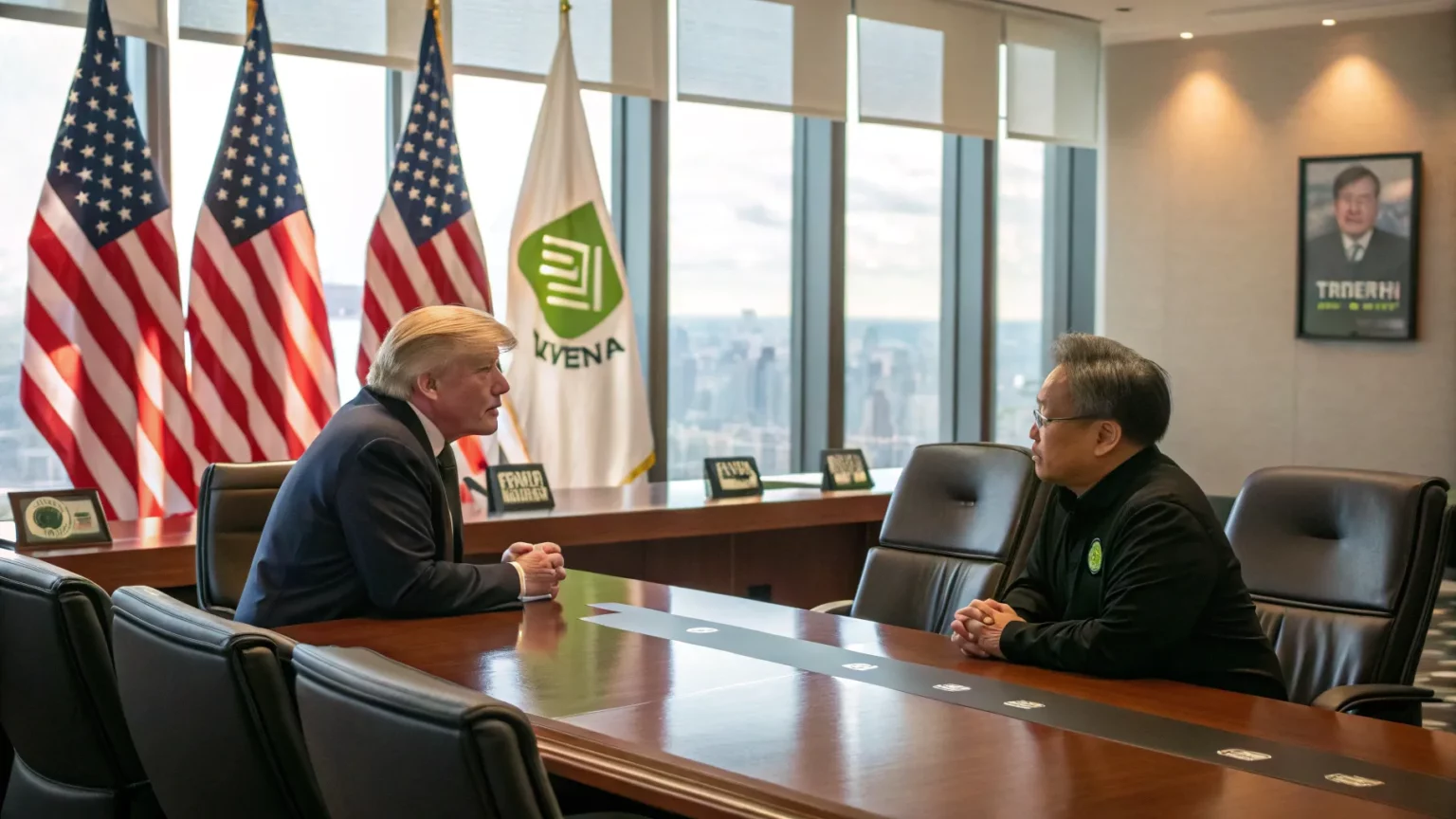
President Donald Trump met with Nvidia CEO Jensen Huang on Wednesday to discuss export controls, according to a CBS News reporter who posted the update on X. The conversation comes as Washington weighs how to manage the flow of advanced chips used to power artificial intelligence. The meeting signals fresh attention from the White House on how policy could affect both national security and a booming U.S. industry.
“U.S. President Donald Trump met with chip giant Nvidia CEO Jensen Huang on Wednesday to discuss export controls,” a CBS News reporter said in a post on X.
Background: AI Chips and U.S. Rules
The United States has tightened restrictions on shipping high-end AI chips and chipmaking tools to certain markets since 2022. The Commerce Department’s rules were designed to limit access to processors used to train large AI models and advanced military systems. Those measures covered Nvidia’s top AI chips and later expanded to versions tailored for overseas buyers.
Nvidia responded by designing adjusted products for restricted markets after the first round of rules. A later update closed those gaps, adding new performance thresholds and licensing steps. The aim has been to slow access to the most advanced AI capabilities while allowing less sensitive trade to continue.
The policy debate has grown as AI use has spread from research labs to consumer apps, cloud services, and defense work. The stakes are high for chipmakers, cloud providers, and U.S. allies that buy American hardware.
Why Nvidia Is Central
Nvidia sits at the center of the AI boom. Its graphics processors run most of the training and deployment for large models used by tech giants and startups. Demand for its high-end chips has outpaced supply for much of the past two years. Any change to export policy can affect Nvidia’s production plans, allocation to customers, and sales in key regions.
Investors track export rules closely. Tighter controls can limit revenue from certain countries. Looser rules can invite security pushback and congressional scrutiny. The company has navigated shifting regulations by adjusting product lines and working with officials on compliance.
Competing Priorities: Security and Commerce
Supporters of strict limits say advanced AI chips can help build weapons, surveillance systems, and cyber tools. They argue controls are needed to protect U.S. interests and slow military advances by strategic rivals. They also say enforcement must keep pace with fast-moving chip designs and cloud access to AI power.
Industry voices caution that blanket restrictions may hurt American companies without stopping end use. They point to alternative suppliers abroad and the risk that overseas buyers shift to non-U.S. hardware or services. Companies also warn that uncertainty in rules makes it harder to plan investments and manage supply chains.



What Policymakers May Weigh Next
The White House could review how performance thresholds are set and whether licensing options give enough flexibility for civilian use. It may study how cloud-based AI access interacts with chip controls. Coordination with allies that produce chip tools and equipment remains a key issue, given the global nature of the sector.
- Are current thresholds aligned with national security goals?
- Do licensing pathways protect sensitive uses while allowing science and commerce?
- How should policy treat cloud access to advanced AI compute?
- Can allied rules reduce loopholes and keep firms on a level field?
Analysts also note the role of enforcement. Even clear rules can falter if resellers, shell companies, or transshipment hubs evade oversight. Strong compliance programs at chipmakers and distributors are part of the response.
What the Meeting Signals
A direct conversation between the president and the head of the leading AI chip supplier suggests policy may be under active review. It also shows how deeply AI has moved into U.S. economic and security planning. Any adjustment to controls could ripple through cloud providers, research labs, and consumer tech that rely on Nvidia hardware.
For Nvidia, policy clarity matters. Clear rules help the company align products with government expectations and keep supply steady for approved buyers. For the administration, industry input can highlight practical effects on innovation, jobs, and U.S. leadership in AI.
The meeting underscores a simple reality: export policy is now a core part of the AI story. Washington wants to protect national security without stalling a major driver of growth. Companies want predictable rules that let them compete and invest. What comes next will shape where the most advanced AI systems are built and who can access them. Watch for updates from the White House and the Commerce Department on any policy shifts, licensing changes, or new guidance that may follow.