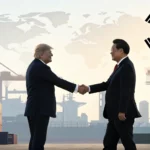





A landmark trade deal has reenergized efforts by US partners to spread their economic ties, seeking stable supply lines and new markets amid geopolitical strain. The agreement arrives as allies weigh growth needs against rising trade frictions, and as governments seek to limit exposure to single markets. The move signals a faster shift in how like-minded economies trade and invest.
Background: A Shift Years in the Making
The push to diversify has been building for years. Supply chain shocks from the pandemic, the war in Ukraine, and energy price spikes tested old assumptions. Tensions between major powers also led companies and governments to rethink concentration risks.
Allies have experimented with different approaches. Some joined large regional pacts to standardize rules. Others prioritized narrower deals on critical minerals, semiconductors, or clean energy components. Many pursued “friend-shoring” with trusted partners while keeping select ties open elsewhere.
The landmark trade agreement is part of a wider trend of US allies diversifying their trade ties.
This trend is not only about tariffs. It includes coordination on export controls, investment screening, and data rules. Governments are trying to pair market access with security assurances.
Why Allies Are Diversifying
Officials cite a few key motives. First, they want to reduce single-country dependence for strategic inputs such as chips, batteries, rare earths, and energy. Second, they aim to open doors for services and digital trade, where growth is strong. Third, they seek more predictable rules that help smaller firms reach customers abroad.
Business leaders add a practical point. More routes and suppliers cut the risk of bottlenecks, storms, strikes, or sudden sanctions. Spreading production across several countries can keep factories running when shocks hit.
- Resilience: Multiple suppliers reduce disruption risk.
- Market access: Broader networks help firms scale.
- Security: Trusted partners share standards and oversight.
Economic Stakes and Risks
Diversification can lower long-term costs by smoothing shocks, but transitions carry risks. Firms face higher short-term expenses when shifting suppliers or retooling plants. Consumers may see price bumps as new logistics lines develop.
Trade lawyers point to rules of origin as a challenge. Companies must track input sources to qualify for tariff preferences. That can strain smaller exporters without strong compliance tools.



Officials argue that streamlined customs and digital paperwork can offset some costs. Clearer standards for low-carbon goods, data flows, and intellectual property may also give investors more confidence.
Geopolitical Calculus
Allies are balancing growth with security. Some want to keep commercial ties with large markets while reducing exposure in sensitive sectors. That means shifting procurement for strategic goods and encouraging joint research with trusted partners.
Energy policy is a major driver. Countries that relied on a single supplier for gas or oil now seek a mix of sources, including renewables and nuclear fuel. Similar thinking guides policies on critical minerals for batteries and wind turbines.
Diplomats say diversification can calm tensions by lowering the risk of economic coercion. If no single partner holds leverage, disputes are less likely to spiral into trade shocks.
What the Deal Signals
The new agreement suggests allies want faster progress on practical issues rather than sprawling, slow-moving talks. Narrow, high-impact chapters on supply chains, standards, and logistics may deliver results sooner than large tariff packages.
Analysts expect more agreements that target specific sectors. Digital services, clean energy inputs, and health products are likely areas for near-term deals. Governments may also expand information-sharing so firms can map supplier risks with better data.
What to Watch Next
Several indicators will show whether the shift is working. Investment patterns should reveal if companies are spreading production. Trade data will indicate whether imports of critical inputs are less concentrated. Regulators may align export controls and screening rules to match new commitments.
Businesses will look for faster customs clearance and common technical standards. If those improve, smaller firms could benefit most. Labor and environmental provisions will also face scrutiny, as voters measure promises against outcomes in local job markets.
The latest deal marks a clear turn toward wider partnerships among US allies. The test now is execution. Success will mean steadier supply chains, more open markets, and fewer shocks. Failure would bring higher costs without greater security.
For now, the momentum is real. More targeted agreements appear likely in the year ahead, especially in critical minerals, clean tech, and digital services. If governments deliver on enforcement and transparency, the shift could reshape trade networks for the next decade.