




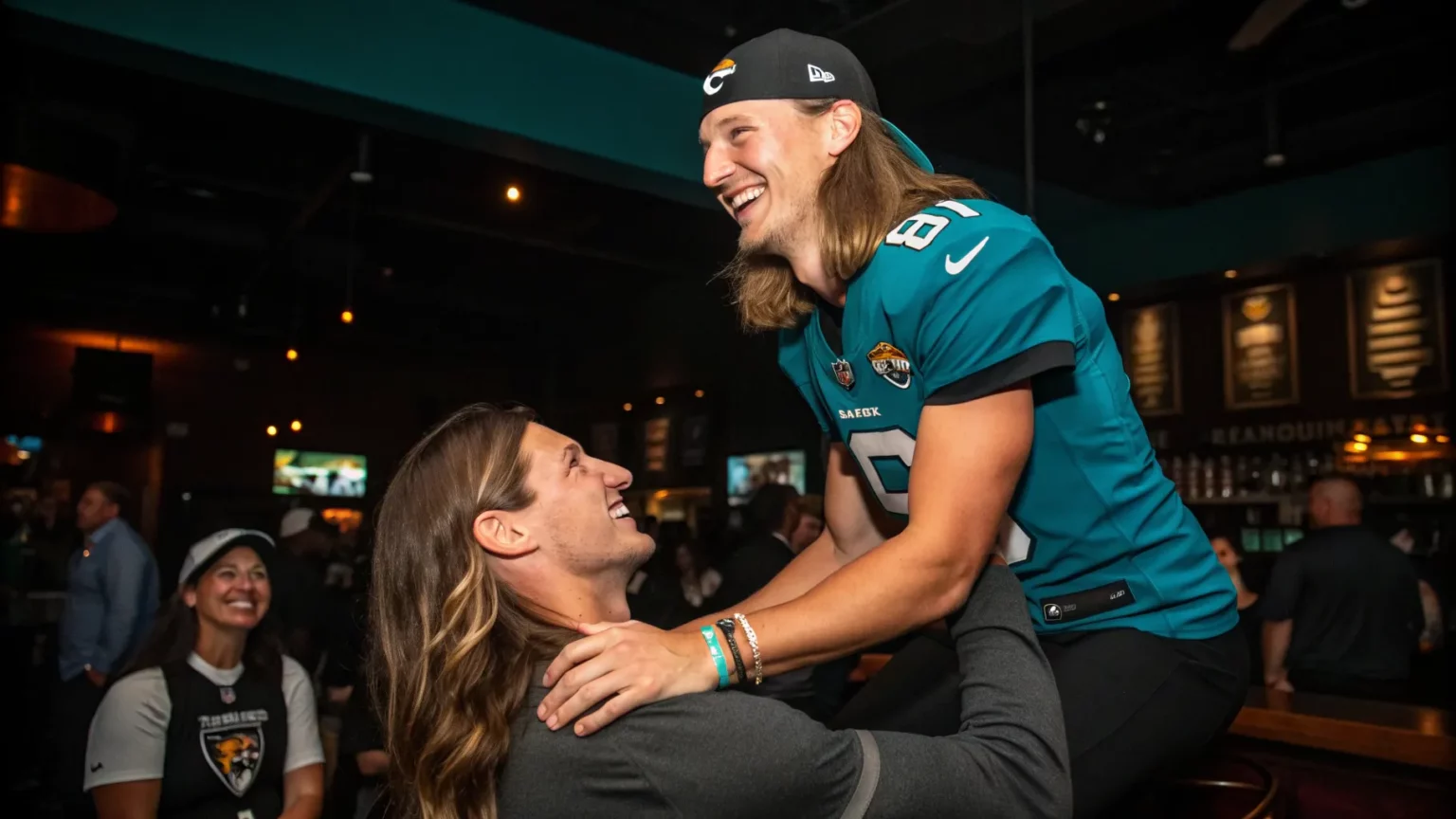
A viral clip of Jacksonville Jaguars quarterback Trevor Lawrence being lifted and squatted by a fan named Natasha Lane at a bar has set off fresh debate ahead of the NFL playoffs. The brief moment, filmed in a crowded setting and shared widely online, shows a lighthearted exchange that many found funny. Others worry about the risk of injury with high-stakes games looming.
The video surfaced in the days before the postseason, adding an odd twist to a week that usually centers on film study, game plans, and recovery. It also raises an old question with new energy: how close is too close when fans approach star athletes in public places?
How the Clip Took Off
As the clip circulated, captions described what viewers saw in plain terms:
“Jaguars quarterback Trevor Lawrence is lifted and squatted by fan Natasha Lane in a viral bar encounter ahead of the NFL playoffs.”
Reaction snowballed within hours. Some commenters praised Lawrence’s easygoing demeanor. Others cringed at the idea of a franchise quarterback getting hoisted in a bar when the season is on the line.
The moment sits at the intersection of two forces: athletes’ public lives and the viral pull of short videos. One curious interaction can become a talking point across sports shows, fan forums, and group chats before dawn.
The Risk Before High-Stakes Games
Quarterbacks are walking investments. Teams stack entire seasons on their health, especially in January. While the lift appeared quick and light, sports medicine experts often warn that unexpected load and balance shifts can be risky for joints and backs.
Teams usually encourage players to limit situations where they cannot control their space, especially close to games. That includes crowded rooms, chaotic entrances, and fan contact that could turn clumsy in a heartbeat.
- Unplanned contact can stress knees, ankles, and the lower back.
- Even minor tweaks can linger through a playoff run.
- Video clips can turn into distractions that linger longer than the soreness.
Fan Culture and Player Boundaries
Fans often see public meetups as part of the modern sports experience. Smartphones are always out. Moments are currency. For many supporters, the clip looks like harmless fun, a star mixing with locals, laughing off a spontaneous stunt.


But the flip side is consent and control. Athletes and teams try to set simple boundaries: photos are fine; lifts, grabs, and surprise moves are not. The difference between a selfie and an impromptu squat is more than optics. It’s about safety and control over the athlete’s body in a crowded room.
Natasha Lane’s role is central to why the clip spread. A named fan, a named quarterback, and a simple visual are tailor-made for viral loops. It is clear she meant no harm. The debate is less about intent and more about risk tolerance when a season hangs in the balance.
What It Says About the Playoff Moment
Public interest spikes in the days before elimination games. Small stories become bigger stories because the stakes are high. A 10-second video can crowd out game-planning talk, at least for a news cycle.
For the Jaguars, any non-football storyline brings noise. Coaches often preach focus and recovery. Quarterbacks, as team faces, tend to carry the extra load of scrutiny. Even minor off-field moments can become part of the week’s narrative.
What Comes Next
It is not yet clear whether the team will address the clip. Often, clubs handle such things quietly with reminders rather than public statements. The most likely outcome is simple: the discourse fades as kickoff nears.
The larger lesson is stickier. Star players live in public, and fan interactions will not stop. But the debate over limits will flare anytime a fun moment brushes against playoff urgency.
For now, the talking points are set. One brief lift. One named fan. One quarterback whose health will matter on every snap. The smart move for everyone—players, teams, and supporters—is simple: keep the jokes, skip the lifts, and save the squats for the weight room.