



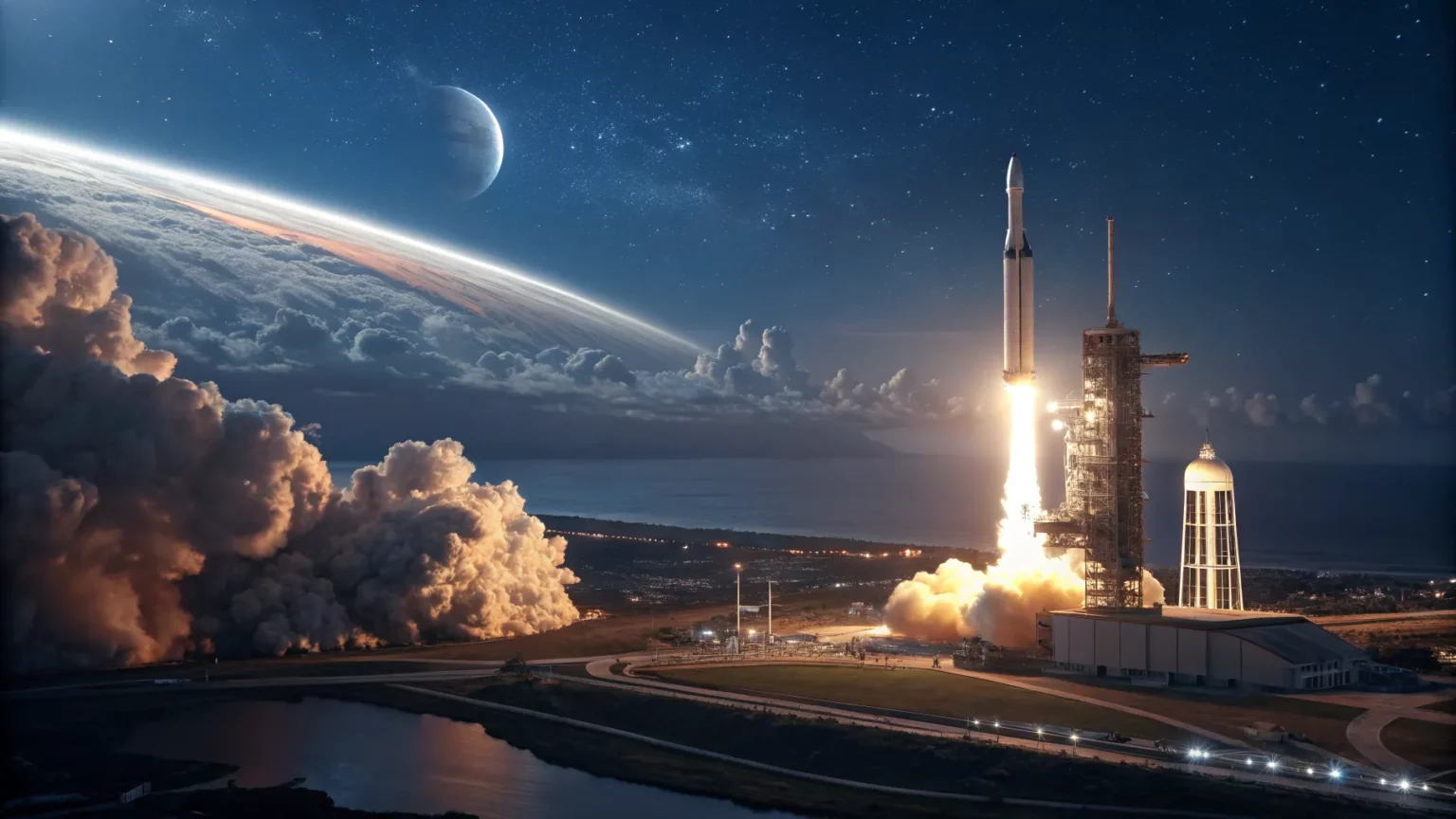
For the first time since Apollo, NASA is preparing to send a crew around the moon, a step that marks the return of humans to deep space and a push to set long-term goals beyond low Earth orbit. The mission, known as Artemis II, will launch from Florida and carry four astronauts on a 10-day flight to test systems for future landings at the lunar south pole.
“NASA’s Artemis II mission is sending humans back to the moon for the first time since the Apollo era.”
The flight is the crewed test of the Orion spacecraft and Space Launch System rocket. It follows an uncrewed trip in 2022 that circled the moon and returned to Earth. NASA delayed the crewed mission to 2025 to address heat shield and life-support concerns, aiming to fly when engineers say it is ready.
What Artemis II Will Do
Artemis II will not land. Instead, it will send astronauts on a free-return path around the moon to check life-support, navigation, and communications in deep space. The crew includes commander Reid Wiseman, pilot Victor Glover, mission specialist Christina Koch, and Canadian Space Agency astronaut Jeremy Hansen. The international seat signals broader partnerships as the United States builds a lunar program with allies.
Why Return Now
U.S. officials point to science, security, and industry. The south pole holds craters in permanent shadow that may contain water ice. If confirmed in useful amounts, that ice could support future crews and be split into hydrogen and oxygen for rocket fuel. The moon also offers a quiet platform for science and tests that are hard to do on Earth.
- Science: Study geology, water ice, and the moon’s radiation and resources.
- Technology: Prove systems for longer missions, including trips to Mars.
- Economy: Grow a space workforce and supply chain across many states.
- Alliances: Deepen ties through the Artemis Accords and shared missions.
- Geopolitics: Keep a leading role as China and others expand lunar plans.
Artemis is also about proving a repeatable way to get to the moon and stay. Unlike Apollo’s short visits, NASA plans a base near the south pole, a small space station called Gateway in lunar orbit, and regular cargo runs. Europe, Japan, and Canada are contributing modules, power systems, and robotic arms.
Money, Risks, and the Debate
The scale is large. The NASA inspector general has estimated per-launch costs for early flights at over $4 billion, not counting years of development. Supporters argue the spending pays for high-skill jobs and new companies, and that sending crews drives faster progress than robotic work alone.
Critics question whether that money should go to climate science, Earth observation, or cheaper commercial rockets. They point to delays and technical issues with the SLS rocket and Orion capsule. They also note that robotic missions have found and mapped water signals already, and can scout landing sites at lower risk. NASA answers that both are needed: robots find targets and crews do complex tasks and urgent fixes.
Science and Industry Stakes
The last decade brought new data. A NASA mission in 2009 kicked up debris that hinted at water in shadowed craters, and later observations detected water molecules on sunlit soil. Artemis surface missions aim to drill and sample these areas for the first time. The results could shape how future crews live off the land.



Industry is shifting too. NASA has hired private landers to deliver instruments, hoping to cut costs and speed up delivery. The program also relies on a commercial lunar lander for the first crewed landing after Artemis II. If these companies succeed, it could open regular cargo and science trips to the moon.
Looking Ahead
Artemis II is the gateway to the first lunar landing attempt of the program, now planned after 2025. That mission is set to carry the first woman and the first person of color to the lunar surface. Before that happens, NASA must show that Orion’s heat shield performs as expected, that life-support works for the full mission, and that deep-space communications are stable.
Success would reset human spaceflight goals for the next decade. It would move the U.S. and its partners closer to a steady presence on and around the moon and offer a testbed for Mars. If technical or budget problems grow, schedules could slip again and plans may be reshaped.
For now, the agency’s message is clear about the purpose. It wants to return, learn to live there, and prepare for longer journeys. The eyes of the space community will be on Artemis II to see if that path holds.