




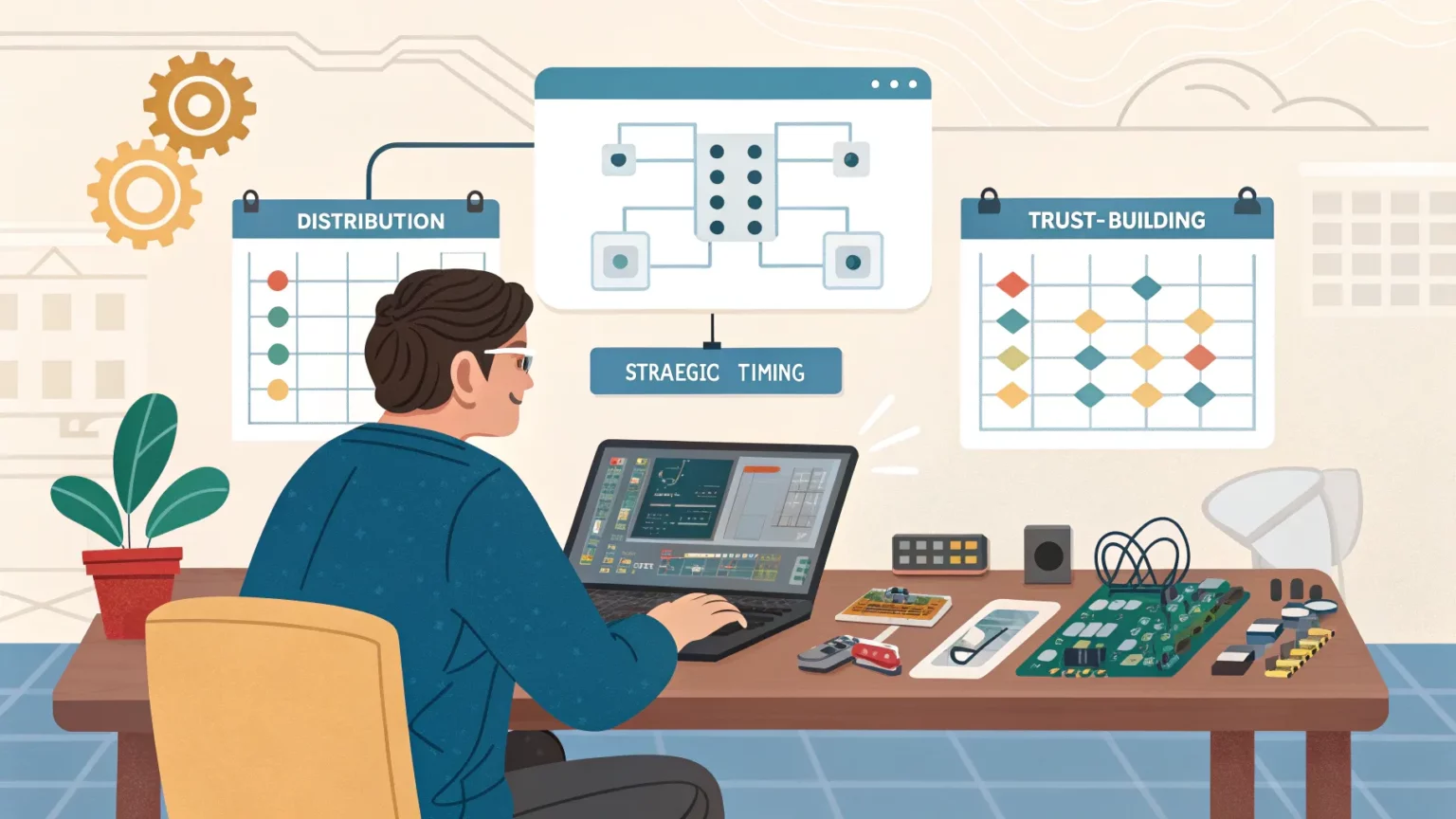
The line landed with a sting: the hardest work begins after the code ships. The remark captures a growing truth in tech. Great products no longer guarantee success. Distribution, trust, and timing do the heavy lifting.
The comment came from a founder describing the grind of turning a strong build into a durable business. It reflects a shift across software. Teams can move fast. Cloud tools and open source shorten the path from idea to release. But adoption is slow, sales cycles stretch, and risk grows outside the codebase.
“Building world-class software was the easy part.”
The Hard Part After the Code
Engineering has modern frameworks, shared libraries, and shared knowledge. That lowers the cost of building. The bottleneck has moved to the market. Buyers want proof the tool will work in their stack. They also want guarantees about security, data, and support.
For many firms, the real test is repeatable go-to-market. Pricing must fit value. Messaging must match pain. The first hundred users can be fans, but the next thousand need confidence and a clear path to results.
Distribution and Trust Drive Outcomes
Founders talk about a new set of early wins. It is not features. It is distribution. Integrations with major platforms help. So do partnerships and customer references. Each lowers the perceived risk of switching.
Trust now sits next to performance in the buying scorecard. Enterprise buyers ask where data lives, how it is encrypted, and what happens if the vendor fails. They ask about uptime history, incident response, and audit trails. They want a roadmap and a real person on call.
- Clear security practices and third-party audits help close deals.
- Transparent pricing and usage caps reduce buyer anxiety.
- Customer stories beat feature lists in late-stage sales.
Regulation and Risk Management
Compliance has become part of product. Even small teams face requests for controls, logs, and policies. Meeting standards takes time away from features, but skipping them stalls sales. The cost shows up early, long before scale.
Privacy rules add more friction. Firms must document data flows, retention, and deletion. They must handle cross-border questions. This work is invisible to users but decisive for contracts.



The Human Load: Hiring and Burnout
Building a team that can sell, support, and implement is harder than writing another module. Hiring is slower. Training is slower. Coordination is its own tax. As one leader’s quip suggests, the code may be tight, but the organization must be tighter.
Support and customer success carry a daily burden. They translate feedback, triage issues, and protect trust. Their work shapes churn. It also shapes the product backlog. That push and pull can strain teams if priorities are unclear.
Product Strategy Meets Reality
Once in the hands of users, perfect plans bend. Edge cases appear. Integrations break. Metrics that looked strong in beta flatten in the field. Leaders have to decide what to cut and what to keep, not just what to add.
Feature creep is a constant threat. Each new request can please one account and confuse the rest. The winning pattern is tight scope, clear outcomes, and steady performance. It is less about hero features and more about reliability.
Signals to Watch
The strongest indicators point outside the code editor. Healthy activation, short time-to-value, and lower support tickets per user hint at product fit. NPS and renewal rates show trust. Sales cycle length shows friction in the path to adoption.
For early teams, pilots that convert to multi-year deals beat any launch buzz. For later-stage firms, expansion revenue and multi-product adoption show staying power. In both cases, the question is the same: can the company help customers win with less effort over time?
What Comes Next
Tools will keep making development faster. That will raise the bar on everything else. The advantage will sit with teams that design for distribution from day one. Security, compliance, and support will be part of the first draft, not afterthoughts.
The founder’s line is blunt, but it fits the moment. Shipping is table stakes. The edge lies in trust, service, and steady results. The winners will treat those as core features and measure them with the same care they give to performance charts.
As buyers tighten budgets and ask for proof, the message is clear. Write great code. Then do the hard part: earn adoption, keep promises, and make the next renewal an easy yes.