




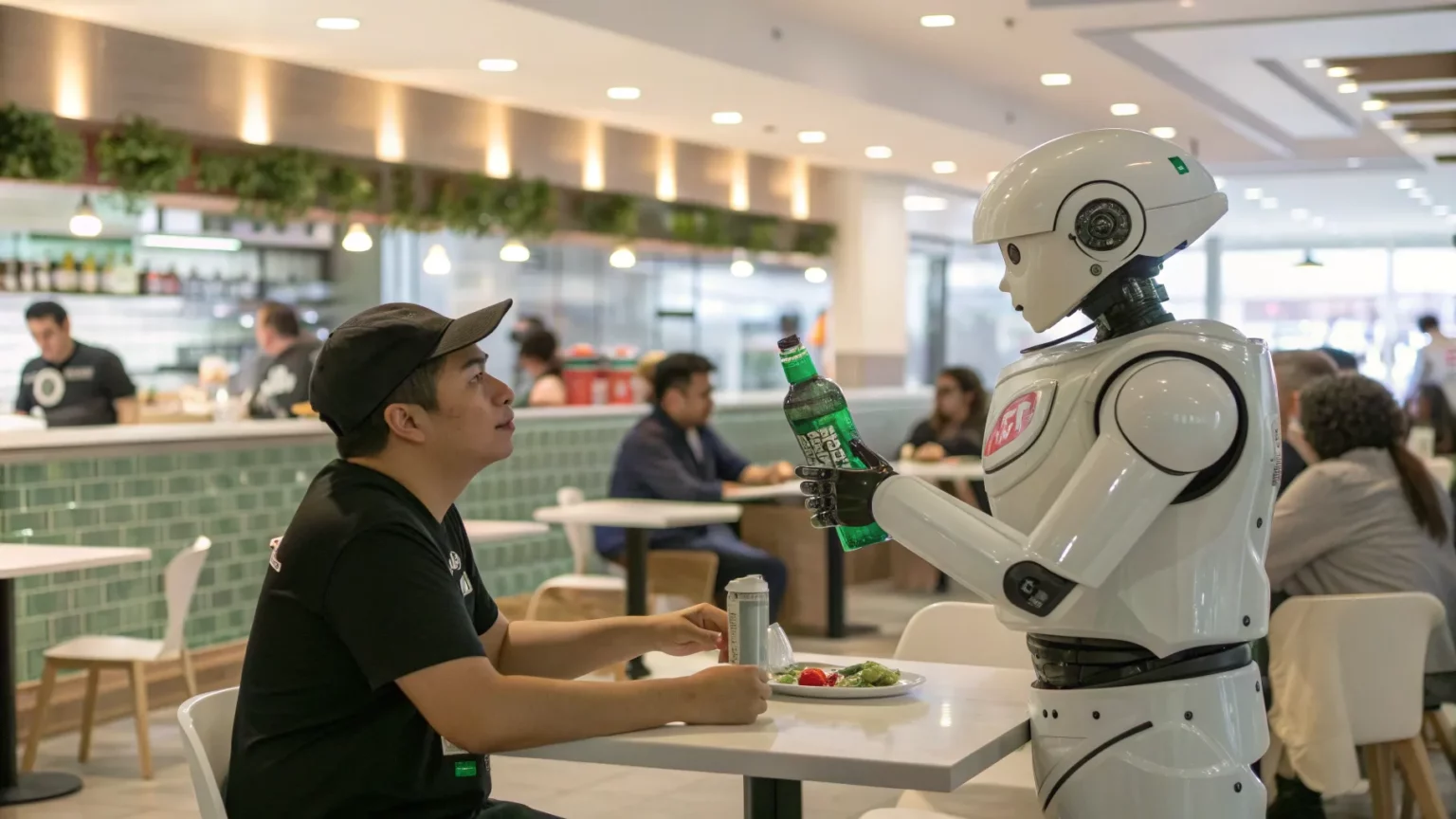
A demonstration video has revealed significant limitations in an artificial intelligence agent’s ability to process simple customer requests. In the footage, the AI repeatedly asks a customer what they want to drink, despite the diner having already ordered a Mountain Dew.
The interaction highlights ongoing challenges in AI comprehension and response capabilities, particularly in customer service applications where basic information retention appears problematic.
Communication Breakdown
The video shows a clear failure in the AI’s ability to register and retain customer input. After the diner explicitly states their preference for Mountain Dew, the AI system continues to prompt for a beverage selection, demonstrating a fundamental flaw in its conversational abilities.
This type of repetitive questioning represents a basic error in natural language processing and short-term memory functionality that would frustrate customers in real-world settings.
Implications for Service Industry Automation
The demonstration raises questions about the readiness of AI systems for customer-facing roles in the food service industry. While companies continue to develop automated ordering systems to reduce labor costs and increase efficiency, this example suggests current technology may not be sophisticated enough to handle even straightforward interactions.
Restaurant industry analysts note that customer satisfaction could suffer significantly if AI systems cannot perform basic order-taking functions correctly. The failure to register a simple drink order suggests these systems may struggle with more complex requests involving customizations or allergen information.
Technical Limitations
The video exposes several technical shortcomings in the AI agent:
- Poor short-term memory retention
- Inability to track conversation context
- Failure to confirm received information
- Repetitive questioning despite having received answers
These issues point to fundamental challenges in developing AI systems that can maintain contextual awareness throughout a conversation—a critical requirement for customer service applications.



Software developers working on conversational AI note that while large language models have made significant progress in generating human-like responses, maintaining conversation state and tracking previously provided information remains difficult.
“This type of error shows we’re still in the early stages of developing truly functional service robots,” said a computer science researcher who reviewed the footage. “The system needs to not just hear words but understand and retain their meaning in context.”
The incident serves as a reminder that despite rapid advances in AI technology, basic functionality issues must be resolved before widespread deployment in customer-facing roles can succeed. As development continues, companies will need to address these fundamental limitations or risk customer frustration and potential damage to their brands through failed interactions.