




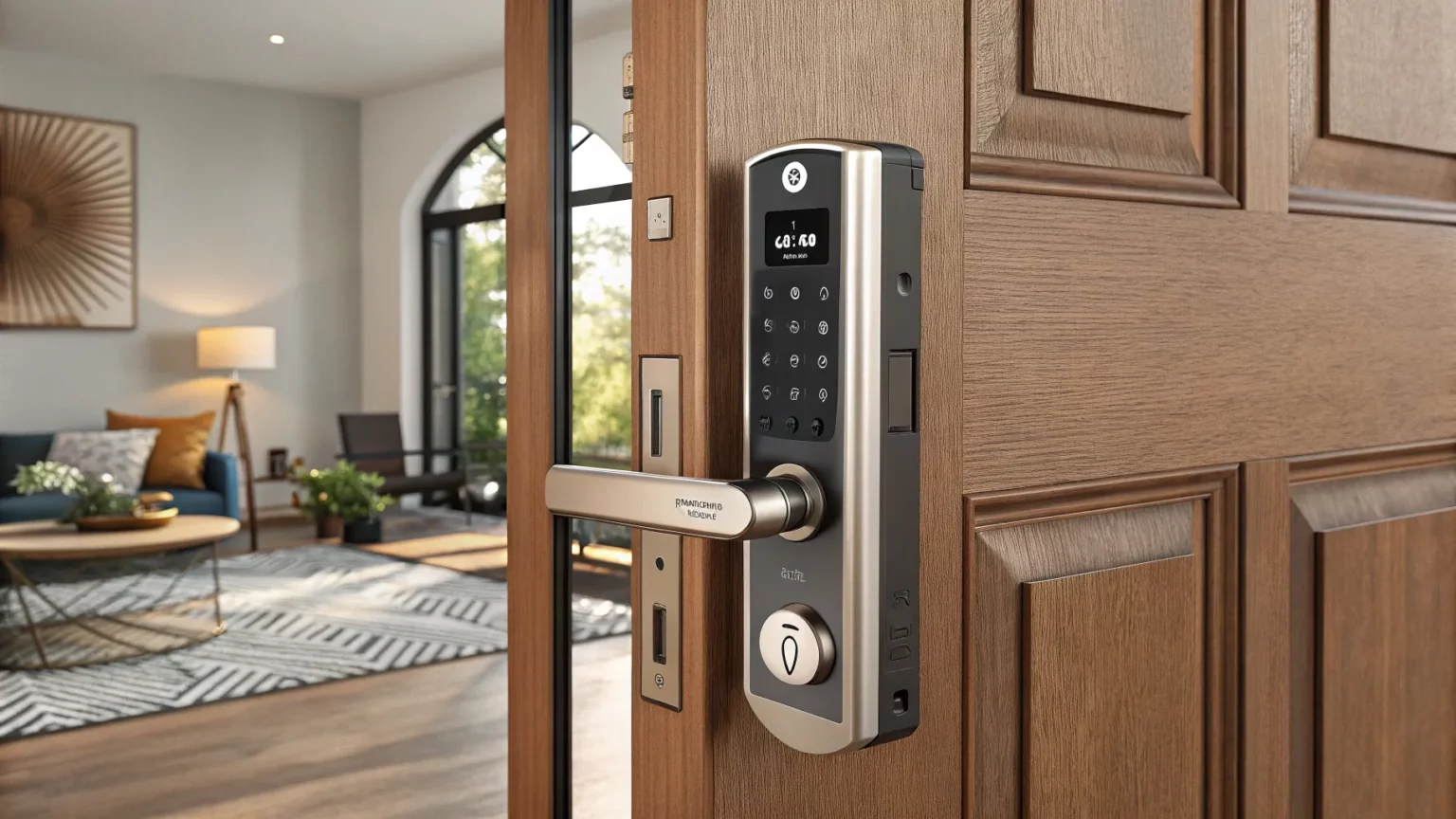
A cutting-edge smart lock has entered the consumer market, offering homeowners advanced biometric security features including facial recognition and palm print scanning capabilities.
The innovative security device allows users to unlock their doors without traditional keys by simply presenting their face or palm to the lock’s sensors. This technology represents a significant advancement in home security systems, moving beyond conventional PIN codes and key fobs.
Advanced Biometric Features
The smart lock’s dual biometric authentication options provide flexibility for users who prefer different methods of access. The facial recognition feature scans and verifies the user’s face before granting access, while the palm print scanner offers an alternative method that works by identifying the unique patterns in a person’s palm.
These biometric features add an extra layer of security compared to traditional locks, as they’re significantly more difficult to duplicate or forge than physical keys. The technology also eliminates common problems like lost or forgotten keys.
Remote Control Capabilities
Beyond its biometric features, the smart lock includes remote control functionality through a dedicated mobile application. This app allows homeowners to:
- Lock or unlock doors from anywhere with internet access
- Monitor entry and exit activity
- Grant temporary access to visitors or service providers
- Receive notifications when someone enters or attempts to enter
The remote capabilities enable homeowners to manage access to their property even when they’re away, providing both convenience and enhanced security monitoring.
Consumer Market Implications
The introduction of this smart lock signals the growing mainstream adoption of biometric security technology in residential settings. Previously, such advanced features were primarily found in commercial or high-security environments.
The device joins a growing category of smart home security products that integrate with broader home automation systems. As these technologies become more accessible to average consumers, the home security market continues to evolve from mechanical locks toward digital, connected solutions.



Security experts note that while biometric locks offer convenience, consumers should consider factors like power outages, backup entry methods, and data privacy when evaluating these systems for their homes.
Pricing and availability details have not yet been disclosed, but the product is expected to compete with other premium smart locks currently on the market, which typically range from $200-500 depending on features.
As smart home technology adoption increases, biometric locks represent the next step in the evolution of residential security, balancing enhanced protection with the convenience modern consumers expect.