




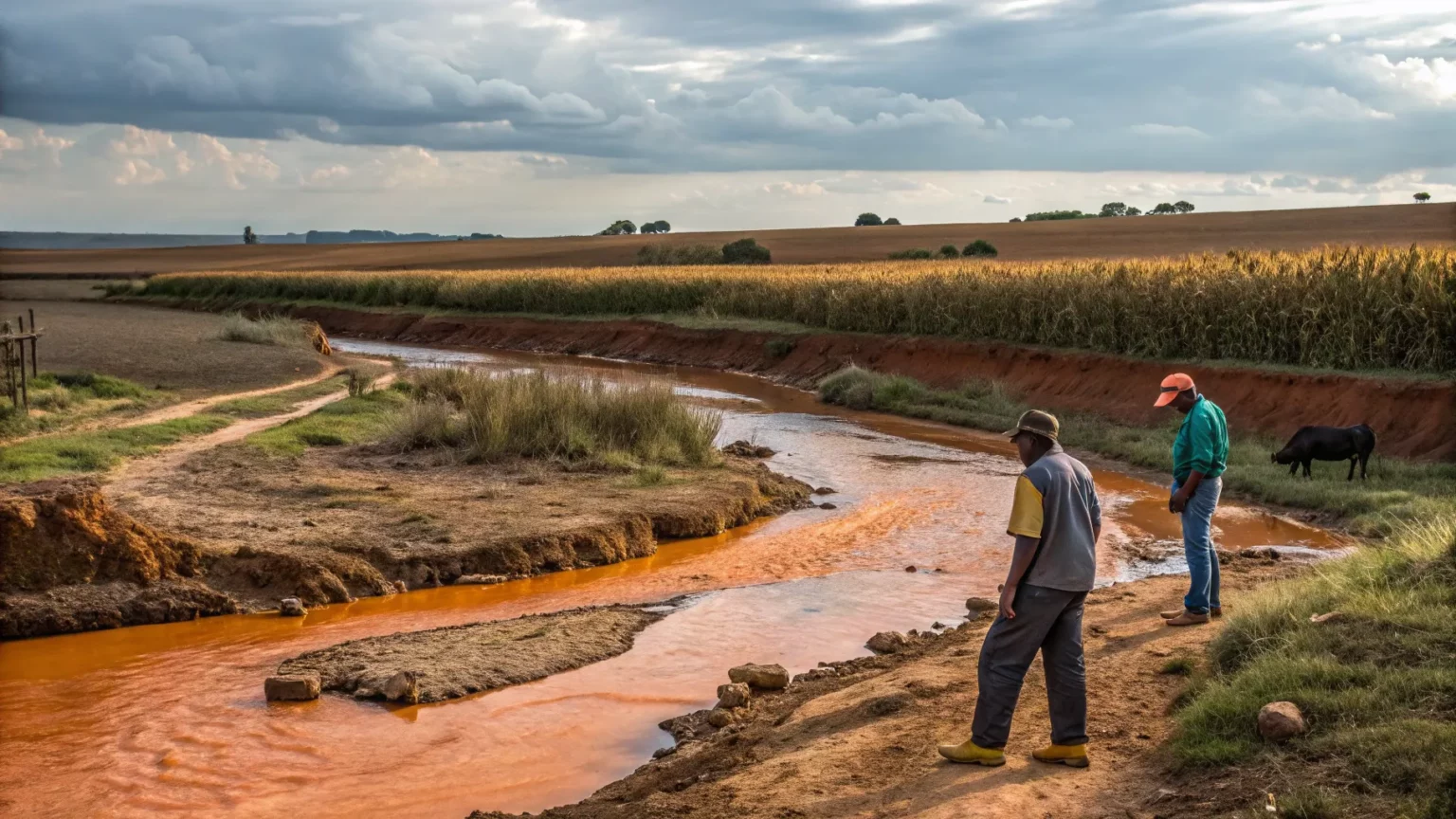
Farmers in a copper-mining region say millions of litres of highly acidic waste have entered nearby rivers, threatening crops, livestock, and drinking water. Community leaders describe dead fish, discoloured channels, and a sharp, chemical smell along stretches used for irrigation. The mining operator and local authorities have not yet offered a detailed public account, residents say, raising urgency for independent testing and swift cleanup.
“Millions of litres of highly acidic waste spilled into rivers in a copper-mining area,” farmers said.
What Residents Reported
Smallholder farmers and herders describe a sudden change in water quality along tributaries downstream of active copper pits and tailings ponds. Several report skin irritation after contact and wilting leaves on river-fed fields.
They say they noticed the change after heavy pumping activity near waste storage areas. Others point to recent rains that may have breached containment berms.
Local clinics, according to residents, have advised boiling water and limiting contact until pH levels are known. Community groups are urging rapid sampling at multiple points along the river.
How Acidic Mine Waste Harms Rivers
Acidic discharges from copper mining often result from exposed sulfide rock reacting with air and water, producing sulfuric acid. This process can dissolve metals such as copper, lead, and arsenic into waterways.
Environmental studies show acid mine drainage can register a pH as low as 2 to 3, far below the neutral pH 7 many freshwater organisms require. Fish kills, invertebrate losses, and crop damage can follow even short exposures.
- Low pH can burn gills and reduce oxygen exchange in fish.
- Dissolved metals can accumulate in sediments and food chains.
- Irrigation with acidic water can damage soils and stunt crops.
Company Response and Oversight
Residents say they have sought an explanation from the mining operator about the cause and scale of the spill. They also want to know the status of tailings dams and pipelines connected to processing plants.
Regional environmental agencies typically require mines to maintain lined tailings ponds, monitor pH and metal loads, and file incident reports within hours of a release. Farmers say they have not seen an official report made public. They are urging on-site inspections, third-party sampling, and daily updates.



Mining analysts note that rapid containment often depends on early detection. Shutoff valves, diversion ditches, and lime dosing can help neutralize acidic flows if deployed quickly.
Economic Stakes for Farming and Mining
The spill threatens two major livelihoods. Many households rely on river-fed fields for staple crops and cash vegetables. Prolonged contamination could delay harvests and affect local markets.
For the mine, an uncontrolled release can halt operations, trigger fines, and erode trust. Asset managers often flag environmental incidents as material risks, raising the company’s cost of capital and insurance.
Community leaders say a cooperative approach could limit damage. That includes emergency water deliveries, safe irrigation alternatives, and compensation where losses are verified.
What Independent Tests Should Measure
Experts recommend a clear sampling plan to establish the facts. Key metrics include pH, electrical conductivity, and dissolved metals such as copper, iron, zinc, and arsenic. Results should be collected upstream and downstream, and at different depths and times of day.
- Test raw river water and sediment.
- Analyze water at irrigation intakes and household taps.
- Track changes over days and weeks to capture plume movement.
Transparent reporting can guide cleanup steps, such as neutralization with lime, sediment removal at hotspots, and controlled releases from tailings ponds to reduce pressure.
Lessons from Comparable Incidents
Past copper-mine spills show a familiar pattern: a containment failure, rapid acidification downstream, and a long tail of sediment cleanup. In several cases, early action reduced ecological losses. Delays increased costs and deepened community distrust.
Researchers also stress long-term monitoring. Metals can shift between water and sediment, causing spikes after storms or during dredging. Recovery plans work best when communities have a role in oversight.
Farmers are asking for clear answers and immediate help as they wait for test results and official updates. The next steps are straightforward but time-sensitive: verify the scale of contamination, stabilize the source, and provide safe water options. The broader test will be accountability. Public reporting, credible science, and fair remedies will shape how quickly the rivers recover and whether confidence in the mine’s safeguards can be restored.