




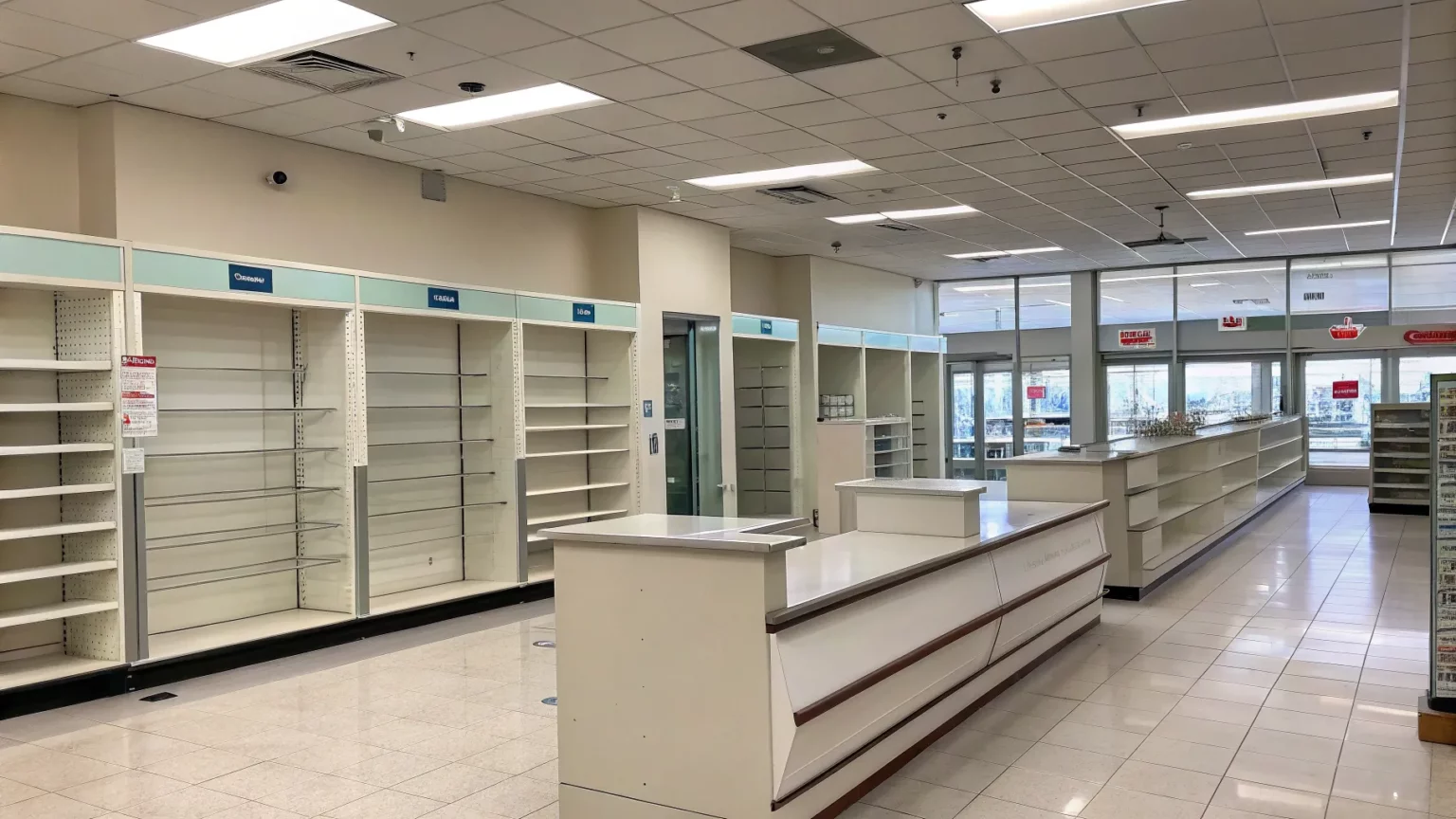
Rite Aid closed its last 89 stores this week, marking the end of a national drugstore brand that served communities for decades. The closures followed a bankruptcy filing in May, the company’s second in less than two years. The shutdowns stretch across multiple states and leave many neighborhoods searching for new options for prescriptions and basic health needs.
“Rite Aid, once one of America’s biggest pharmacy chains, shuttered its remaining 89 stores this week after filing for bankruptcy in May for the second time in less than two years.”
The move caps years of shrinking store counts, heavy debt, and legal pressures. It also reflects a pharmacy market under strain from tight reimbursement rates and changing consumer habits.
How a National Chain Reached the End
Rite Aid grew from a regional chain into a coast-to-coast retailer over the last half of the 20th century. At its peak, it operated thousands of stores and competed with CVS and Walgreens in most major markets. In recent years, it sold locations, exited select markets, and worked to stabilize finances.
That effort could not overcome mounting costs. The company faced lawsuits tied to opioid prescriptions, declining margins from pharmacy benefit managers, and rising theft and operating expenses. Attempts to cut costs and refocus the business were not enough to balance debt and legal risks.
What Drove the Collapse
Several forces converged. Legal liabilities increased uncertainty and raised financing costs. Lower reimbursement rates from third-party payers squeezed profits on prescriptions, which are the core of a drugstore’s revenue. Front-of-store sales also shifted online, reducing foot traffic and impulse purchases that once supported thin pharmacy margins.
- Heavy debt and interest costs limited options.
- Opioid-related litigation added legal and financial risk.
- Reimbursement pressure eroded pharmacy profits.
- Online shopping reduced in-store sales of everyday items.
Analysts say these headwinds hit mid-sized chains hardest. Large rivals can negotiate better rates and invest in technology. Smaller independents can specialize in care and local service. Rite Aid sat in the middle, with high fixed costs and limited flexibility.
Community Impact and Pharmacy Access
The closures will reshape access to care in some areas. Many stores served older patients and people managing chronic conditions. The loss of a nearby pharmacy can mean longer travel times and delays in filling prescriptions.
Public health groups warn about “pharmacy deserts,” especially in low-income neighborhoods and rural towns. When one pharmacy leaves, remaining options can struggle with higher demand. Lines grow longer. Wait times increase. Patients may skip doses if pickup becomes harder.



Local clinics and independent pharmacies will likely see new customers. Some chains may step in and buy leases or patient files. But transitions can be uneven, and insurance networks do not always match.
Employees, Suppliers, and Landlords Brace for Fallout
Store closures ripple through the supply chain. Employees face job losses or transfers where possible. Suppliers, from drug wholesalers to consumer goods brands, lose a sales channel. Landlords must find new tenants for mid-size retail spaces that can be hard to re-lease.
Creditors will look to recover value from inventory, leases, and brand assets. That process can take months and may leave little for unsecured claims. The final outcome depends on court approvals and asset sales.
Industry Pressures Will Persist
The pharmacy sector is consolidating. Large players are pushing into primary care and home delivery. Insurers and pharmacy benefit managers have more influence over where and how patients fill prescriptions. Independent pharmacies continue to advocate for fairer reimbursement.
Investors are watching three indicators: script volume growth, reimbursement trends, and labor costs. Any easing on those fronts could stabilize remaining chains. Continued pressure could trigger more closures or mergers.
What Comes Next for Patients and Markets
Patients should move prescriptions as soon as possible to avoid gaps in care. Health plans can help identify in-network alternatives. State regulators may monitor access in affected ZIP codes and encourage continuity of care.
For rivals, the exit presents a chance to gain customers. But absorbing new volume requires staffing and inventory adjustments. Missteps could strain service levels during flu season and other peaks.
For communities, the long-term question is who will provide accessible care and vaccinations, especially in under-served areas. Partnerships between clinics, grocers, and independents may fill some gaps.
Rite Aid’s exit marks a turning point for retail pharmacy. The company’s final stores may be closed, but the issues that drove this outcome remain. Watch for consolidation deals, new care models inside stores, and policy debates on reimbursement and pharmacy access. The next few quarters will show whether the industry can adapt fast enough to keep care close to home.