




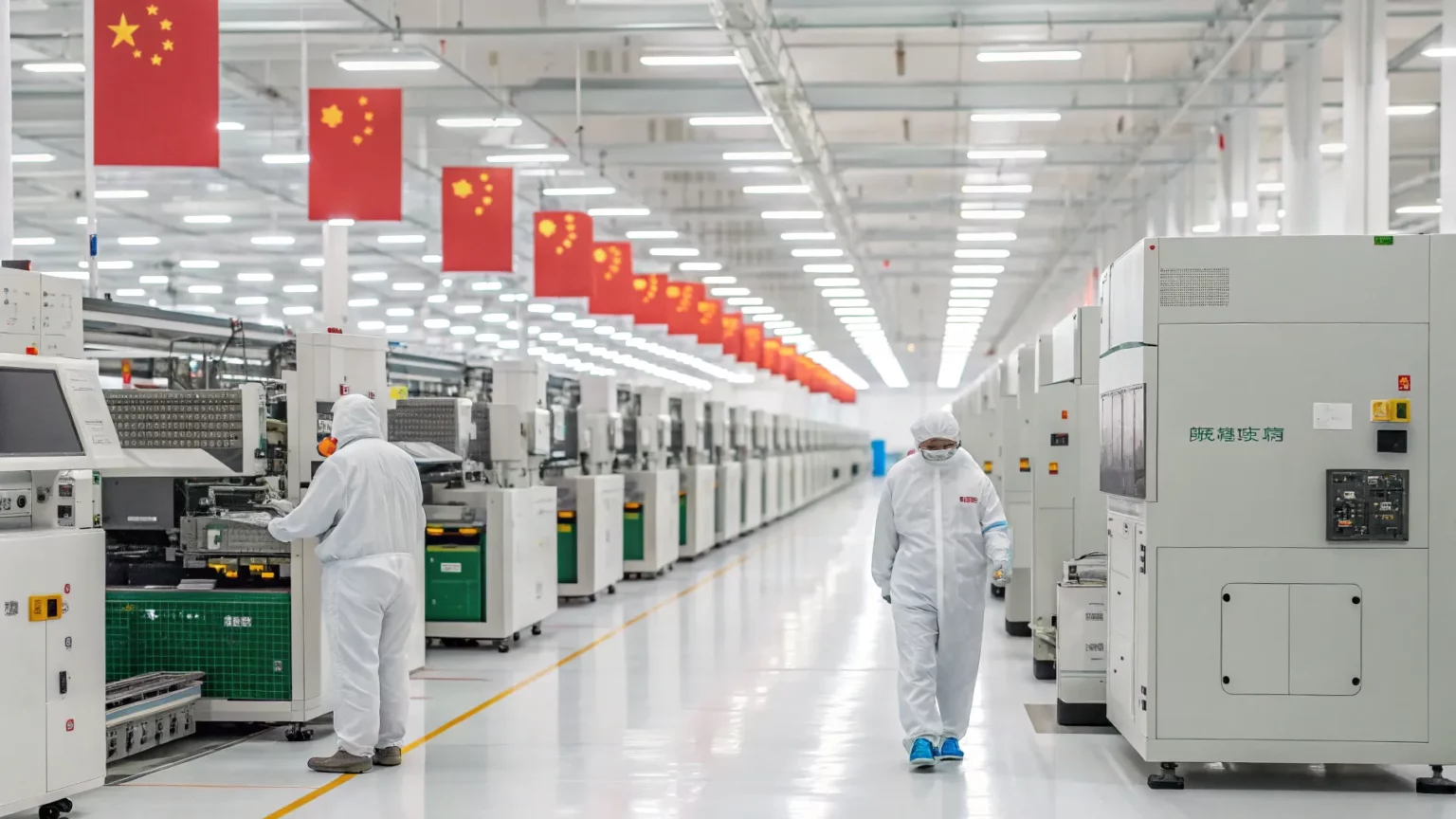
China is urging companies to adopt domestic semiconductors, intensifying a strategic push to reduce reliance on foreign suppliers amid export controls and rising demand for AI. The guidance reaches cloud providers, state-linked firms, and research labs across major cities, with the aim of building a self-sufficient chip stack that can power the next wave of computing.
The move comes as Washington tightens restrictions on advanced accelerators used for training large AI models. Nvidia has been the dominant supplier in that market. Beijing’s message raises a central question for executives and engineers: can Chinese alternatives meet performance, software, and cost needs today?
“Beijing has urged local firms to use homemade chips. But is China ready to turn away from Nvidia?”
A Strategic Push Years in the Making
China’s drive for semiconductor self-reliance has deep roots. The Made in China 2025 plan set targets to raise domestic content in key technologies. A broader “Xinchuang” program later pushed homegrown hardware and software across government and finance.
US export curbs, heightened since 2022, accelerated the shift. Caps on Nvidia’s most advanced GPUs pushed Chinese buyers to secure inventory and test alternatives. Local governments stepped in with subsidies for servers built on domestic processors.
Behind the policy is a simple calculus: AI and high-performance computing are now core to economic growth and national security. If access to foreign chips can be cut off, China wants backup options it controls.
Domestic Alternatives Take Shape
Several Chinese vendors are racing to fill the gap. Huawei’s Ascend series has gained traction in data centers, with toolchains tailored for AI training and inference. Startups have introduced general-purpose GPUs and AI accelerators aimed at cloud tasks, though many are still scaling production.
Engineers say the performance picture varies by workload. Some inference tasks run well on domestic accelerators. Complex training jobs often remain faster on Nvidia hardware due to maturity and software support.
- Data center deployments with local chips are growing in pilot projects.
- Power efficiency and availability remain active concerns for operators.
- Manufacturing constraints can limit volumes and raise costs.
The Software Hurdle
Hardware is only half the battle. Nvidia’s CUDA ecosystem has been built over years, with libraries, frameworks, and tools that developers rely on. Porting models and pipelines to new platforms can take months and adds risk.



Chinese vendors offer their own stacks and compilers. They court developers with migration kits and support teams. Progress is visible in benchmarks and pilot wins, but compatibility gaps persist. Many AI teams run hybrid setups: domestic chips for parts of inference, Nvidia GPUs for large-scale training.
Cloud providers are trying to make the transition easier. They offer managed services that abstract low-level differences. Even so, switching costs and talent shortages weigh on adoption.
Market Impact and Procurement Shifts
Procurement policies are changing. State-linked buyers are encouraged to prioritize local chips, especially for government workloads. Private firms face a more nuanced decision, balancing policy, performance, and time to market.
Some industries are better positioned to switch. Financial risk models and recommendation systems can be tuned to domestic accelerators with manageable trade-offs. Cutting-edge generative AI training remains sensitive to hardware choice because training windows affect product cycles.
Cost comparisons are fluid. Subsidies and bundled cloud offerings can make domestic options attractive. But supply chain limits and tooling costs can offset headline savings. Analysts expect a steady rise in local chip share, not an overnight break with foreign suppliers.
What to Watch Next
Three signals will shape the transition. First, can domestic chips match performance per watt on mainstream AI tasks? Second, will software ecosystems mature enough to cut porting time? Third, can manufacturers scale production with stable yields?
International dynamics also matter. Further export controls could push more buyers to switch. Any easing would slow the shift, especially for private firms focused on speed.
China’s push to local chips is real and gathering momentum, but the timetable is uneven. High-end AI training still favors Nvidia for many teams, while inference and sector-specific workloads are moving faster to domestic options. The next year will likely bring more mixed deployments, more tooling to lower switching costs, and clearer performance data. For now, companies are hedging: testing local chips where they can, and keeping Nvidia in the loop where they must.