




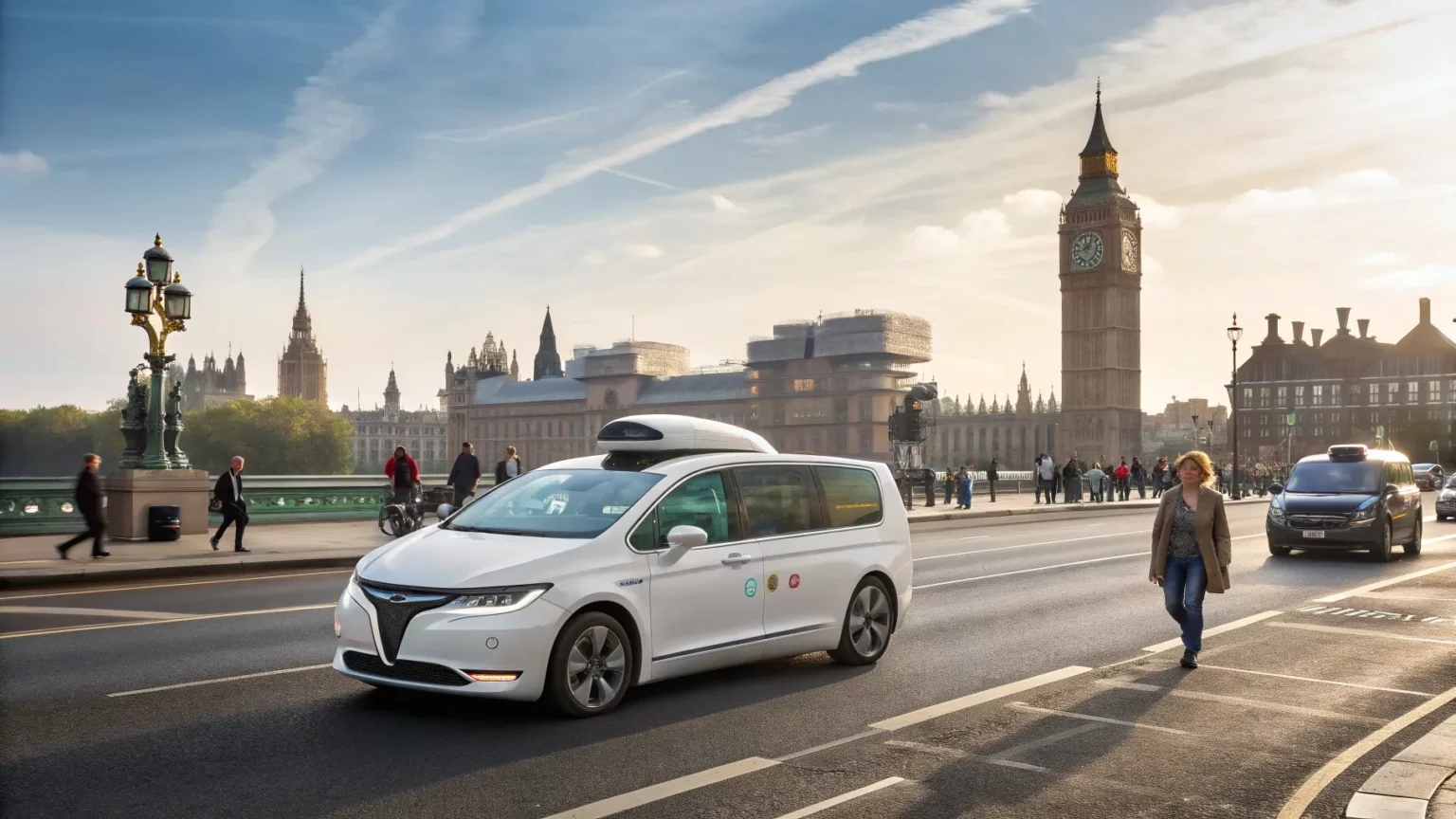
Waymo plans to bring its driverless ride service to London next year, beginning with supervised tests on public roads in the coming weeks. The company’s move signals a push into one of Europe’s most complex urban markets, as UK regulators prepare new rules for autonomous vehicles.
The company, owned by Alphabet, said the tests will start on London streets with human oversight. The goal is to lay the groundwork for a commercial robotaxi service once approvals are in place. The announcement came Wednesday and positions London as a potential European launchpad for the technology.
“Robotaxi pioneer Waymo plans to expand to London next year,” the company said, adding it will begin testing “on London streets in the coming weeks.”
Regulatory Shifts Set the Stage
London has been preparing for self-driving trials for several years. The UK’s Automated Vehicles Act, passed in 2024, sets a legal framework for companies to deploy autonomous systems once they meet safety standards. The law clarifies who is liable in a crash and how safety will be monitored.
Transport for London has also developed permit processes for road trials and data sharing requirements. Earlier pilots by British firms demonstrated limited autonomous operations on designated routes. Waymo’s planned testing adds a large US player to the mix, and will likely draw scrutiny from city officials and public safety advocates.
Left-hand traffic, narrow streets, frequent road works, and complex junctions make London a demanding test bed. Weather adds another layer, with heavy rain and low winter light known to challenge sensors.
What Testing Will Look Like
Waymo said the first phase will involve supervised driving, with a trained operator ready to take control. That step is common in new markets as companies adapt software to local road rules, signage, and driving habits. It also helps gather data to refine maps and improve performance in dense traffic.
Experts say London’s varied street types could speed learning. Central corridors, residential zones, bus lanes, and cycling superhighways present different conditions. Operators are expected to limit early testing to certain neighborhoods and hours to reduce risk.
- Supervised trials on public roads
- Geofenced areas during initial phase
- Data sharing with regulators
- Gradual scale-up before any paid service
Safety, Trust, and Public Reaction
Public acceptance will be a key factor. London’s black cab drivers have raised concerns about congestion and fair competition from new mobility services in the past. Disability groups will watch for accessible vehicles and reliable support for riders with special needs.



Waymo faces a sensitive safety backdrop. U.S. rival Cruise paused operations nationwide in late 2023 after a serious incident in San Francisco and has only recently begun limited testing. Waymo, by contrast, continued to operate in select American cities under tighter oversight, highlighting differences in safety records and practices.
Independent researchers note that transparency on disengagements, near-misses, and incident reporting will matter as much as headline crash rates. Clear communication when software hands control to a human, and why, remains central to building trust.
Competition and Market Impact
London is a prized ride-hailing market served by Uber, Bolt, FreeNow, Addison Lee, and the black cab trade. A successful robotaxi launch could shift pricing and availability, especially late at night or in underserved areas. It could also trigger new rules on curb access and pick-up zones.
Analysts expect any commercial rollout to start small, with limited routes and promotional fares. Fleet size, charging infrastructure for electric vehicles, and integration with existing apps will shape adoption. The city’s congestion and clean air charges may influence where and when autonomous fleets operate.
What to Watch Next
The coming months will reveal how quickly Waymo can move from tests to a pilot service. Key milestones include safety audits, insurance arrangements under the UK’s new framework, and community outreach in selected boroughs.
If trials go smoothly, London could become a case study for European deployment. If not, regulators may tighten requirements, affecting timelines across the sector.
For now, the company’s plan marks a cautious entry: supervised driving, targeted routes, and close coordination with city authorities. The outcome will shape how soon Londoners might hail a driverless ride—and how other European capitals respond.