




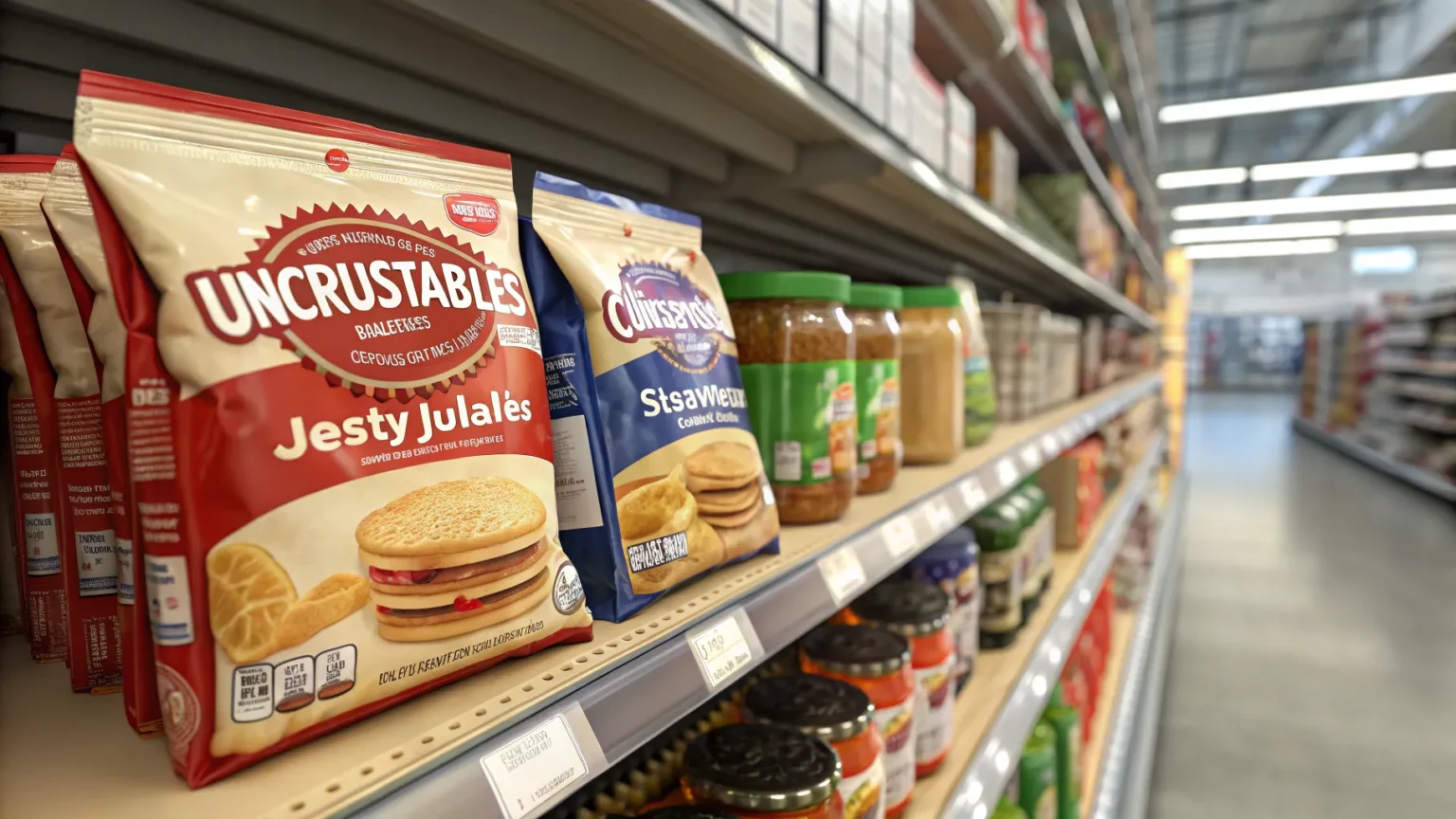
J.M. Smucker has filed a lawsuit against Trader Joe’s, accusing the grocer of selling a look-alike version of Uncrustables that harms the brand’s sales. The dispute centers on sealed, crustless peanut-butter-and-jelly sandwiches, a category Uncrustables helped popularize and one that has become a key growth driver for Smucker. The case places a growing private-label trend under legal scrutiny and could reshape how established brands defend their signature products.
Background: A Growing Snack Staple
Uncrustables launched more than two decades ago and evolved from a school-lunch novelty into a mainstream staple in frozen aisles. Smucker has highlighted Uncrustables as one of its fastest-growing businesses in recent years. The company has publicly targeted annual sales in the hundreds of millions of dollars, with long-term goals reaching toward $1 billion.
Smucker once sought patent protection for the sealed, crustless sandwich design in the early 2000s, but regulators rejected the claims after review. Since then, brand protection has leaned on trademarks, packaging, product names, and trade dress. These tools are often used to argue that a competing product confuses shoppers or rides on a brand’s reputation.
Trader Joe’s, known for its private-label approach, frequently offers house-brand versions of popular items. The model can benefit shoppers on price, but it has also triggered legal fights when national brands argue that store-brand packaging or product features come too close.
The Claim: Copying and Market Confusion
“Smucker’s is suing Trader Joe’s, claiming that a knockoff version of Uncrustables is eating their lunch.”
At the heart of the case is whether Trader Joe’s product is so similar that it could confuse consumers or dilute Uncrustables’ distinct identity. Legal experts say such claims often hinge on how the product looks on shelves, the packaging design, the product name, and the overall impression in the freezer case.
Smucker is likely to argue that the alleged imitation capitalizes on goodwill built over years of marketing and innovation. Trader Joe’s, for its part, could counter that its product is clearly labeled as a store brand and priced differently, reducing any chance of confusion.
What’s at Stake for Both Companies
For Smucker, Uncrustables has become a signature line with strong brand awareness among families and schools. Protecting that position matters not only for near-term sales but also for future expansion into new flavors, sizes, and formats. If Smucker prevails, it could deter other retailers from launching close look-alikes and reinforce the value of trade dress and trademark defenses.
For Trader Joe’s, a loss could force packaging or product changes and set a precedent that affects the company’s private-label strategy. Retailers depend on the ability to offer alternatives to national brands. A tighter legal standard could narrow the room for similar-looking products even when labels are different.


Industry Context: Private Label vs. National Brands
Private-label products have gained share in many grocery categories, especially during periods of inflation. They often advertise comparable taste at lower prices. National brands respond by investing in marketing and innovations that they argue justify the premium.
- Retailers seek to expand store brands to build loyalty and margins.
- Brand owners guard trade dress, trademarks, and product reputation.
- Courts weigh consumer confusion, packaging, and intent.
Food companies have brought similar claims in snack foods, beverages, and personal care, with mixed outcomes. Courts often look closely at side-by-side comparisons and survey data that measure whether shoppers mistake one product for another.
What Legal Experts Will Watch
Key questions will include how similar the sandwich and packaging appear, whether the names and logos create distance, and whether Smucker can show actual or likely confusion. Sales data, shopper surveys, and internal documents could play a role. The case may also test how much protection a brand can claim over a familiar product format.
Both companies may seek a settlement that includes packaging changes or other concessions. If the dispute advances, it could produce a ruling that guides future private-label launches across grocery chains.
The lawsuit signals how valuable Uncrustables has become for Smucker and how competitive the freezer aisle has grown. A resolution could clarify how far private labels can go when echoing national favorites. Shoppers should watch for any packaging or product changes in frozen PB&J. The outcome may shape the next wave of store-brand innovation and how big brands defend their most recognizable foods.