




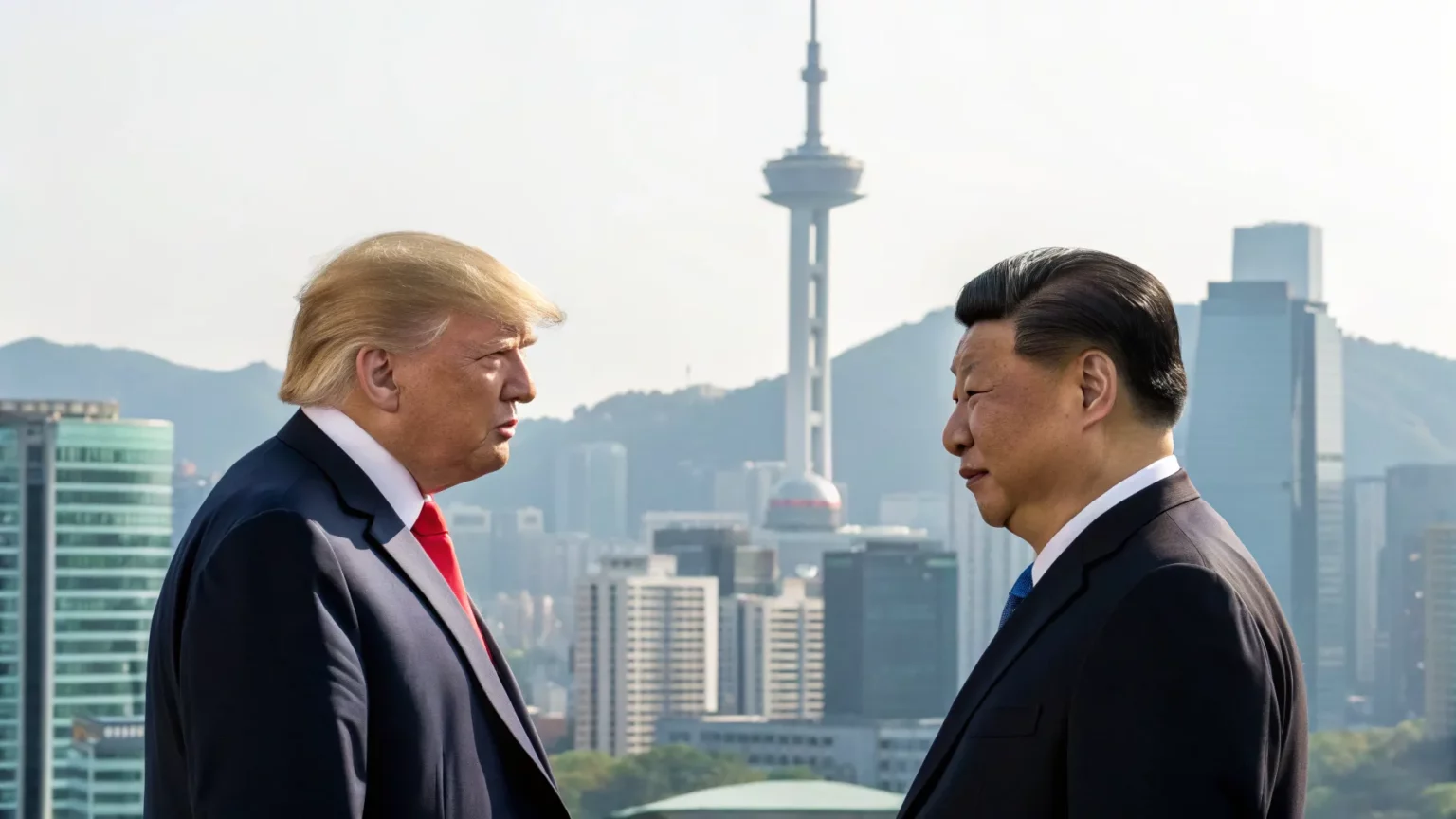
The leaders of the United States and China are set to meet in South Korea on Thursday, seeking to halt a trade fight that has shaken the global economy. US President Donald Trump and Chinese leader Xi Jinping will try to find common ground after years of tariffs, technology disputes, and a slide in trust between the two powers. The meeting’s location adds weight, placing the talks in a key manufacturing hub and US ally that sits at the center of supply chains.
US President Donald Trump and Chinese leader Xi Jinping are poised to hold a high-stakes summit in South Korea on Thursday, as the world’s two largest economies struggle to resolve a protracted trade conflict that has upended global economy.
The session follows a series of stalled efforts to calm tensions since the 2018 tariff exchanges. It offers a chance to reset terms on trade, technology, and market access.
Why the Meeting Matters
Washington and Beijing have fought for advantage in trade and technology since 2018. The United States raised duties on hundreds of billions of dollars of Chinese imports. China responded with tariffs of its own on American goods. The hit to business confidence was swift, while costs for companies and consumers rose.
The International Monetary Fund estimated in 2019 that tariff battles could reduce global GDP by about 0.8 percent in 2020. Many firms shifted sourcing to Vietnam, Mexico, and other markets to sidestep higher costs. Yet the core issues never went away.
Trade War’s Toll and the Phase One Deal
In early 2020, both sides signed a Phase One agreement. China pledged to increase purchases of US goods, strengthen intellectual property rules, and allow more market access. Tariffs, however, largely stayed in place.
Independent reviews later found that purchase targets fell short as the pandemic struck and demand patterns changed. The tariffs outlasted the deal’s benefits, locking in higher costs across sectors from machinery to consumer electronics.
Competing Goals and Possible Bargains
Each side enters the summit with a clear list of demands and red lines. The United States seeks stronger protection for data and intellectual property, fewer market barriers, and curbs on subsidies that tilt prices. China wants tariff relief and fewer limits on access to advanced technology.
- Tariff reductions tied to verifiable steps on market access
- Rules for data security and technology transfers
- Guardrails on export controls and investment screening
- Clear dispute channels to prevent sudden escalation
Any agreement may come in phases. Limited tariff relief could trade for enforceable steps on intellectual property and services access. Broader issues, such as advanced chips and cloud services, may take longer.



Technology Controls and Supply Chains
Tech has become the sharpest fault line. US export controls on advanced semiconductors and manufacturing tools seek to limit military uses. Beijing has pushed to expand domestic chip capacity and reduce reliance on foreign suppliers.
Companies caught in the middle have diversified suppliers. South Korean chipmakers, Taiwanese foundries, and US equipment firms face shifting demand and compliance costs. A clear framework would help firms plan investments and reduce surprise shocks.
Why South Korea Is the Stage
South Korea is a strategic choice. It is a US ally with deep trade ties to China. Its firms are central to memory chips, batteries, displays, and shipbuilding. A deal that steadies tariff policy and export rules would ripple through these sectors.
Seoul also benefits from calmer shipping lanes and predictable demand. Business leaders there have urged stable trade rules and faster customs procedures to cut delays and costs.
What to Watch Next
Signals to watch include any commitment to a tariff standstill during talks, timelines for working groups, and language on technology and data. Markets will look for clarity on enforcement to avoid repeat disputes.
If both sides agree to practical steps, supply chains could see fewer disruptions within months. If talks stall, firms may deepen their shift to alternate sourcing and invest more in compliance, not expansion.
The planned summit brings a rare opening in a long period of strain. Even a modest pact could lift trade flows and ease pressure on prices. Durable progress will hinge on clear rules, steady enforcement, and a channel to resolve new disputes before they spread.