




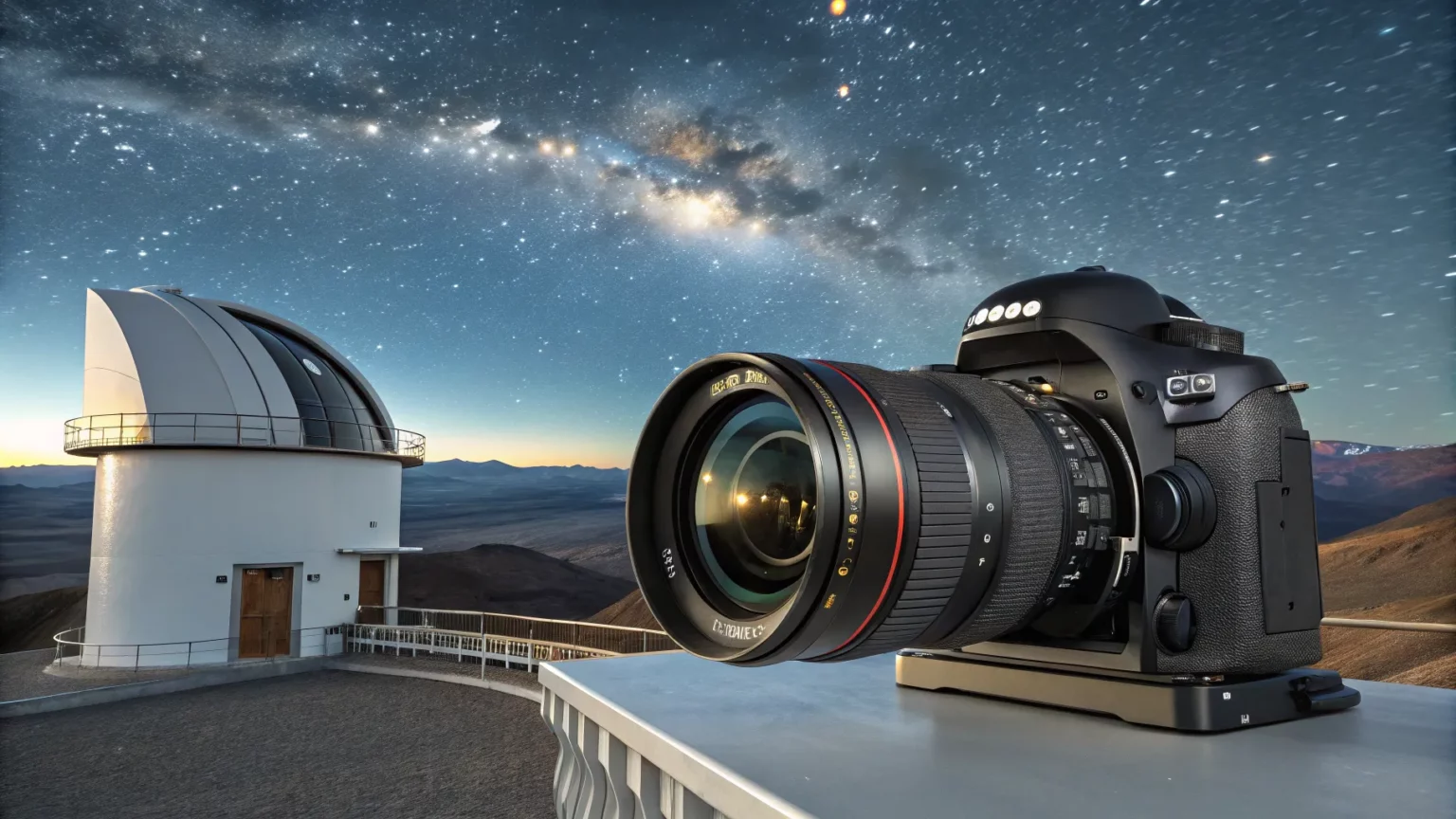
A new observatory outfitted with the world’s largest digital camera is nearing operation, promising to map the night sky in unprecedented detail and speed. The project, based in northern Chile and funded by U.S. science agencies, is expected to open a fresh window on dark matter, dark energy, and fast-changing cosmic events.
“Equipped with the world’s largest digital camera, this new telescope is poised to help solve some of the universe’s biggest mysteries.”
The effort centers on a 3.2-gigapixel camera and an 8.4-meter-class telescope designed to scan the entire visible sky every few nights. Scientists say the observatory will create an enormous archive of images over a planned decade-long survey, delivering nightly alerts on new or changing objects.
What Is Being Built, and Where
The facility sits atop Cerro Pachón in Chile, where dry air and clear nights offer prime viewing. The observatory’s wide-field design allows it to capture huge areas of the sky in a single shot. The digital camera, assembled at SLAC National Accelerator Laboratory and built with Department of Energy support, is the size of a small car and houses a focal plane more than half a meter across.
The 3.2-gigapixel sensor array will resolve fine details over a broad field. Engineers designed the optics to minimize distortion, so images remain sharp from center to edge. The National Science Foundation, working with international partners, supports the telescope and site infrastructure.
How It Changes Astronomy
The observatory’s survey, often referred to as the Legacy Survey of Space and Time, will produce a rolling movie of the sky. By revisiting the same regions every few nights, it can catch objects that flare, fade, or move.
- Detect near-Earth asteroids and track potential hazards.
- Observe supernovae to probe dark energy’s role in cosmic expansion.
- Map billions of galaxies to study dark matter through weak lensing.
- Build a census of stars in the Milky Way and its outskirts.
Astronomers expect the observatory to issue up to 10 million alerts per night for newly detected changes. Each alert can trigger rapid follow-up by other telescopes. The goal is to spot rare, short-lived events that might be missed by slower surveys.
The Data Tide and Who Can Use It
Operating most nights, the system could generate 15 to 20 terabytes of data per night. Over ten years, this will add up to tens of petabytes. Teams have built pipelines to process raw images, remove noise, and publish alerts within about a minute.
Researchers plan to release calibrated images and catalogs to the scientific community on a regular schedule. Many groups are preparing machine learning tools to sift through the torrent of objects and changes, flagging targets for detailed study.



Public engagement is also expected. Citizen scientists may help classify unusual sources through online platforms, supporting discoveries at scale.
Why It Matters Now
For decades, astronomers relied on narrow, deep images or wide, shallow snapshots. This project blends both speed and depth. It will track how the sky evolves, rather than offering a single view. That shift could sharpen estimates of the universe’s contents and test ideas about gravity on large scales.
It also arrives as observatories across the globe coordinate more closely. When a transient event appears, radio, optical, X-ray, and gravitational-wave facilities can respond together. Fast alerts from this camera improve the odds of catching events from their first moments.
Challenges and Next Steps
Managing data volumes and ensuring reliable alerts remains a central challenge. Engineers must maintain stable cooling for the camera’s sensors and keep optics clean in a harsh mountaintop setting. Software pipelines will be tuned during commissioning to remove false positives without missing real events.
Early test images will guide the final calibration of the instrument. Once routine operations begin, the survey will start building a nightly record that grows more valuable with each pass.
Taken together, the observatory’s speed, sensitivity, and field of view mark a turning point in wide-sky monitoring. If it performs as planned, researchers could refine measurements of dark energy, track asteroid risks with greater confidence, and discover phenomena never seen before. The next few years will show how much this giant digital eye can reveal—and how quickly the global astronomy community can act on what it finds.