




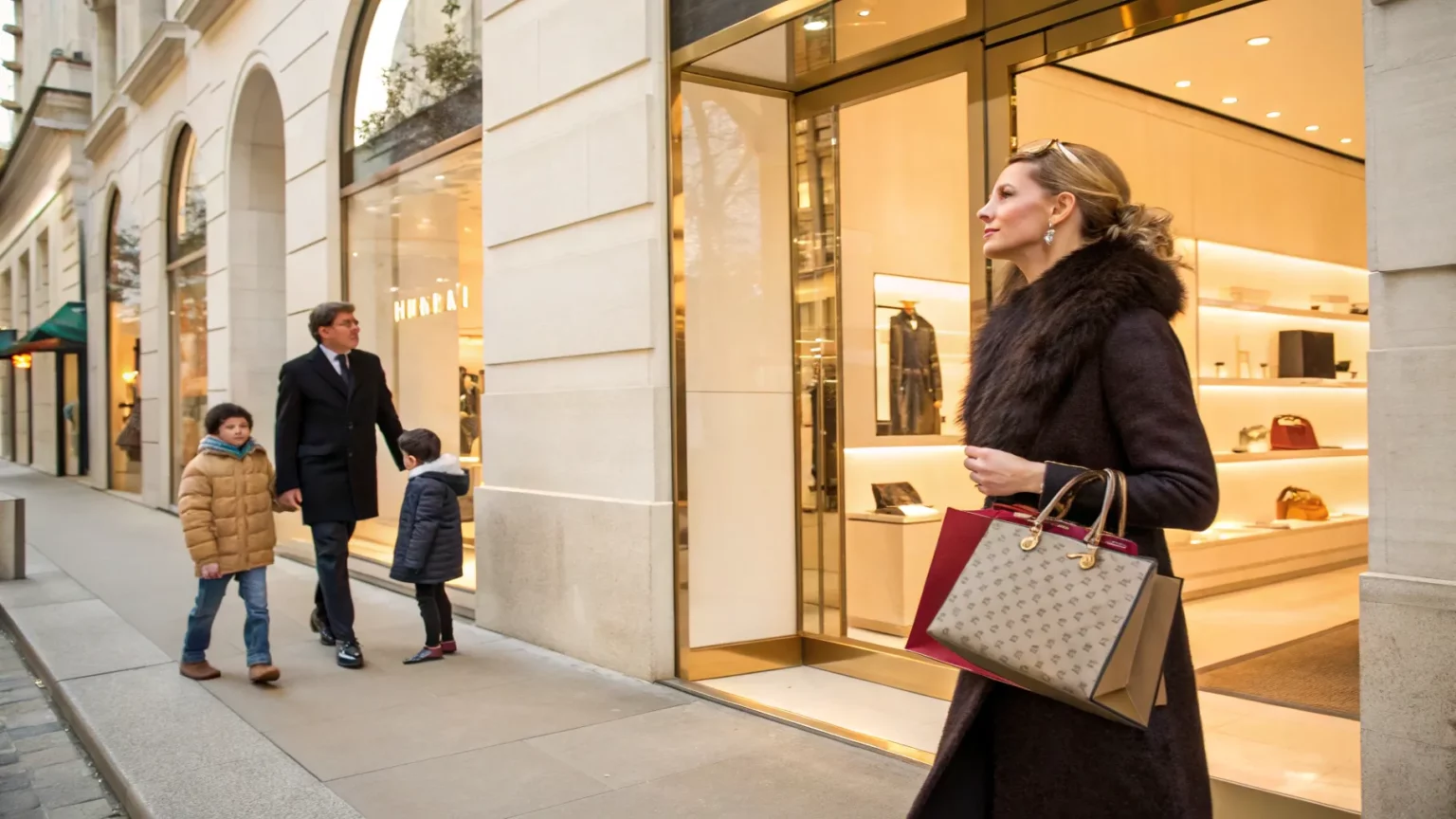
A widening split in consumer spending is reshaping the retail economy, as high-income households keep spending while many lower- and middle-income families cut back. The pattern has become more visible this year in stores, services, and travel, raising questions about how long the divide can last and what it means for growth and prices.
“It means wealthy consumers do well and spend freely while lower- and middle-income people struggle and scrimp.”
The comment reflects a growing view among retailers and analysts. Luxury sales remain steady, while discount chains report more traffic and smaller baskets. The timing aligns with sticky prices in essentials, higher borrowing costs, and depleted savings for many households. The split is most visible in discretionary categories such as dining out, travel upgrades, and premium goods.
A Two-Speed Consumer Economy
Economists describe a “two-speed” pattern. Higher earners benefit from job stability, stock gains, and home equity. They continue to book trips, dine out, and spend on services. Lower- and middle-income households face tighter budgets. They are trading down to store brands, delaying repairs, and looking for promotions.
Retail executives have pointed to this gap in recent earnings calls. Luxury brands report resilient demand for high-end accessories and experiences. Discount retailers say customers are visiting more often for groceries and basics but pulling back on non-essentials. The split shows up in categories like apparel, electronics, and home goods, where promotions are rising.
Labor markets remain strong in headline terms, but wage gains have cooled relative to earlier spikes in inflation. That leaves many households feeling the squeeze. Rents, car insurance, and food prices are key pressure points for family budgets.
How Retailers Are Responding
Companies are adjusting strategy to match the shift. Grocery chains are expanding private-label ranges. Big-box stores highlight value endcaps and “everyday low price” claims. Luxury brands focus on experiences, loyalty programs, and limited releases to keep demand firm among affluent shoppers.
Some chains are redesigning store layouts to put essentials up front and seasonal goods near value displays. Others are boosting small-package offerings to hit price points under $5 or $10. Online, retailers push subscriptions, coupons, and flexible payments to reduce friction for cost-conscious buyers.
Service providers see a similar split. Premium gym memberships, boutique fitness, and high-end beauty services hold up. Budget gyms and entry-level services compete harder on price and promotions to keep traffic steady.



Inflation, Rates, and Savings
The divide is tied to three forces: inflation, interest rates, and savings levels. Prices for many essentials remain above pre-pandemic trends. Higher rates make credit card balances and auto loans more expensive. Pandemic-era savings are uneven, with wealthier households still holding buffers while many others have less cushion.
Household net worth has risen for many asset owners, supported by equities and home values. That supports ongoing spending at the top. Meanwhile, credit card delinquencies have ticked up among younger and lower-income borrowers, signaling stress in day-to-day finances.
Some analysts argue that easing inflation and steady jobs could narrow the gap. Others warn that rent burden, student loan payments, and high interest costs will keep pressure on the middle.
What To Watch Next
Several signposts will show whether the split widens or narrows in the months ahead.
- Trends in grocery and gas prices, which shape weekly budgets.
- Credit card balances and delinquencies, a gauge of financial strain.
- Luxury versus discount sales growth, a real-time measure of the split.
- Wage growth compared with inflation, especially for service workers.
- Travel and dining reservations, which reveal discretionary demand.
Retailers will continue to test price points, loyalty perks, and inventory mixes. If price-sensitive shoppers keep trading down, expect more private label growth and sharper promotions. If rates fall, financing costs could ease, offering relief to households carrying balances.
The core question is whether broad consumer strength can hold while many families cut back. For now, high-income spending is cushioning growth in services and luxury goods. But widespread budget strain can limit overall momentum. A turn in inflation or interest rates could shift the picture. Until then, the “two-speed” economy remains the key theme to watch.