


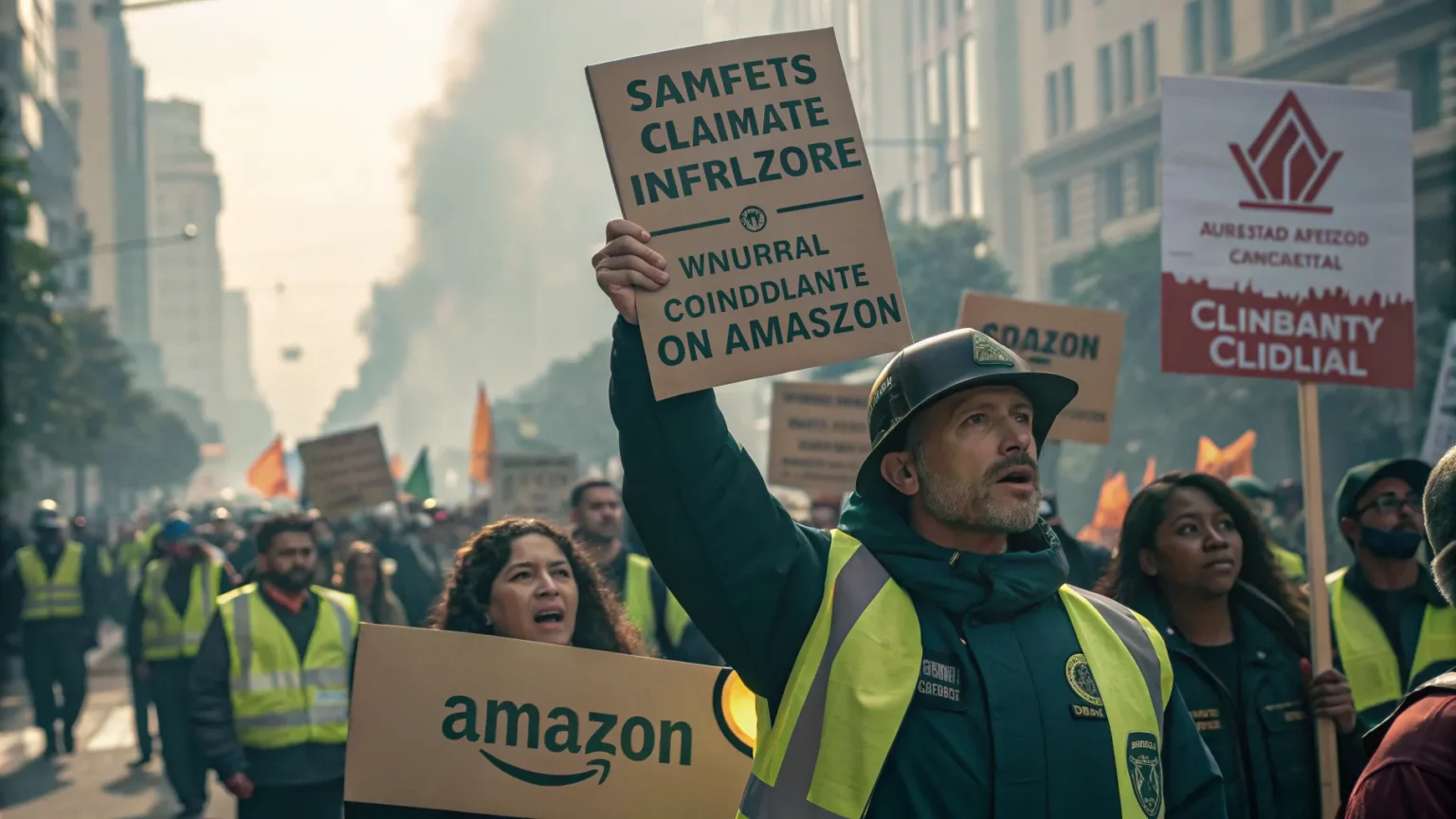
On Black Friday, worker groups across multiple countries staged protests targeting Amazon, calling out unsafe conditions, climate impact, the growth of workplace AI, and ties to immigration enforcement. The actions came during one of retail’s busiest shopping days, when order volumes spike and pressure on warehouse staff rises.
Organizers described a coordinated push to draw attention to safety at fulfillment centers, the environmental costs of rapid delivery, and the use of algorithms that track productivity. They also criticized the company’s relationships with government agencies involved in immigration enforcement. Demonstrations were reported at warehouses and city centers in several regions, backed by labor unions and climate advocates.
Concerns Driving the Protests
“Black Friday sees Amazon workers worldwide protesting unsafe conditions, climate impact, AI growth, and ICE ties.”
Worker groups say injury risks increase during peak periods when speed targets rise. They argue that tight quotas force staff to skip breaks and work through pain. Advocates also point to repetitive strain injuries and stress linked to constant monitoring.
Climate groups argue that same-day and next-day delivery increase emissions from transport and packaging. They want the company to slow the pace of shipping, shift more deliveries to low-emission options, and cut waste in packaging.
Organizers say AI tools in warehouses can push unrealistic benchmarks and trigger discipline. They warn that automation threatens job security and may expand surveillance of workers. Protesters further raised concerns about Amazon’s business with government clients tied to immigration enforcement.
What Protesters Are Demanding
The actions vary by location, but organizers commonly call for:
- Lower injury rates through safer staffing levels and pace-of-work standards.
- Transparency and worker input on AI systems that track performance.
- Stronger climate targets covering delivery fleets, facilities, and packaging.
- Ending business relationships with immigration enforcement agencies.
Company Response and Track Record
Amazon has previously said it invests in safety technology, training, and ergonomics, and that injury rates are improving at many sites. It also points to pay and benefits above local minimums in many markets. The company says it uses data tools to improve safety and efficiency while complying with local laws.
On climate, Amazon cites its commitment to reach net-zero carbon by 2040, expand electric delivery fleets, and power operations with more renewable energy. Critics argue these steps do not fully cover the surge in deliveries driven by peak sales events and that packaging waste remains high.

Regarding government contracts, the company has stated that cloud services are broadly used across public and private sectors and that it follows applicable regulations. Advocates want clearer limits on how government clients use those tools.
Why Black Friday Matters
Black Friday places intense strain on retail logistics. Warehouses run extended shifts and carriers add capacity. Worker groups say the day highlights the real cost of fast shipping borne by warehouse employees and delivery drivers.
Past years have seen coordinated actions in Europe and North America during major sales events. This year’s protests align worker safety with climate and technology concerns, reflecting how these issues are now linked in retail supply chains.
What Comes Next
Labor organizers plan to track injury data, press for limits on algorithmic management, and campaign for climate commitments that cover last-mile delivery. Some groups are pushing for audits by independent safety experts and more transparency on AI use.
Policy makers in several countries are weighing rules on warehouse quotas and surveillance, while regulators examine competition and labor practices in e-commerce. Investors, meanwhile, are asking companies to disclose more about safety performance and climate risk.
The protests put Amazon under fresh scrutiny at a critical moment for holiday spending. The company faces pressure to prove that rapid delivery can be safe for workers and cleaner for the planet, while balancing the role of AI in its operations. The next test will be peak season performance and whether negotiations produce concrete changes, such as injury reduction targets, stronger worker input on AI, and clearer limits on public sector contracts. Observers will watch for measurable progress in safety, emissions, and transparency as the season unfolds.