



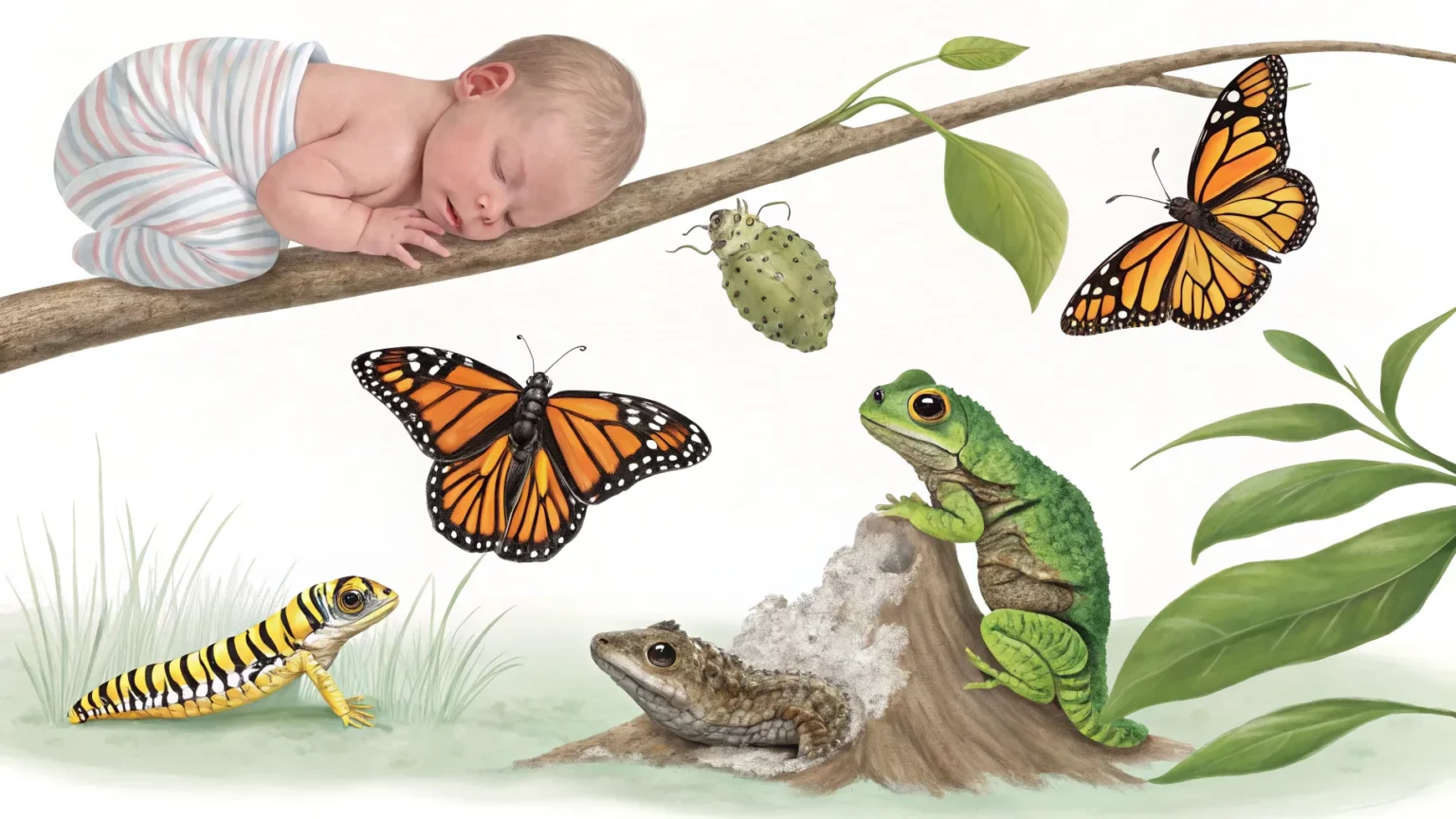
As his family awaits the birth of a third child, writer and historian Oren Harman is turning that personal moment into a wide inquiry on how animals change shape across a lifetime. The project, described this week, links a private arrival with a sweeping tour of metamorphosis, growth, and aging. It sets out to ask what changing bodies tell us about identity, survival, and the science of development.
The effort arrives at a time of fresh public interest in how organisms adapt from one life stage to another. It also taps a long scientific tradition that runs from Aristotle to modern genetics. By tying family to fieldwork and lab discoveries, the work aims to make biology’s hardest questions feel close to home.
A Personal Spark for a Big Biological Question
“The imminent birth of Oren Harman’s third child leads him into a sweeping exploration of the changes in form that animals experience throughout their lives.”
That premise anchors a narrative that moves from the nursery to the natural world. Harman, known for blending biography with science history, is using this moment to look at how bodies take on new roles and risks as they grow. The theme has a wide scope: insect metamorphosis, amphibian transitions, molting in crustaceans, and the subtler arcs of mammalian development, including humans.
The guiding idea is simple yet deep: form is not fixed. A butterfly was a caterpillar. A tadpole grows lungs and legs. Even in humans, puberty reshapes voices, bones, and social lives. The question is not only how these changes happen, but what they mean.
Background: From Metamorphosis to Evo-Devo
Biologists have long studied metamorphosis as a survival strategy. A caterpillar eats leaves; a butterfly drinks nectar and spreads pollen. By splitting diet and habitat between stages, a species reduces internal competition and expands its reach. Frogs move from water-breathing larvae to air-breathing adults, bridging two worlds and escaping some predators.
Modern research has mapped parts of the control system behind these changes. Hormones flip developmental switches. Gene networks guide cells to die, divide, or build new tissues. In holometabolous insects, entire body plans restructure inside a pupa. In vertebrates, thyroid hormones help drive amphibian shifts from gills to lungs. These insights connect to evolutionary developmental biology, which asks how small changes in timing or gene control can yield large differences in adult form.
What Changing Bodies Say About Identity
Harman’s framing invites more than lab notes. If a body changes, what stays the same? In animals, identity is often defined by function and fit: Can it feed, mate, and defend itself? In humans, identity is layered with memory, story, and law. Watching a newborn arrive while a butterfly emerges from a chrysalis focuses the mind on that tension.
The work suggests that bodies carry a record of prior stages. Scars of growth remain, both physical and social. Biologists point to vestiges—structures that hint at earlier forms—as guides to what came before. Parents see a different version: each day a new face, yet unmistakably the same child.


Why This Matters Now
Climate change and shifting habitats are stressing life cycles. Altered temperatures can disrupt the cues that trigger metamorphosis in insects and amphibians. That puts pollination, pest control, and food webs at risk. Understanding the timing and triggers of change has practical value for conservation and agriculture.
There is also a cultural dimension. Stories of shape-shifting run through myths and modern media. Linking those narratives with real biology can help explain how nature works without stripping away wonder. Harman’s approach—mixing personal stakes with science—may widen the audience for these ideas.
Multiple Views From Science and Story
- Developmental biologists focus on hormones, genes, and cellular programs that build and rebuild tissues.
- Ecologists track how life stages fit into habitats, food chains, and seasonal cycles.
- Historians of science study how earlier thinkers framed growth, from vital forces to molecular control.
- Parents and caregivers read change through care, routine, and the pace of family life.
Together, these views sketch a full picture: life is a series of stages linked by mechanisms and meaning. The new work appears set to braid those strands.
What to Watch
How deeply the project engages current research will shape its impact. Readers will be looking for clear cases, careful sourcing, and voices from the field. Detailed portraits of organisms—monarchs, axolotls, cicadas, and salmon—could ground the story and show how fragile timing can be.
There is room, too, for the quieter changes that define humans. Puberty, pregnancy, and aging are not as dramatic as a chrysalis, yet they carry their own metamorphoses. Setting those arcs side by side may be the work’s strongest move.
For now, the promise is clear: a personal event as a doorway into life’s most visible magic—how bodies change and still remain themselves. If it delivers on that frame, it could bring complex science into everyday rooms and spark fresh curiosity about the living world.