




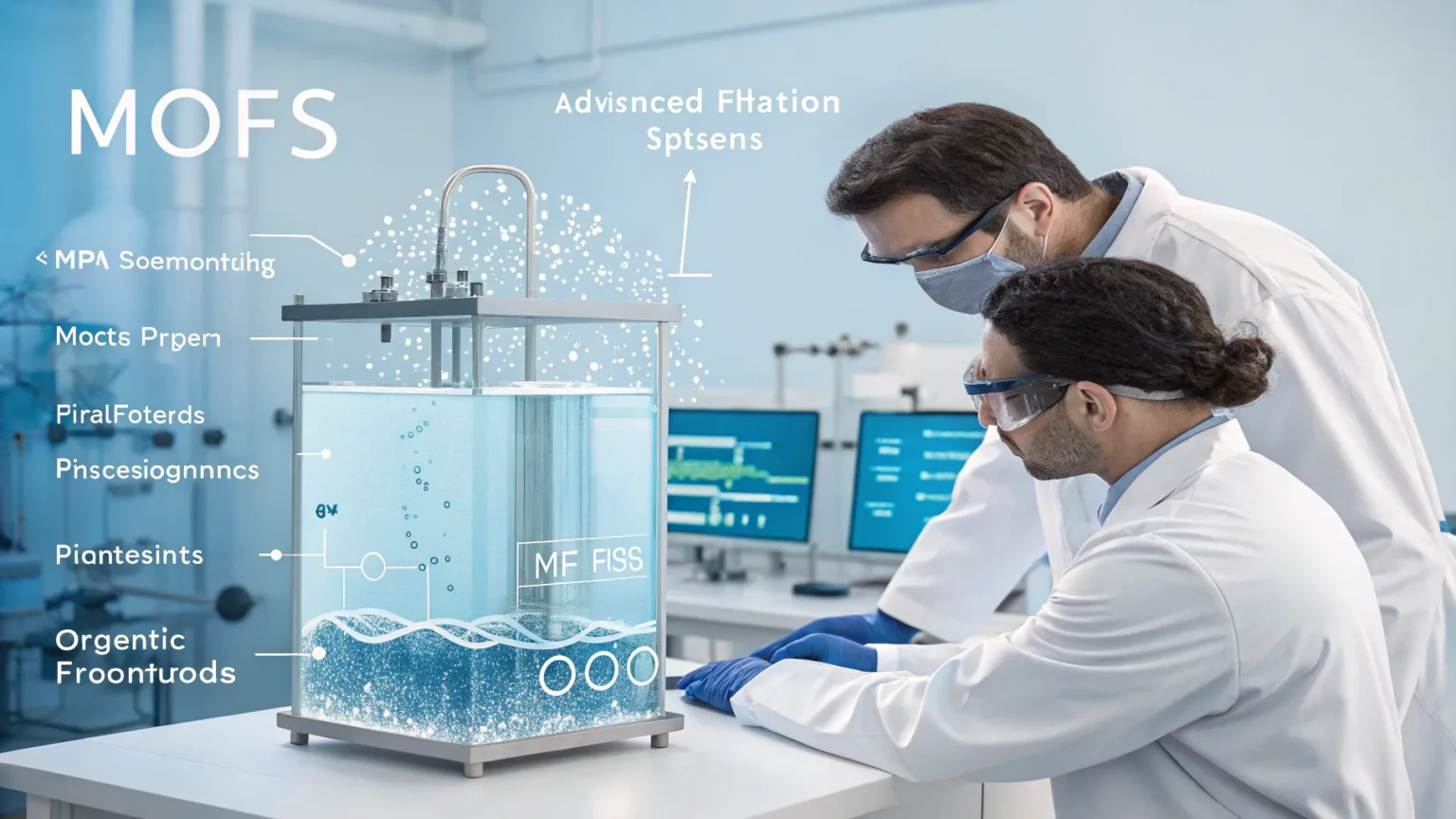
Scientists are reporting a new way to pull “forever chemicals” out of water at high speed while keeping costs down. The approach uses metal-organic frameworks, or MOFs, materials that can be cleaned and used again. The findings arrive as U.S. regulators tighten limits on PFAS in drinking water and utilities search for tools that work in the field.
PFAS, short for per- and polyfluoroalkyl substances, are linked to cancer, thyroid disease, and immune harm. They persist in the environment and resist normal treatment. In April 2024, the Environmental Protection Agency set the first national drinking water limits for several PFAS, including 4 parts per trillion for PFOA and PFOS. Many water systems must now act fast to meet the rules.
Background: Why PFAS Are Hard to Remove
PFAS have strong carbon-fluorine bonds that do not break down easily. They have been used for decades in nonstick cookware, firefighting foam, textiles, and packaging. Thousands of PFAS exist, and they vary in size and behavior. That makes treatment complex.
Many utilities rely on granular activated carbon, ion exchange resins, or reverse osmosis. These can be effective, but they can be slow, costly, and hard to regenerate. Spent media create waste streams that still need safe disposal. Incineration has faced legal and technical scrutiny.
A New Tool: How MOFs Work
MOFs are crystalline materials built from metal nodes and organic linkers. They have very high surface area and pores that can be tuned to target specific molecules. In this case, MOFs can be designed to attract PFAS and hold them in place.
Materials known as metal-organic frameworks, or MOFs, trap some PFAS fast — and can be reused again and again.
Researchers say the speed comes from pore sizes that match PFAS tails and from charged sites that pull in the molecule heads. Once loaded, the MOFs can be rinsed, releasing a smaller waste stream for final destruction. Early tests suggest the materials keep working after many cycles, which could lower costs.
How It Compares to Current Methods
Activated carbon often needs long contact times and frequent changeouts. Ion exchange can be selective, but resins can foul and require brine for regeneration. Reverse osmosis removes a wide range of contaminants, yet it generates a concentrated waste that is expensive to handle.
- Speed: MOFs appear to capture some PFAS faster than carbon in lab tests.
- Selectivity: Tailored pores may target short-chain PFAS that are tougher to catch.
- Reuse: Regeneration could reduce media costs and solid waste.
Experts caution that field water is messy. Natural organic matter, salts, and competing ions can clog pores or block binding sites. Long-term stability and performance in real systems will decide whether MOFs move from pilot to plant.



What Utilities and Industry Are Watching
Water systems face tight timelines under the new drinking water limits. Small towns, in particular, worry about capital and operating costs. If MOFs can cut media replacements and keep removal rates high, they could help meet standards without major rate hikes.
Manufacturers that must treat wastewater are also testing new sorbents. Short-chain PFAS used as replacements can slip past older systems. MOFs tuned to these smaller molecules could fill a gap. But scale, supply chains, and quality control will matter if demand grows.
Open Questions and Next Steps
Key issues include durability over many cycles, performance with mixed PFAS, and safe regeneration. Researchers are exploring ways to recover PFAS in a small volume and send that stream to high-temperature destruction or electrochemical treatment. Life-cycle assessments will be needed to confirm real-world gains in cost and emissions.
Policy is moving at the same time. Several states have set PFAS rules that go beyond federal limits. Lawsuits and cleanup orders continue near airports, military sites, and chemical plants. The market for treatment is growing, but buyers want proof at scale.
The Bottom Line
MOFs add a promising option to the PFAS toolbox: fast capture, potential selectivity, and repeated use. Early results are strong, yet field performance will make or break adoption. Watch for pilot projects at municipal plants and industrial sites, side-by-side tests against carbon and resins, and clear plans for safe PFAS destruction. With tighter standards now in place, solutions that work quickly and can be reused will draw serious attention.