




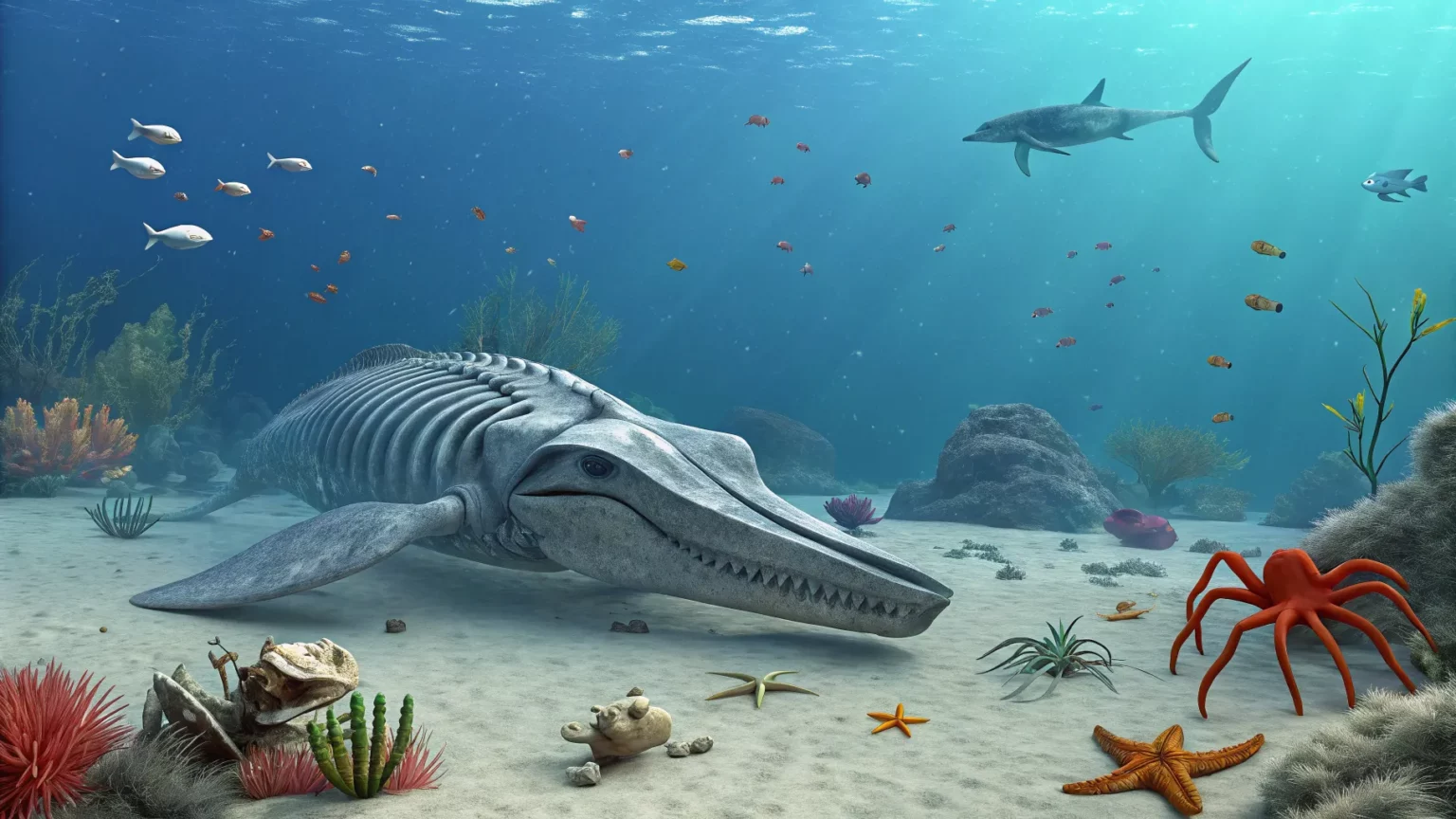
In a surprising deep-sea result, researchers placed whale bones on the ocean floor and waited a decade, only to find no zombie worms at all.
The work took place in waters with low oxygen and was meant to track how whale remains fuel life in the deep. The absence of the worms, which normally arrive quickly and strip bones clean, points to a larger problem. Scientists warn that shrinking oxygen levels tied to climate change could disrupt entire whale-fall communities.
Background: Why Whale Falls Matter
When a whale dies and sinks, its body becomes a temporary oasis. The remains feed scavengers, microbes, and specialized species for years. These sites can host hundreds of species over time, offering food and shelter in the nutrient-poor deep.
One key player is the “zombie worm,” known to scientists as Osedax. These worms bore into bones and extract nutrients with root-like tissues. By breaking down skeletons, they help recycle carbon and support a chain of animals that follow.
Since their discovery in the early 2000s, zombie worms have appeared across oceans, often arriving within months. Their predictable role makes their absence striking.
The Experiment and Its Unsettling Result
The team deployed whale bones in deep water and checked them over ten years. They expected to see Osedax colonies spread across the remains. That did not happen.
“When researchers lowered whale bones into the deep ocean, they expected zombie worms to quickly move in. Instead, after 10 years, none appeared — an unsettling result tied to low-oxygen waters in the region.”
Scientists also stressed the ecological role of these worms.
“These worms play a key role in breaking down whale remains and supporting deep-sea life. Their absence hints that climate-driven oxygen loss could unravel entire whale-fall ecosystems.”
The finding raises basic questions. Were larvae unable to survive in hypoxic water? Did currents fail to bring them to the site? Or has oxygen loss already pushed local populations away?



Oxygen Loss and Climate Pressures
Oceans are losing oxygen as waters warm and stratify. Warmer surface layers mix less with deep water. That slows oxygen delivery to depth and expands low-oxygen zones.
Deep-sea animals can be sensitive to small shifts in oxygen. If an area slips below a threshold, key species may fail to reproduce or settle. That can break links in food webs.
The study site’s low oxygen appears central to the outcome. It may have shut the door on worms that normally arrive and thrive on bones.
What the Absence Could Mean
Without Osedax, whale skeletons may persist longer. That can alter which species gain access to energy and when. It could slow nutrient recycling on the seafloor.
Researchers outlined several possible ripple effects:
- Delayed breakdown of bones, changing food timing for scavengers.
- Fewer habitats for animals that live within bone tunnels.
- Shifts in carbon flow from large carcasses to microbes and fish.
Some experts caution that one site may not reflect global patterns. Local currents, larval supply, or chance events might also explain the result. Still, a ten-year absence in a known worm habitat is hard to dismiss.
Comparisons and What Comes Next
Elsewhere, whale falls have attracted Osedax within months to a few years. The contrast with this decade-long test stands out. It suggests conditions at the site have crossed a key limit.
Future work could deploy duplicate bone sets at different oxygen levels. Tracking larvae with genetic tools could reveal whether worms are nearby but unable to settle. Time-lapse cameras may also show which scavengers fill the gap.
If oxygen loss keeps spreading, more whale-fall sites may miss their usual pioneers. That would reshape how carbon from large marine mammals is processed at depth.
The study reveals a quiet warning from the seafloor. A simple absence — no worms on bones after ten years — signals a system under stress. Researchers will look to confirm the trend across regions and depths. The next step is clear: find out where the worms can still survive, and how falling oxygen will rewrite life around the largest meals in the deep.