




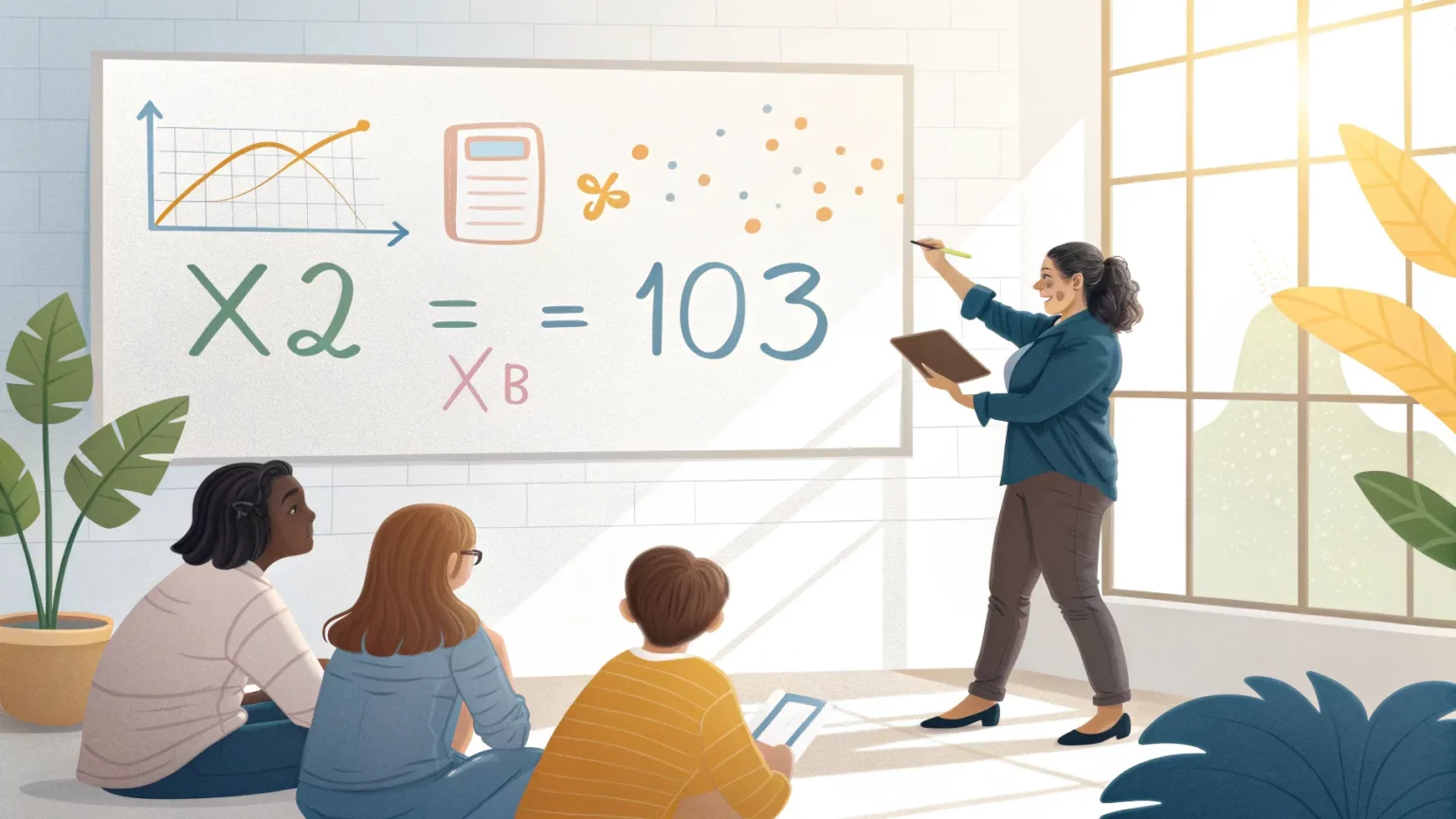
Superscripts, the small numbers perched above letters and figures, are having a moment. Teachers, designers, and students are taking a fresh look at how they work and why they matter, arguing that the core ideas are easier to learn than their fussy reputation suggests.
The renewed attention comes as schools refine math curricula and publishing platforms streamline formatting tools. From exponents in algebra to footnotes in reports, the same tiny marks carry big meaning in classrooms, labs, and newsrooms.
What Superscripts Do
Superscripts appear in many places. In math, they signal exponents, like x² or 10³. In science, they show isotopes and units. In writing, they mark footnotes and ordinal numbers such as 1st or 2nd.
“These powerful little superscripts may be simpler than you thought.”
That view reflects a shift toward clearer instruction and better tools. Educators say the concept of an exponent as repeated multiplication is straightforward when taught step by step. Editors add that modern software makes formatting superscripts fast and consistent across documents and devices.
Why They Confuse Learners
For many students, the hurdle is not the idea but the rules that stack up around it. Terms like “power,” “base,” and “index” can feel abstract. Mixing exponents with negative numbers or fractions adds another layer of worry. In typography, inconsistent superscript sizes or spacing can hurt readability, especially on small screens.
Specialists in accessibility also point to screen readers. Poorly marked superscripts can produce awkward audio, leaving blind or low-vision users with a garbled message. Clear notation and proper markup help everyone follow along.
Rules Made Easy
Math teachers say a few core rules unlock most problems. Once learners see exponents as a shortcut, the rest falls into place with practice.
- Same base, multiply: add exponents (x² × x³ = x⁵).
- Same base, divide: subtract exponents (x⁵ ÷ x² = x³).
- Power to a power: multiply exponents ((x²)³ = x⁶).
- Anything to the zero power equals 1 (x⁰ = 1, x ≠ 0).
In writing, the advice is just as simple: use superscripts for footnote markers and ordinals sparingly. Many style guides suggest keeping ordinals in plain text for clarity, especially in formal documents. When superscripts appear, they should be sized and spaced to match the typeface so they do not distract from the main text.



Digital Tools and Access
Online editors, coding libraries, and word processors now include one-click superscript options. That cuts format errors and reduces manual tweaks. In math apps, caret notation (x^2) converts to superscripts, helping students focus on ideas rather than menu commands.
Accessibility advocates urge careful use of semantic markup. MathML and accessible labels allow screen readers to speak exponents properly. Educators recommend pairing visual examples with spoken explanations, such as “x squared means x times x.” Small changes improve comprehension for a wide range of learners.
Beyond the Classroom
Superscripts matter in fields that prize precision. Chemists read isotopes like ¹⁴C at a glance. Economists cite footnotes in dense tables. Journalists link data to sources without crowding copy. When used well, these details support clarity, trust, and speed.
Designers still warn against overuse. Too many footnotes can clutter a page. On mobile, tiny superscripts may hinder reading. The fix, they say, is restraint and testing. If a number is vital, keep it full size. If it is a reference, make sure the link or note is clear.
The message is simple: teach the core rules, standardize the format, and keep readers in mind. With better instruction and tools, superscripts can do their job without confusion. Expect schools to lean into plain-language lessons, publishers to tighten style rules, and software to improve accessibility. Watch for more consistent notation in classrooms and reports in the months ahead.