




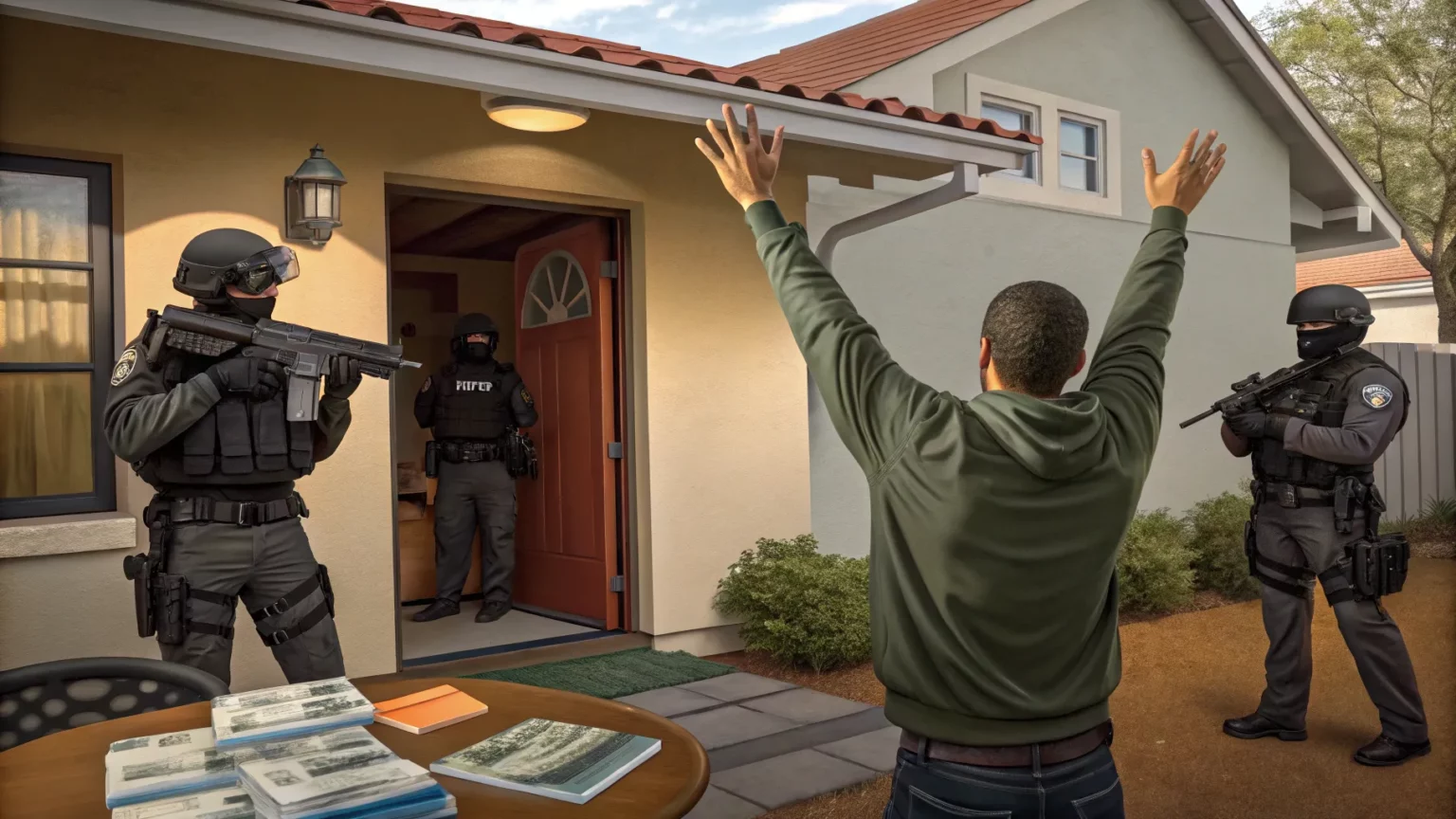
A wanted man surrendered without incident after officers located him at a private residence, where authorities say they seized a handgun and several high-capacity magazines. The peaceful end to the search eased fears of a standoff and put the focus on how law enforcement manages risk when firearms are present.
Officials did not release the man’s identity or the original charges at the time of the arrest. The recovery of a handgun and large-capacity magazines, however, raised immediate legal and safety questions. Laws on such magazines vary by state, and investigators are now reviewing how the items were obtained and whether additional charges are warranted.
“The wanted man surrendered peacefully to law enforcement, who recovered a handgun and high-capacity magazines from the home where he had been hiding.”
Peaceful Surrender Ends Search
Officers moved to secure the home after developing leads on the suspect’s location. The decision to prioritize a negotiated surrender aligned with current de-escalation practices. Those practices aim to reduce the risk of injury to officers, suspects, and bystanders. Police often set containment, establish clear communication, and work with trained negotiators when the presence of a weapon is suspected.
Authorities said the man complied with commands and was taken into custody without force. No injuries were reported. The recovered items were logged as evidence and will be examined by forensic teams. That review typically includes serial number checks, trace requests, and ballistic testing when appropriate.
Recovered Magazines Draw Legal Scrutiny
High-capacity magazines are a recurring subject in gun policy debates. Some states limit magazine size, while others do not. Prosecutors often weigh the specific location, purchase method, and prior record to determine charges. A handgun with such magazines can change the risk profile of an encounter, which may influence charging decisions.
- Handgun seized at the residence.
- High-capacity magazines recovered on site.
- No shots fired and no injuries reported.
Legal experts note that possession rules can hinge on narrow definitions. These include whether a magazine exceeds a certain round count or was acquired after a ban date. The case will likely turn on those details.
Community Safety and Police Tactics
Residents often face anxiety during searches for wanted suspects, especially when firearms are involved. Police agencies have leaned on de-escalation training to limit harm. That training emphasizes time, distance, and communication. It also promotes the use of specialized teams when feasible. The peaceful resolution here reflects those methods.
Advocates for stricter gun laws argue that limiting magazine size can reduce the lethality of crimes. Gun rights supporters counter that such limits burden lawful owners and do not address root causes of violence. This case sits in the middle of that debate. It highlights the day-to-day challenges for officers who must interpret laws and protect the public.



What Investigators Will Review
After arrests that involve weapons, investigators follow several steps. They verify the suspect’s legal status and examine any prior convictions. They determine whether the firearm was reported stolen. They also assess whether the magazines meet or violate state limits.
Forensic checks can link a gun to other incidents. Test results may take time, and case files are often updated as lab reports return. Prosecutors then decide on charges based on the full record, including the surrender, the items found, and any witness statements.
Looking Ahead
The suspect’s court appearance will clarify the legal path. If magazine restrictions apply in the jurisdiction, additional counts could follow. If not, prosecutors may focus on the original warrant. Either way, the peaceful surrender reduces potential trauma and cost for both the community and law enforcement.
This arrest underlines two themes that will keep drawing attention. First, the growing use of de-escalation to resolve high-risk searches without force. Second, ongoing disputes over high-capacity magazines and their role in public safety. Observers will watch for charging decisions, any changes in policy, and whether this case informs future police training.
For now, the key facts are clear. A wanted suspect is in custody. A handgun and large-capacity magazines are off the street. The next steps will play out in court and in policy discussions that reach far beyond a single address.