




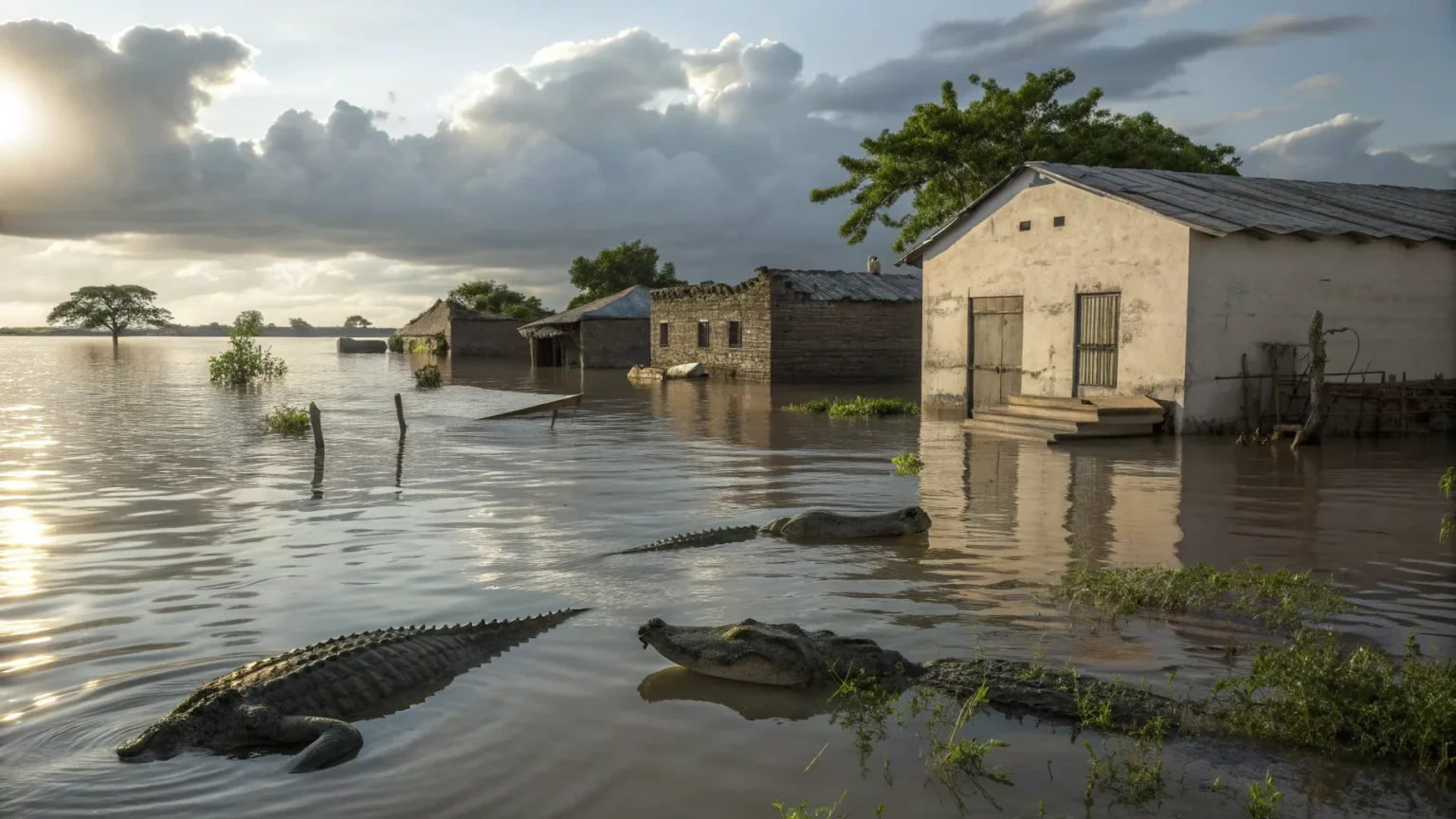
Deadly floods in southern Mozambique have pushed crocodiles into submerged towns, leaving at least three people dead and prompting urgent safety warnings in Xai-Xai and nearby communities. Local officials are urging residents to avoid floodwaters as emergency teams work to reach stranded families and protect critical infrastructure.
The crisis is centered in Gaza province, where the Limpopo River often swells during heavy rains. With streets and fields underwater, displaced wildlife is moving through villages and city edges. This has increased the risk of attacks as people seek food, water, and safe shelter.
“As floods ravage Mozambique, crocodiles are appearing in submerged towns and responsible for at least three deaths.”
Towns Under Water, New Dangers Emerge
Xai-Xai, the provincial capital of Gaza, is among the hardest hit areas. Authorities have warned residents to stay off flooded roads and to avoid wading through standing water. Damage assessments are still underway, but aid groups report disrupted transport, limited access to clinics, and concerns over clean water.
Families are moving to higher ground where possible. Schools and public buildings are serving as temporary shelters. Relief workers say conditions are changing by the hour as channels shift and new areas flood.
Why Crocodile Encounters Rise After Floods
Experts say crocodiles follow currents into new waterways when rivers overflow. Floods blur the line between river and street. That makes encounters more likely in places where people do not expect them.
Muddy water reduces visibility. Strong currents carry animals long distances. Livestock carcasses and household waste in flood zones can attract large predators.
In rural areas, residents depend on rivers for transport, fishing, and water collection. When floods spread, daily routines bring people closer to hidden risks.
Background: A Region Prone to Flooding
Mozambique sits on major river systems that drain from neighboring countries. Seasonal rains and cyclones can cause rapid rises in river levels. Gaza province, through which the Limpopo flows, has a long history of damaging floods.



Past disasters have shown how floods can trigger secondary crises. These include displacement, food shortages, crop losses, and outbreaks of waterborne disease. The latest events point to the same hazards, now complicated by dangerous wildlife moving into human settlements.
Emergency Response and Public Warnings
Local officials and responders are urging residents to use safe routes, avoid night travel, and keep children away from flood zones. Community leaders are organizing watch groups along riverbanks and around shelters.
- Avoid wading through floodwaters whenever possible.
- Use boats only with trained operators and safety gear.
- Do not fish or collect water in submerged areas.
- Move livestock to higher ground and fence off access to channels.
- Report wildlife sightings to local authorities.
Health teams are distributing water treatment supplies and hygiene kits. Officials are inspecting wells and latrines to reduce contamination. Veterinary services are monitoring livestock losses.
Economic and Social Strain
Flooded fields threaten harvests in a region that relies on maize, rice, and horticulture. Transport routes to markets are cut, straining small businesses and raising food prices. Families with limited savings face tough choices as they relocate and rebuild.
Schools converted to shelters may pause classes. Clinics and pharmacies report shortages of key medicines as deliveries stall. Aid groups warn that vulnerable groups—including children, pregnant women, and the elderly—are at higher risk.
What to Watch in the Days Ahead
Authorities are tracking river levels and assessing embankments and bridges. As waters recede, teams will inspect homes, wells, and cropland. The risk from crocodiles may persist while pools and channels remain.
Humanitarian agencies are preparing for food and shelter assistance if damage is extensive. Recovery plans will likely focus on safer housing sites, improved early warning, and river management.
The coming days will show whether rain upstream eases or adds pressure on the Limpopo basin. For residents of Xai-Xai and surrounding districts, the immediate goal is simple: reach safe ground, avoid flooded areas, and wait for waters to drop.
For now, officials stress caution. With floodwaters still high and visibility low, staying out of the water can save lives.