

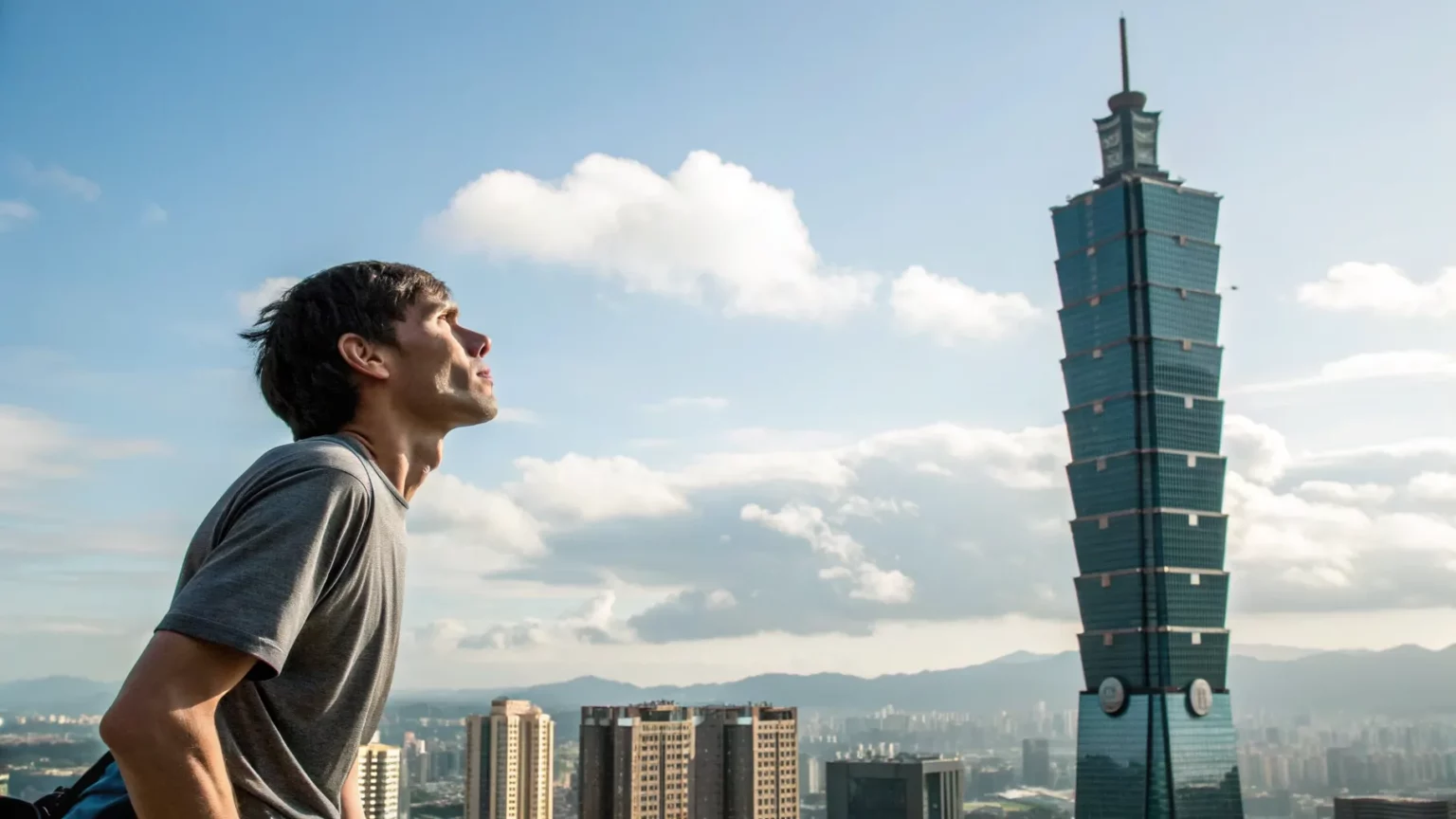
Alex Honnold is weighing a climb of Taipei 101 and says he first had to confirm whether the ascent was even possible. The acclaimed climber, known for high-risk ascents without ropes, described a careful approach ahead of a planned Netflix “Skyscraper Live” special. The remarks point to a methodical process that blends urban ambition with the safety and planning of traditional climbing.
Honnold indicated he turned to conventional techniques to assess the building. Taipei 101 stands 508 meters tall and has 101 floors, making any external route complex and exposed. The project would require technical planning, permissions, and a detailed study of surfaces and weather conditions in Taipei. It also hints at how elite climbers test feasibility long before stepping onto steel or glass.
Traditional Methods Before a Modern Spectacle
“Alex Honnold says he needed to know if scaling the Taipei 101 was even possible before he did Netflix’s ‘Skyscraper Live’ special, so he turned to a more traditional way of climbing to find out.”
That approach reflects Honnold’s broader philosophy. He is known for meticulous preparation, including route memorization and repeated practice. While his best-known climbs rely on no ropes, his planning does not. Using traditional methods to scout a skyscraper suggests controlled tests, safety backups, and support teams.
Urban ascents differ from mountain routes. Exterior panels, maintenance ladders, bolts, and ledges form a mosaic of holds and hazards. Engineers and managers often control access, and weather in a dense city can shift quickly. A trial using ropes, anchors, and belays can answer basic questions: Where are the holds? How slick is the surface? What is the wind like at 300 meters and higher?
Risk, Permission, and Public Safety
A televised event on a building of this height involves more than athletic skill. Public safety, legal clearances, and emergency plans are central. Coordinating with city officials and the building’s management is standard practice for high-profile ascents. The goal is to reduce risk for the climber and the public below.
Experts in fall protection point to wind shear, surface friction, and anchor integrity as the top concerns on glass-and-steel facades. Even small objects dropped from height can be dangerous. Planning often includes street closures, protective canopies, and precise weather windows.
How Climbers Vet a Route
Climbers test big projects in stages. For a structure like Taipei 101, that can include short, supervised sections and mock-ups built at ground level to simulate panels and seams. Honnold’s reference to “traditional” methods suggests emphasis on control and repeatability.
- Roped inspections to map holds and sequences.
- Load testing of potential anchors and points of protection.
- Weather modeling for wind and rain patterns by floor.
- Drills with support teams and medical staff.
These steps create a route plan and a set of go/no-go criteria. They also provide a shared language between the athlete, riggers, and safety officers.


What the Attempt Could Mean
A successful ascent would likely draw a global audience and renew debate over urban climbing. Supporters argue that televised climbs can highlight planning and discipline. Critics worry that publicized feats may inspire unsafe copycat efforts.
Taipei 101, a symbol of modern engineering, presents unique conditions. The wind profile at the top can differ sharply from the base. Seasonal rain can leave surfaces damp, and temperature shifts affect grip and adhesives. A climb here would test not only strength and focus but also logistics and timing.
Balance Between Spectacle and Method
Honnold’s comment points to a balance: deliver a live event while using time-tested climbing practices. That means accepting the pace of careful preparation. For broadcast producers, it also means building contingencies into a fixed production schedule.
Production teams typically plan multiple dates and alternate segments when weather or safety triggers a delay. Viewers may see highlight packages and analysis while crews wait for a safe window. This helps maintain live coverage standards without cutting corners on risk.
For now, the headline is Honnold’s choice to test the idea the old-fashioned way. That decision signals respect for the building, the city, and the audience. If the climb proceeds, expect a slow, deliberate rollout, heavy coordination, and a clear safety plan. If it doesn’t, the process still shows how elite athletes weigh danger against possibility—and why the best outcomes often start with restraint.