




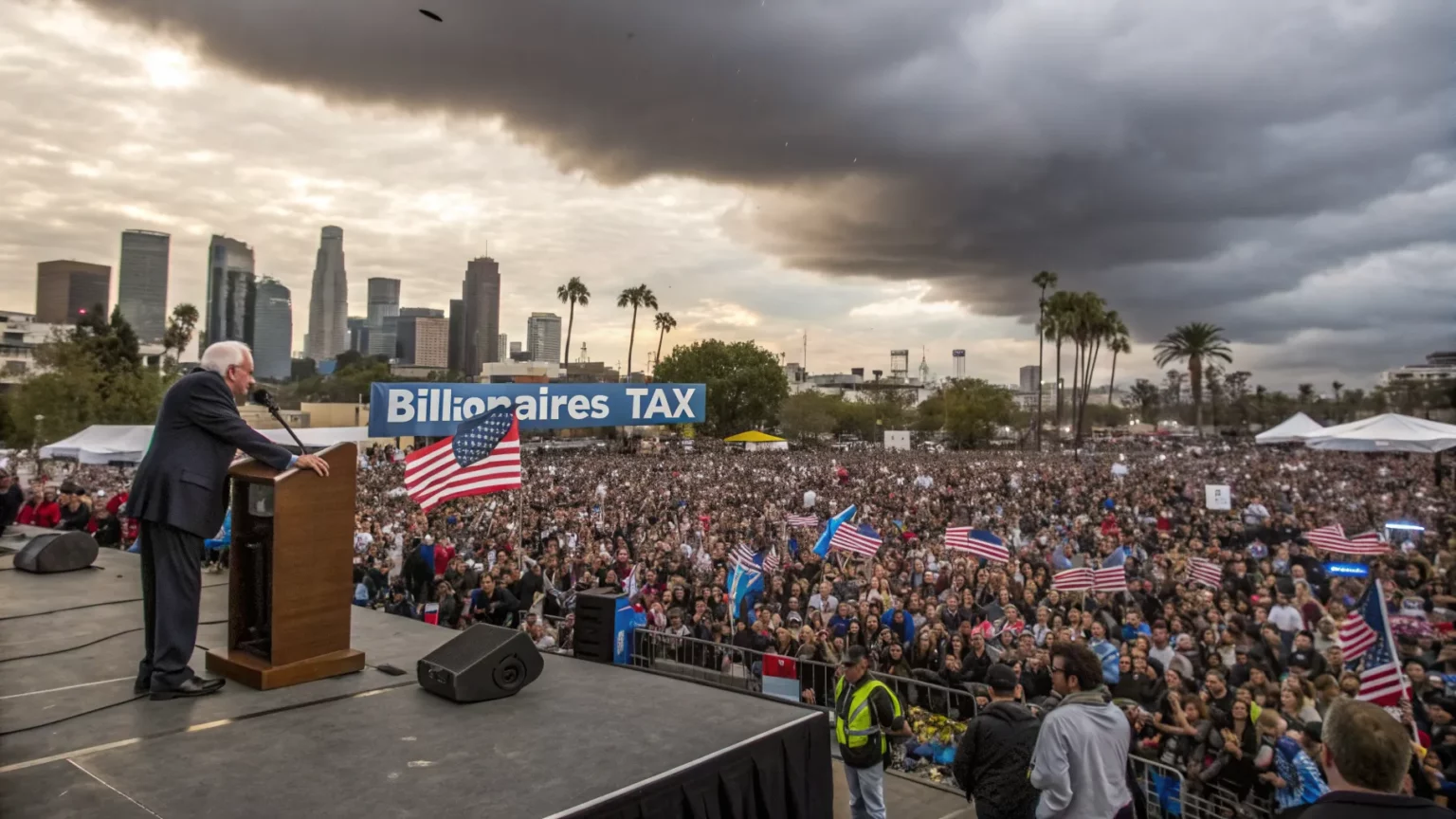
Sen. Bernie Sanders is set to land in Los Angeles to back a proposed “billionaires tax,” injecting national firepower into a fight that has rattled tech leaders and split Democrats in one of the country’s wealthiest states.
The push centers on raising new revenue from the ultra-rich to fund public services. The plan has stirred sharp objections in Silicon Valley and forced party leaders to pick sides. Sanders’ visit signals that the debate is no longer local. It is a test of how Democrats want to tax wealth and fund big promises.
“Bernie Sanders is coming to Los Angeles to campaign for a proposed ‘billionaires tax’ that has set off an uproar in the Silicon Valley and led to divisions among Democrats.”
Why the Tax Fight Matters
California is home to many of the world’s largest tech fortunes. Supporters of the tax say the state cannot meet its needs without asking more from those who gained the most during market booms. They frame it as simple math and simple fairness.
Backers argue the revenue could help stabilize budgets and shield schools, housing programs, and health care from cutbacks. They also say wealth growth at the very top has far outpaced wages for most workers, and policy should catch up.
Critics warn the tax could chill investment. They say founders, venture capitalists, and top engineers might scale back risk or shift assets elsewhere. They raise concerns about unpredictable revenue tied to market swings.
Silicon Valley Pushback
Tech leaders have been vocal. Some investors argue that taxing wealth, rather than income, punishes paper gains that can vanish in a downturn. Startup advocates say new founders rely on equity value to fund early growth.
Executives contend the state already has high costs and complex rules. They fear another levy would tip decisions on where to hire and build. A few have floated the idea of moving teams or residences to lower-tax states.
Progressives answer that threats of flight surface during every tax debate, yet most companies stay to tap talent, research hubs, and capital. They add that strong public services help produce the very workers companies need.



Democratic Rift and Political Stakes
The fight has cracked Democratic unity. Progressives view the tax as a litmus test on inequality. Moderates urge caution, warning of budget volatility and legal challenges. Local officials are gauging how voters see fairness, growth, and risk.
Sanders’ involvement could energize the base and raise turnout in key communities. It also pressures national figures to state their positions. Party strategists are watching donor reactions and small-dollar enthusiasm.
- Progressives: Say the richest should pay more to fund core services.
- Moderates: Worry about investment, exits, and unstable revenue.
- Tech leaders: Warn of reduced risk-taking and talent shifts.
What the Money Would Mean
Supporters tout potential funds for classrooms, mental health, and housing. They argue predictable services cut long-term costs in policing, emergency care, and homelessness response. Business groups counter that better outcomes come from streamlining permits, easing construction rules, and supporting job training.
Some policy analysts recommend guardrails. Ideas include phasing in rates, exemptions for early-stage equity, and reserve funds to smooth revenue dips. Those measures could blunt volatility while still raising money from extreme wealth.
What Comes Next
Sanders’ rally will give the proposal national attention and test its message with swing voters wary of new taxes. Organizers hope for momentum as lawmakers weigh timing and design. Opponents are preparing ads and economic studies to question the plan’s costs.
The state’s recent market cycles are a cautionary tale. When stock values surge, receipts climb. When they fall, budgets strain. Any wealth-focused tax would need safeguards to handle those swings without deep cuts.
The outcome could shape how other states approach wealth and public spending. If the plan advances, expect fierce campaigning, legal scrutiny, and intense lobbying from tech and labor alike. If it stalls, pressure will grow to find fresh ways to fund services.
For now, Sanders’ stop in Los Angeles marks a clear escalation. The fight over who pays, and how much, is moving from boardrooms and committee rooms to the streets and the ballot box. Voters may soon have the final say.