




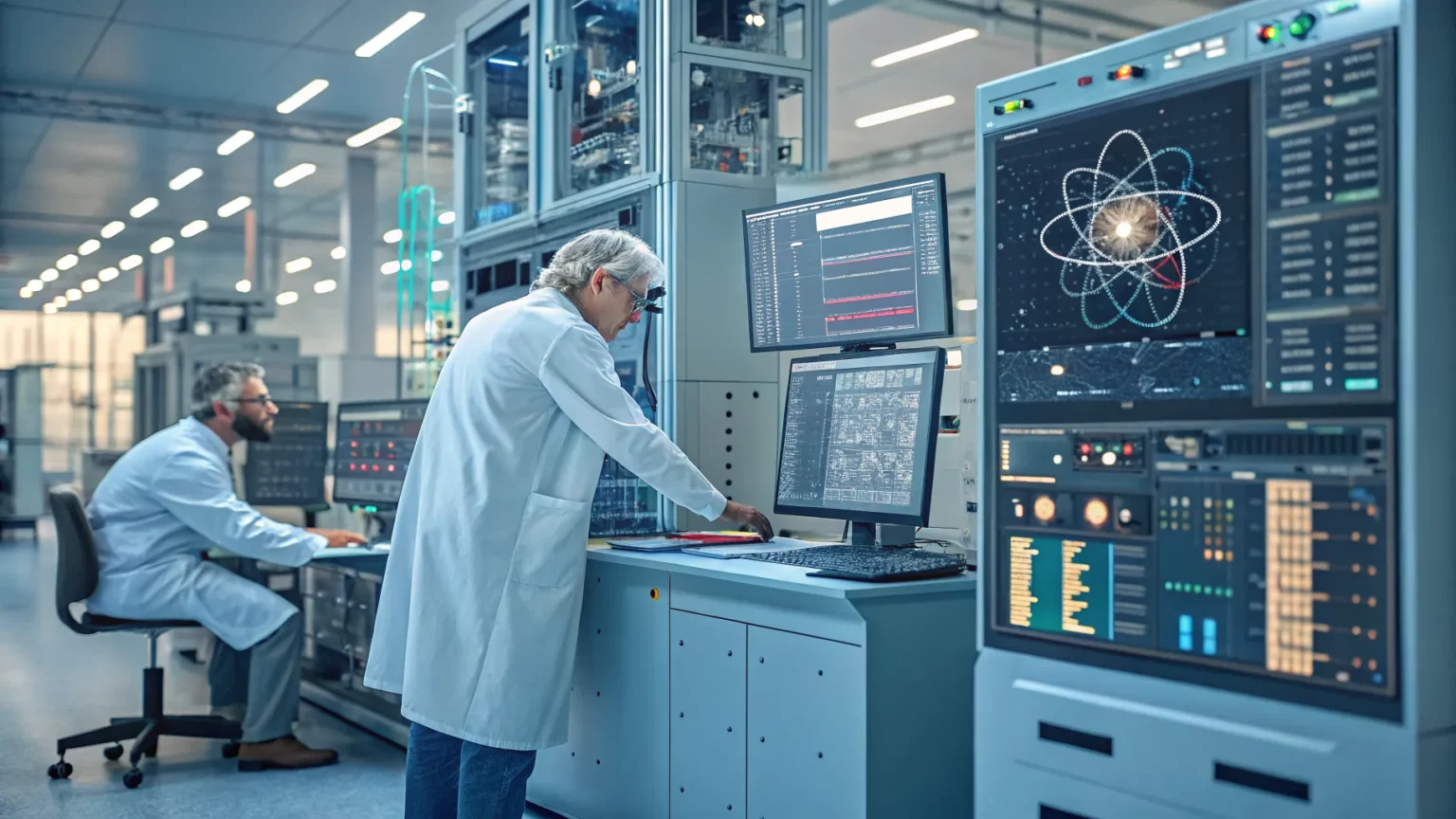
Researchers say machine learning can now spot the sources of noise in quantum computers with speed and precision, and do so across several types of qubits. The advance targets one of the field’s most stubborn problems: unstable hardware that scrambles fragile quantum states. If adopted in labs and factories, it could shorten troubleshooting cycles, cut costs, and move quantum systems closer to useful performance.
The approach focuses on diagnosing error sources rather than only correcting them. That shift matters because it can help engineers fix root causes, improve calibration, and plan upgrades. While details of the model were not disclosed, the claim of flexible use across different qubit platforms hints at a tool that could support both research settings and early commercial deployments.
“Machine learning quickly and precisely diagnoses sources of noise in quantum computers, with flexible application across several qubit types.”
Why Noise Is the Bottleneck
Every quantum computer fights noise. Qubits interact with their surroundings, drift over time, and interfere with each other. Gate operations introduce small mistakes that add up over many steps. Readout can be faulty. These problems limit the depth and scale of useful programs.
Today’s devices sit in the noisy, intermediate stage, often called NISQ. Typical gate error rates are small but frequent enough to swamp long calculations. That is why better diagnosis is so valuable. Finding which parts of a system fail, when they fail, and why they fail helps teams prioritize fixes and keep machines stable hour to hour.
Different qubit types—such as superconducting circuits, trapped ions, and semiconductor spins—face different failure modes. A method that works across several platforms suggests common patterns can be learned from operational data, even when hardware physics vary.
How Machine Learning Can Help
Machine learning thrives on patterns in messy data. Quantum hardware produces large streams of calibration logs, measurement outcomes, and performance tests. With proper training, a model can flag shifts that signal new noise sources, separate overlapping effects, and rank likely causes. Fast detection means teams can respond before problems spread across a chip or a rack of modules.
In practice, a system like this could guide daily maintenance. It might identify crosstalk between neighboring qubits, a drifting control line, or a faulty amplifier. It could suggest targeted recalibration instead of a full system reset, cutting downtime.
Promise and Limits
Supporters argue that speed and precision in diagnosis can free scarce engineering time and improve uptime. If models transfer across qubit types, smaller labs without large software teams could benefit as well.

But there are trade-offs. Machine learning models can be hard to interpret. Engineers may want to know not only what is wrong but why the model thinks so. Training requires high-quality labeled data, and data collection itself can interrupt experiments. A model tuned to one device may miss rare errors on another if the training set is narrow.
To be trusted on the lab floor, the system must show stable gains over weeks, not just on a single test. It also needs guardrails to avoid chasing noise that is harmless or transient.
What It Means for the Field
Diagnostics shape the pace of progress in quantum hardware. If teams can shorten the feedback loop from hours to minutes, more tests fit into each day, and designs evolve faster. That helps both error mitigation—squeezing more from today’s devices—and long-term error correction, which demands steady, predictable hardware.
- Faster recovery: Quicker fault isolation reduces downtime.
- Better scaling: Automated alerts can manage larger qubit arrays.
- Cross-platform value: A shared toolset can aid diverse labs.
- Data-driven roadmaps: Trends in faults can guide hardware upgrades.
Next Steps to Watch
Independent benchmarking will be key. Labs will look for head-to-head tests showing shorter calibration time, fewer failed runs, and improved gate fidelity after fixes. Portability across platforms must be proven, not just stated. Clear reporting on false positives and false negatives will help teams judge when to act on an alert.
Vendors and research groups are also likely to combine this approach with automated control stacks. Closed-loop systems that detect, diagnose, and adjust settings in real time could keep large devices in their best operating zone for longer stretches.
The core claim is simple and ambitious. If machine learning can rapidly and accurately diagnose noise sources across several qubit types, it could make quantum hardware more reliable, more scalable, and easier to manage. The coming months should show whether results in the lab translate into steadier machines and more useful computations.