




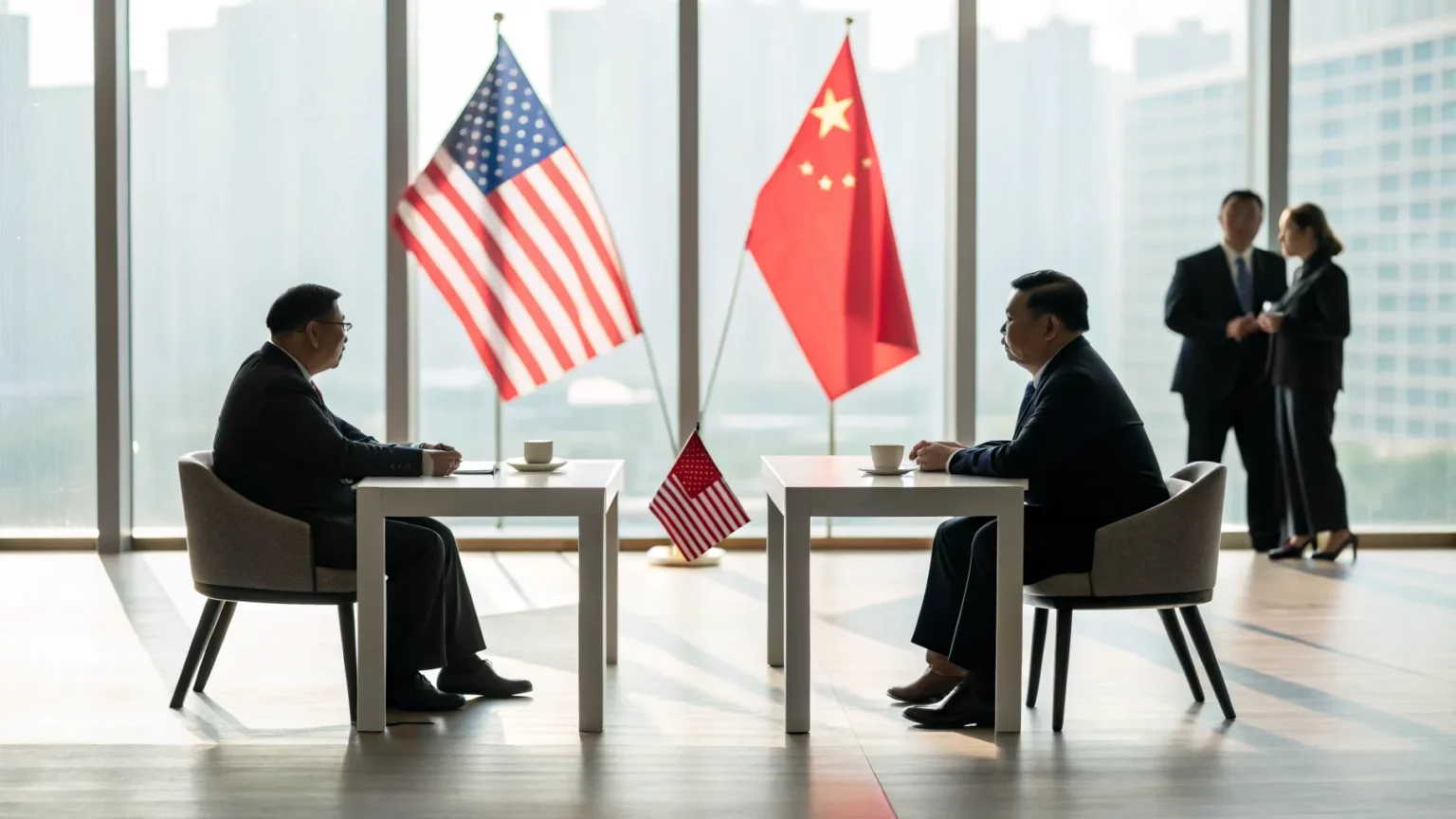
Bank of America executive Sharon Miller said small businesses are watching Washington and Beijing closely after President Donald Trump met with Chinese President Xi Jinping. Speaking on Fox Business’ Mornings with Maria, the head of Business Banking outlined what owners want to see next: clarity on trade, stable prices, and access to credit. She also described how artificial intelligence is moving from test projects to daily tools inside local firms.
The discussion came as manufacturers, retailers, and service providers reassess supply chains and pricing. Many firms rely on goods or parts linked to China. Any change in tariffs or rules can shift costs within weeks. The meeting lifted hopes for steadier trade, but owners remain cautious until policies are clear.
Trade Signals And Market Reaction
Business owners have lived through multiple rounds of tariffs, exemptions, and compliance changes. Even a hint of thaw can move orders and hiring plans. Yet many remember price spikes during earlier trade tensions. That history explains the current wait-and-see posture.
Stocks tied to global trade often react first. But smaller firms feel shifts later, when invoices and freight bills arrive. For importers, any relief in duties could ease margin pressure. For exporters, a more predictable climate could revive contracts paused during uncertainty. Service firms—logistics, legal, and consulting—are bracing for a rush of guidance requests if new rules follow the meeting.
What Bank Lending Shows For Small Firms
Miller described steady interest in credit lines and equipment financing as owners plan for 2025. Demand tends to rise when firms expect orders to improve. It cools when costs or policy appear unstable. She suggested owners are budgeting for flexibility, keeping more liquidity on hand and spreading supplier risk.
Bankers are tracking three signals from clients:
- Inventory financing needs, which reveal sales expectations.
- Requests to refinance variable-rate debt, reflecting rate sensitivity.
- Cash management activity, a sign of tighter expense control.
If trade talks lead to fewer frictions, lending for expansion could pick up. If not, owners may extend maintenance cycles and delay new hires. Either path hinges on clearer policy guidance after the Trump–Xi meeting.
AI Adoption On Main Street
The other focus of the conversation was artificial intelligence. Miller said adoption is rising across payroll, marketing, customer service, and back-office tasks. Owners want faster quotes, cleaner books, and better inventory planning. Many are testing tools that draft emails, summarize meetings, and predict reorders.


Cost and trust are the two biggest hurdles. Firms weigh subscription fees against labor savings. They also need confidence that customer data is secure and that outputs are accurate. Banks, software vendors, and accountants are fielding more questions on data controls and audit trails.
Early gains appear in simple, repeatable tasks. Chat features can triage support questions. Scheduling tools cut no-shows. Invoice scanning reduces manual entry errors. More advanced uses—pricing optimization or demand forecasting—are growing but require cleaner data and staff training.
Multiple Viewpoints On Risk
Manufacturers focused on China are the most sensitive to trade outcomes. They could benefit from tariff relief but face setbacks if talks stall. Retailers want steady import costs before the holiday cycle. Service firms see opportunity in compliance work but fear client pullbacks if costs jump.
On AI, tech-forward firms see quick productivity wins. Regulated fields move slower, citing privacy and quality control. Labor groups warn about job shifts if automation scales too fast. Many owners counter that AI fills gaps in tight labor markets and helps staff move to higher-value work.
What To Watch Next
Three markers will signal where this is heading:
- Policy details after the Trump–Xi meeting, especially tariff timelines and enforcement.
- Freight rates and lead times, which show supply chain strain or relief.
- Small business credit demand, a proxy for confidence in orders and hiring.
Software spending by small firms will also be revealing. Growth in AI-enabled tools would show that pilots are turning into standard workflows. If adoption slows, owners may be waiting for clearer returns or better safeguards.
The bottom line is practical. Small firms want stable rules and useful tools. If trade policy calms and AI proves its value, owners could step up investment. If uncertainty lingers, they will keep cash close and move in smaller steps. Either way, the next wave of policy details—and how quickly firms act on them—will set the tone for the year ahead.