




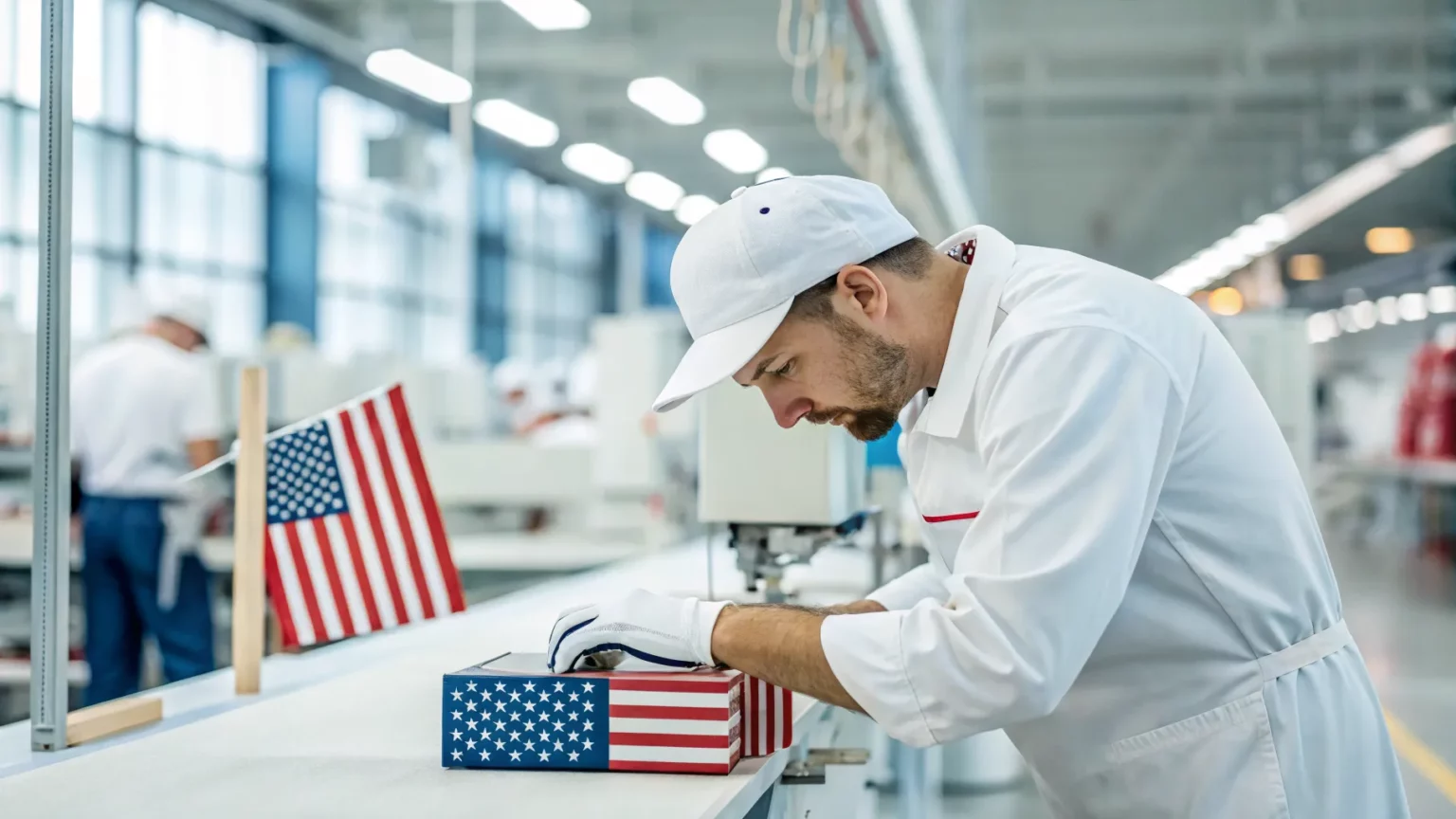
In a call for consumer action, Authentically American founder and CEO Dean Wegner argued that choosing U.S.-made goods can help protect domestic jobs, strengthen local economies, and reduce exposure to supply shocks from China. Speaking on Fox Business, he framed the decision at the checkout line as a practical step with national impact.
Wegner’s message arrives as U.S. manufacturers add workers and reconfigure supply chains after years of disruption. It also comes amid shifting trade flows. China’s share of U.S. goods imports has fallen in recent years, while Mexico and other partners gained ground. The discussion taps into long-running debates over price, quality, and resilience in the consumer market.
Why “Made in USA” Still Matters
Wegner, a veteran entrepreneur in the apparel sector, tied purchasing choices to immediate economic effects. He emphasized how domestic orders keep factories running, support suppliers, and generate tax revenue for cities and states.
- Jobs: Orders at home support manufacturing, logistics, and services.
- Growth: Local spending circulates through communities.
- Resilience: Shorter supply lines can reduce delays and risk.
Manufacturing remains a major U.S. employer, with roughly tens of millions of Americans connected to it through direct and indirect roles, according to government labor data. Economists often cite a relatively high job multiplier for factory work, meaning each job on the line supports additional jobs in transportation, maintenance, and retail.
Shifting Supply Chains And China Risk
Wegner’s warning on reliance on China echoes broader concerns raised by policymakers and companies since the pandemic. Bottlenecks, shipping delays, and geopolitical tensions exposed weak links. Many firms have since diversified production or moved assembly closer to their customers.
Public trade data show China’s share of U.S. imports declined in 2023, while Mexico became a leading source for goods. That shift reflects years of tariff policy, wage changes, and companies seeking more predictable delivery times. For consumers, the question is whether a product’s origin should factor into everyday purchases, alongside price and quality.
“Buying American strengthens jobs, boosts the economy, and reduces dependence on China,” Wegner said, pressing viewers to check labels and ask how items are made.
The Price Question And Consumer Trade-Offs
Critics caution that U.S.-made products can cost more due to higher wages and regulatory standards. For families managing tight budgets, even small price differences matter. Retail analysts note that private-label goods and imported basics often win on cost, while domestic goods compete on durability, warranty support, and delivery speed.
Some economists add that diversification, not isolation, best balances cost and risk. They argue a mix of domestic and allied sourcing can limit shocks without pushing prices sharply higher. Still, the trend toward “nearshoring” and “friend-shoring” suggests firms view resilience as a core part of long-term planning.



Signals From Industry And Policy
Several U.S. sectors—semiconductors, batteries, and clean energy—are receiving new investment and federal support. Construction data show a rise in factory projects tied to advanced manufacturing. Apparel and consumer goods face different pressures, but the same themes apply: lead times, quality control, and brand reputation.
Retailers also report growing interest in origin labeling and sustainability claims. While intent does not always translate into purchases, marketing that pairs made in the USA with clear value—fit, longevity, or service—may gain traction.
What To Watch Next
Wegner’s appeal highlights a test for both consumers and companies. Can brands produce competitively in the U.S. at a scale that meets demand? Will buyers accept modest price differences for shorter supply lines and domestic payrolls?
Key signals in the months ahead include factory hiring trends, retail inventory levels, and the share of store brands made domestically. Trade flows with China and neighboring suppliers will show whether diversification continues.
Wegner’s core claim is simple and direct: spending choices add up. The broader data suggest a shift is already underway. The outcome will depend on how much value consumers place on origin—alongside price, quality, and speed—each time they reach for the shelf.