



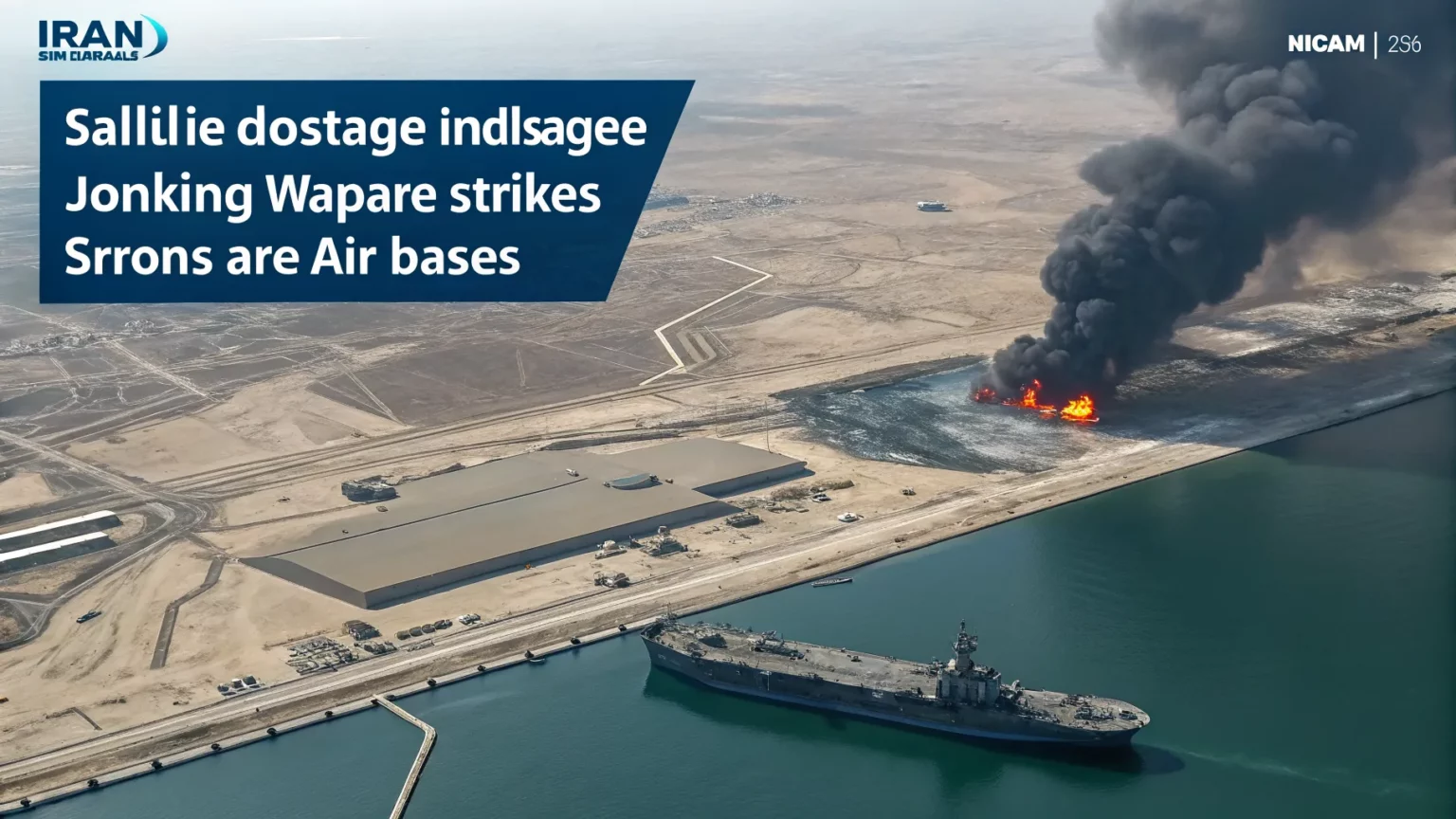
Fresh satellite images point to early damage inside Iran after strikes attributed to the United States and Israel, including a burning warship and drone activity at air bases. The images suggest strikes hit both maritime and air assets, raising questions about the scope and goals of the operation. The developments carry high stakes for regional security and global markets.
The footage appears to capture an attack with both symbolic and military weight. A vessel on fire signals pressure on Iran’s naval posture. Drones in motion at air bases hint at heightened alert, rapid response, or follow-on actions. The timing and sequencing remain unclear, but the visuals chart the first contours of the strike’s impact.
What The Images Show
“New satellite imagery captures initial damage from the US and Israel’s attack on Iran, including a burning warship and drone activity at air bases.”
The burning ship suggests a direct hit or secondary fire at a naval facility. Such damage can disrupt patrols, logistics, and coastal defense. It can also send a signal to military planners about vulnerable assets.
Drone movement at air bases points to an active operational picture. It may reflect Iran’s efforts to assess damage, bolster air defenses, or prepare surveillance and strike missions. Without ground confirmation, analysts caution that early readings may shift as more data arrives.
Commercial satellites have become central to conflict monitoring. In recent years, image analysis has guided reporting on battles from the Black Sea to the Gulf. It offers rapid, independent insight when official accounts are limited or conflicting.
Background to a Long-Simmering Standoff
The strikes come after years of tension between Iran, the United States, and Israel. Disputes over Iran’s nuclear program, missile development, and regional influence have fed periodic clashes. Maritime incidents, cyber operations, and proxy attacks have marked this shadow conflict.
Israel has long targeted Iranian-linked assets in Syria and elsewhere. Washington has enforced sanctions and responded to attacks on U.S. personnel and shipping. Tehran has supported allied groups in Lebanon, Iraq, Syria, and Yemen, shaping pressure points across the region.
Air and naval targets often factor in these exchanges. Hitting a warship can weaken deterrence and complicate patrol patterns. Targeting air bases can affect drone fleets, runways, fuel stores, and radar coverage.



Strategic and Economic Implications
Damage to Iranian military assets may narrow Iran’s options in the near term. Yet it can also prompt asymmetric responses, including cyber attacks or proxy strikes. The risk of miscalculation remains high when both sides signal strength.
Energy traders will watch for signs of shipping disruption in the Strait of Hormuz and nearby routes. Even brief interruptions can move prices and insurance rates. Regional states may tighten air defense coordination and maritime patrols.
The presence of drones at air bases signals a contest for the intelligence edge. If Iran expands surveillance, it can better map vulnerabilities and time responses. If its drone operations are blunted, recovery could take weeks.
Competing Narratives and Limited Visibility
Official details were scarce in the immediate aftermath. Governments often restrict information during active operations. Early satellite frames can fill gaps but do not explain intent or next steps.
Analysts will look for follow-up imagery showing repair work, additional fires, or new air defense deployments. Runway craters, scorch marks, and vessel positions can help confirm strike patterns.
- Do later images show sustained damage or rapid repairs?
- Are additional ships repositioning to safer ports?
- Do air defenses shift to protect critical runways and fuel depots?
- Are proxy groups signaling coordinated responses?
Comparisons with past strikes suggest that early damage assessments can change. Hidden internal harm to radars or fuel lines may surface days later. Conversely, visual fires can overstate longer-term impact if crews contain them quickly.
The initial images offer a narrow window into a wider fight. They hint at a plan that targets both sea and air capabilities. The next frames—and any official statements—will clarify whether this was a limited warning or the start of a longer campaign. For now, watch for new satellite passes, changes in shipping patterns, and fresh air defense activity across the region.