




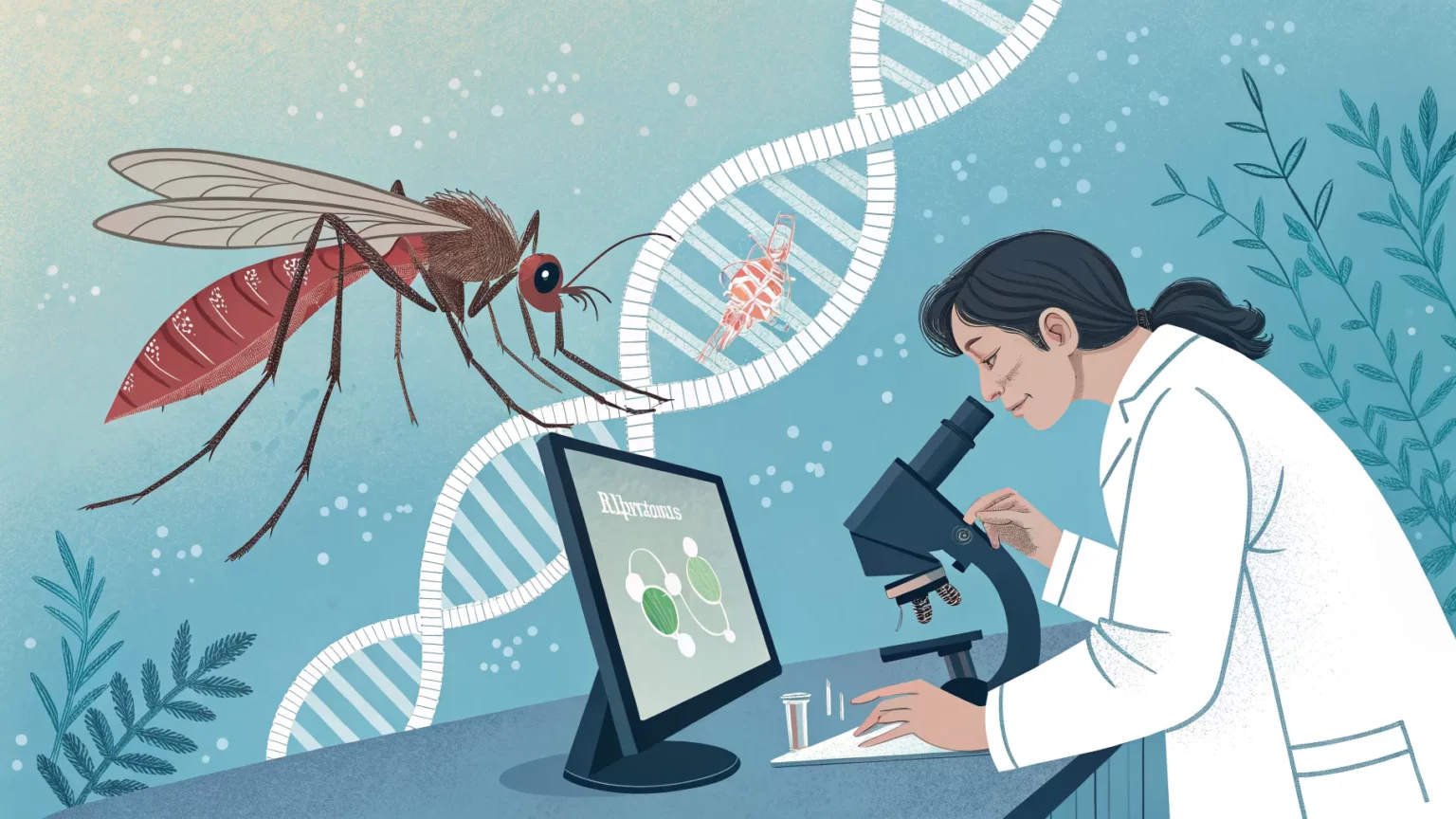
A new genetic study suggests that some mosquitoes began preferring human blood far earlier than once thought, pointing to a shift that may stretch back 1.8 million years. The finding, based on DNA evidence, reframes how and when these insects aligned their feeding habits with humans, with wide implications for disease control and human history.
Researchers report that ancestral mosquito populations may have started tracking early human ancestors across Africa long before agriculture, towns, or stored water would have drawn them close. The conclusion challenges the view that human preference is mainly a recent byproduct of urban living.
What the Study Suggests
“A new genetic analysis suggests some mosquitos’ taste for human blood may date back 1.8 million years.”
That timeline would place the shift near the era of early Homo species. It implies that human scent, heat, and behavior could have shaped mosquito evolution over deep time. The research leans on comparisons of mosquito genomes and behavioral traits across populations that feed on humans and those that do not.
How Mosquitoes Shifted to Humans
Most mosquitoes feed on a range of animals. A smaller set, including major disease carriers, show a strong pull toward human odor and carbon dioxide. Prior work tied this shift to the rise of settlements, standing water, and year-round access to hosts.
The new analysis points to an older origin. Early hominins were mobile, gathered near water, and lived in groups. These habits could have offered steady feeding chances for mosquitoes. Over many generations, that access may have selected for traits that lock onto human skin chemicals and body heat.
Why the Timeline Matters
Rewinding the clock changes scientific debates about host choice. If human preference is ancient, it may be more deeply coded in mosquito biology than assumed. That would affect how easily those preferences can be altered through control efforts.
The timeline also suggests that human ancestors and mosquitoes have been in a long arms race. As hominins spread, they may have carried mosquito-adapted lineages with them, shaping regional disease risks.
Implications for Public Health
Mosquito-borne diseases kill hundreds of thousands of people each year, according to the World Health Organization. Malaria, dengue, Zika, and yellow fever rely on species that often prefer humans. Strategies that interrupt that preference—by masking human scent or reducing contact—are key to prevention.


- If human targeting is ancient, behavioral cues may be hard to disrupt.
- Genetic insight can reveal scent receptors and pathways to target.
- Control tools might need to differ by species and region.
Programs that use traps, repellents, treated nets, and habitat management could benefit from genetic maps of host-seeking circuits. Precision tools, such as gene-based control, would also depend on this evolutionary detail.
Balancing Evidence and Open Questions
While the study points to an early date, scientists will look for confirming lines of evidence. Fossil records for mosquitoes are limited. Behavioral traits leave few direct traces. That puts weight on genetic signals and careful statistical models.
Key questions include which species show ancient human preference and whether the trait rose once or multiple times. Climate shifts over the past two million years likely affected mosquito ranges and hosts, complicating the picture.
What Comes Next
Future work will likely expand sampling across Africa and other regions. Researchers will test if the same odor-receptor genes drive human seeking in different species. Field studies that link gene variants to real-world biting patterns will be vital.
Public health planners could integrate these findings into surveillance. If certain lineages are primed to target humans, early detection and tailored responses may blunt outbreaks.
The new timeline opens a deeper view of a familiar foe. If human-biting preferences took shape 1.8 million years ago, the partnership between people and mosquitoes is older—and harder to break—than assumed. Still, genetic insight offers a guide to smarter tools and more focused control. The next steps will test how this ancient tie can inform modern defense.