



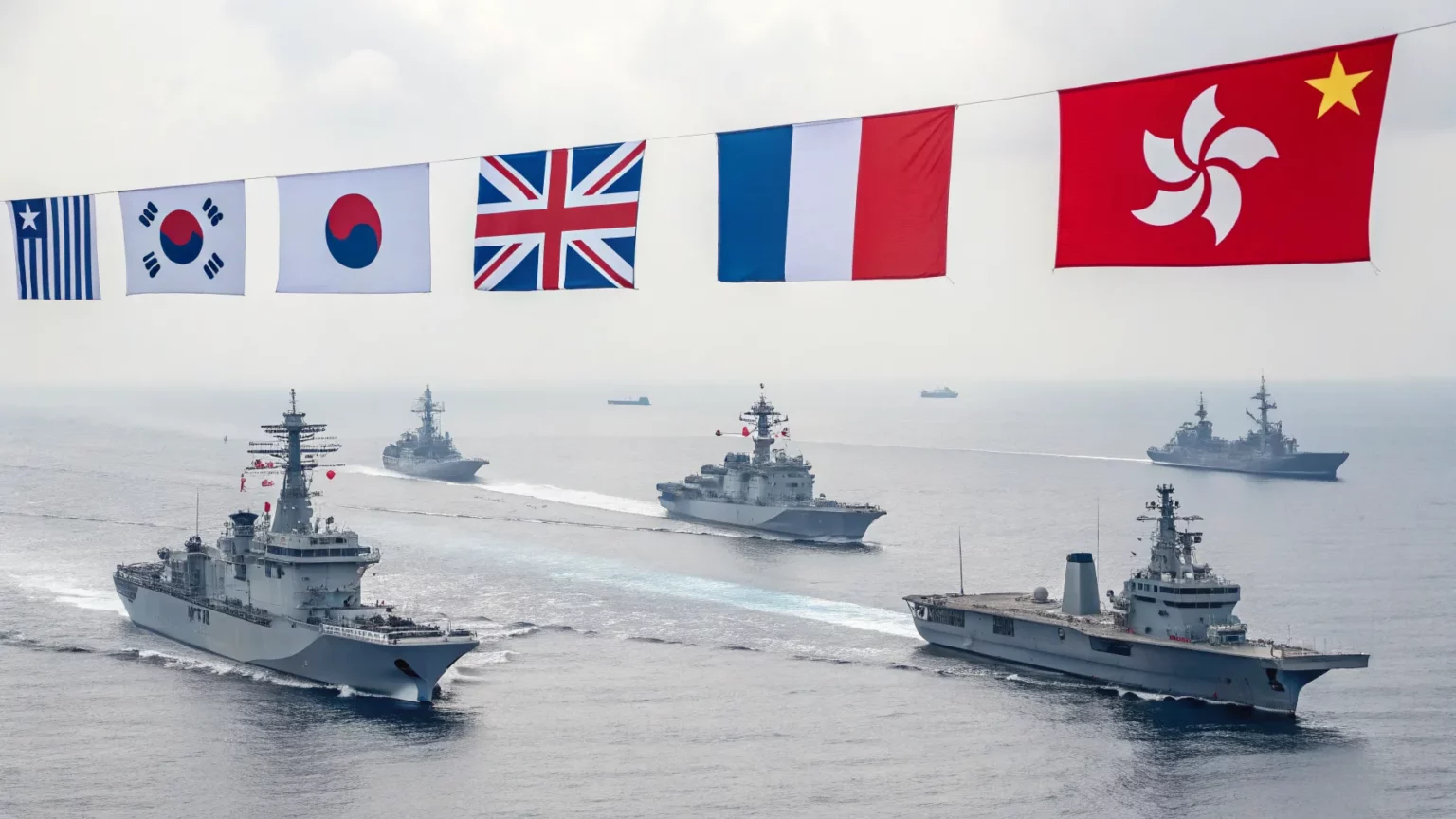
Former President Donald Trump urged several allied nations to “send ships,” escalating his public calls for a coordinated response to what he described as an “artificial constraint” affecting global trade. In a brief post on his social media platform, Trump named China, France, Japan, South Korea, and the United Kingdom among countries he believes should act.
The message, shared without further detail or a timeline, drew attention because it invoked major trading partners and maritime powers. It also hinted at growing concern over stress points in sea lanes and chokepoints that matter to the global economy.
What Trump Said
“Hopefully China, France, Japan, South Korea, the UK, and others, that are affected by this artificial constraint, will send Ships,” President Donald Trump says in a Truth Social post.
Trump did not define the “artificial constraint,” identify a location, or describe the mission. The wording left open whether he was urging commercial deployments, naval escorts, or humanitarian operations. His office did not release added context at the time of publication.
Why Shipping Matters Right Now
Maritime transport carries most of the world’s trade by volume. Disruptions can raise prices, extend delivery times, and strain supply chains. Recent years have seen a series of shocks, from pandemic-era port backlogs to canal restrictions and regional conflicts.
- The Suez Canal handles roughly one in ten goods traded globally, by some estimates.
- Dry conditions in the Panama Canal in 2023 and 2024 forced draft limits and fewer daily transits.
- Security incidents near major chokepoints have added detours and insurance costs for carriers.
Countries Trump named rely heavily on sea trade. Japan and South Korea import most of their energy by tanker. The UK and France are key NATO navies with experience in maritime security missions. China operates the world’s largest merchant fleet by some measures and has grown its blue-water navy. Each has interests in steady flows of oil, gas, and container cargo.
Potential Motives and Interpretations
Without specifics, observers offered several possible readings of the call. It could reflect concern over shipping delays due to canal constraints. It could also relate to regional security, where commercial ships at times need naval protection. Another interpretation is political, signaling support for a tougher stance on trade disruptions.
Policy experts often caution that ad hoc naval deployments can help in the short term but carry diplomatic and legal questions. Joint patrols usually rely on clear mandates, rules of engagement, and coordination through alliances or coalitions. Commercial measures, like slot auctions or priority transits at canals, involve multilateral agreements rather than unilateral shows of force.
How Allies Might Respond
Governments typically move carefully before deploying ships. They weigh trade needs, alliance duties, and domestic opinion. France and the UK have participated in past maritime security coalitions. Japan and South Korea coordinate closely with partners on sea lanes vital to energy supply. China acts to protect its shipping but prefers actions under its own flag and interests.



Early reaction from these capitals was not immediately available following Trump’s post. Any future response is likely to depend on clarity about the problem, proof of harm, and legal justification. Industry groups and insurers could also push for action if risk premiums rise or detours persist.
Economic Stakes for Shippers and Consumers
Even modest constraints can ripple across supply chains. Longer routes add fuel costs and charter rates. Congestion at alternative ports delays deliveries. Retailers and manufacturers may have to boost inventories, which ties up cash.
Analysts note that container shipping rates have been sensitive to disruptions since 2020. Energy flows are also exposed. A delay in crude or LNG shipments can move prices in spot markets, which then hit consumer bills and factory costs.
What to Watch
Clarity is the first test. If governments identify a specific chokepoint or policy causing the “artificial constraint,” a targeted plan becomes more likely. That could include naval escorts, convoy systems, or diplomatic steps to ease transit rules. If the issue is commercial or environmental, coordination with canal authorities and port operators would be key.
Markets will track freight rates, insurance costs, and reported transit times through major canals. Any formal coalition announcement from the countries Trump named would signal a shift from rhetoric to action.
Trump’s post placed maritime risk back in the political spotlight, but the path forward hinges on details that were not provided. For now, shipping companies and allied governments face a familiar choice: absorb higher costs, reroute vessels, or organize joint measures. The coming weeks will show whether a shared response takes shape—and whether the constraint he cited proves temporary or entrenched.