



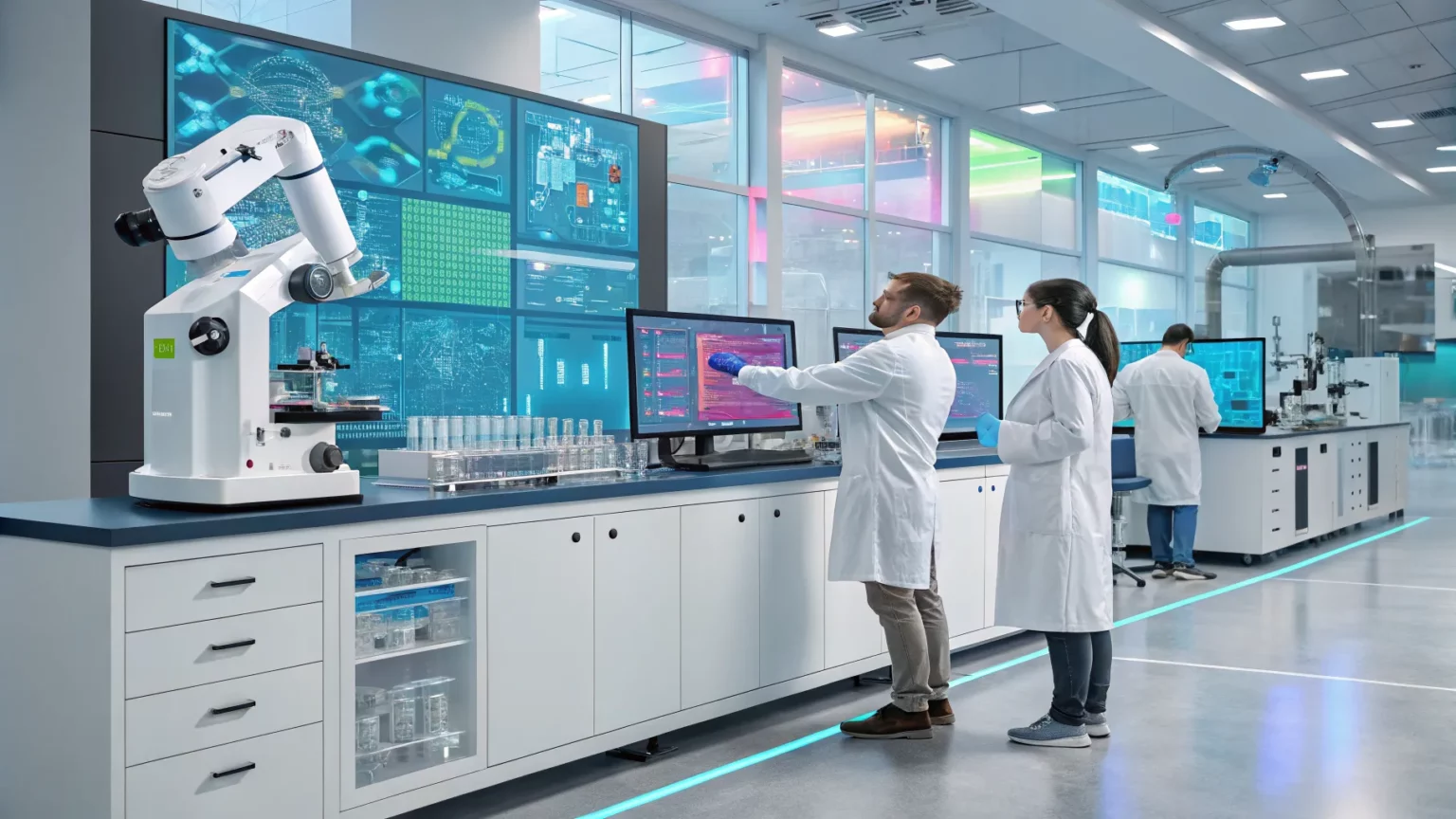
Researchers from OpenAI and Ginkgo Bioworks say they have linked an AI model to an autonomous lab to design and run real biology experiments at high speed. The collaboration, described by the teams as a major step in automating experimental science, suggests that software can not only plan experiments but also carry them out and learn from the results. The work could reshape how drug discovery, enzyme design, and strain engineering are done, while raising fresh safety questions for the life sciences.
What The Team Demonstrated
The groups reported that an AI system could propose experiments, send those plans to a robotic lab, review the outputs, and then improve the next round. That closed loop is key for faster learning. It shifts work from human hands to a model-lab pipeline that can run day and night.
“Researchers at OpenAI and Ginkgo Bioworks showed that an AI model working with an autonomous lab can design and iterate real biology experiments at unprecedented speed.”
While formal results were not disclosed, both sides framed the effort as proof that automated planning and execution can shorten the slowest parts of wet-lab science. Ginkgo’s foundry platform has long handled high-throughput protocols. Linking it to an AI planner adds a decision layer on top of that hardware. OpenAI has invested in scaling models that can read, write, and plan. In this case, the model turns scientific goals into testable steps, then updates those plans based on lab data.
Why It Matters For Biotechnology
Biology projects often stall on trial-and-error. Each round of cloning, culturing, or assay can take days. A self-updating loop can shrink that cycle. Faster loops can cut costs and push more ideas through screening.
Biotech firms see gains in several areas:
- Enzyme engineering: test more variants and reach target activity sooner.
- Strain optimization: adjust growth, yield, or tolerance across many runs.
- Assay development: refine conditions until signals are clean and reliable.
If the approach scales, startups and big pharma could run more programs with the same staff. Academic labs might share access to automated runs, widening participation in complex experiments.
Balancing Speed With Safety
Automating design and execution also raises oversight needs. Models trained on public literature might propose steps that require containment or select-agent checks. An autonomous lab must block those paths by design.
Biosecurity experts argue that guardrails should sit at three points: what the model can request, what the lab can perform, and what results can leave the system. Each stop point can screen for risk. Rate limits and human review can slow or halt sensitive tasks. Strict sourcing of strains and reagents further reduces exposure.

OpenAI has said it runs evaluations on biology-capable systems. Ginkgo operates under standard biosafety practices and has internal review processes. Outside observers will want independent audits and clear reporting, especially if the loop expands to more organisms or higher biosafety levels.
Signals For The Industry
AI-guided labs are not new, but pairing a large model with a commercial-scale foundry is notable. Investors have backed “self-driving labs” in chemistry and materials. Biology has lagged due to messy data and complex protocols. The report suggests those hurdles are starting to ease.
The winners may be groups that can integrate three assets: large, clean experimental datasets; reliable automation; and models that plan across many steps. Firms with any two pieces will still face bottlenecks. Public funding agencies may push shared facilities so smaller teams can run AI-planned experiments without building full robot lines.
What To Watch Next
Key questions remain. Can the loop generalize to new tasks, or does it need heavy tuning each time? How do error rates compare with expert human workflows? What are the true time and cost savings across full projects, not just single assays?
Transparency will matter. Benchmarks that show time-to-result, reproducibility, and safety incidents will help the field judge progress. Clear red lines on disallowed experiments, paired with technical filters, will build trust.
Regulators are also paying attention. Policy may require documentation of how AI proposals are screened, who can approve runs, and how data is handled. International rules could seek common standards so labs do not shop for lax oversight.
The core message is simple: linking AI planning to automated labs can speed biological work. If safety keeps pace, the approach could shorten paths to new enzymes, materials, and medicines. If it does not, the field will face pushback. The next phase will be proof at scale, with measured gains and visible guardrails.