




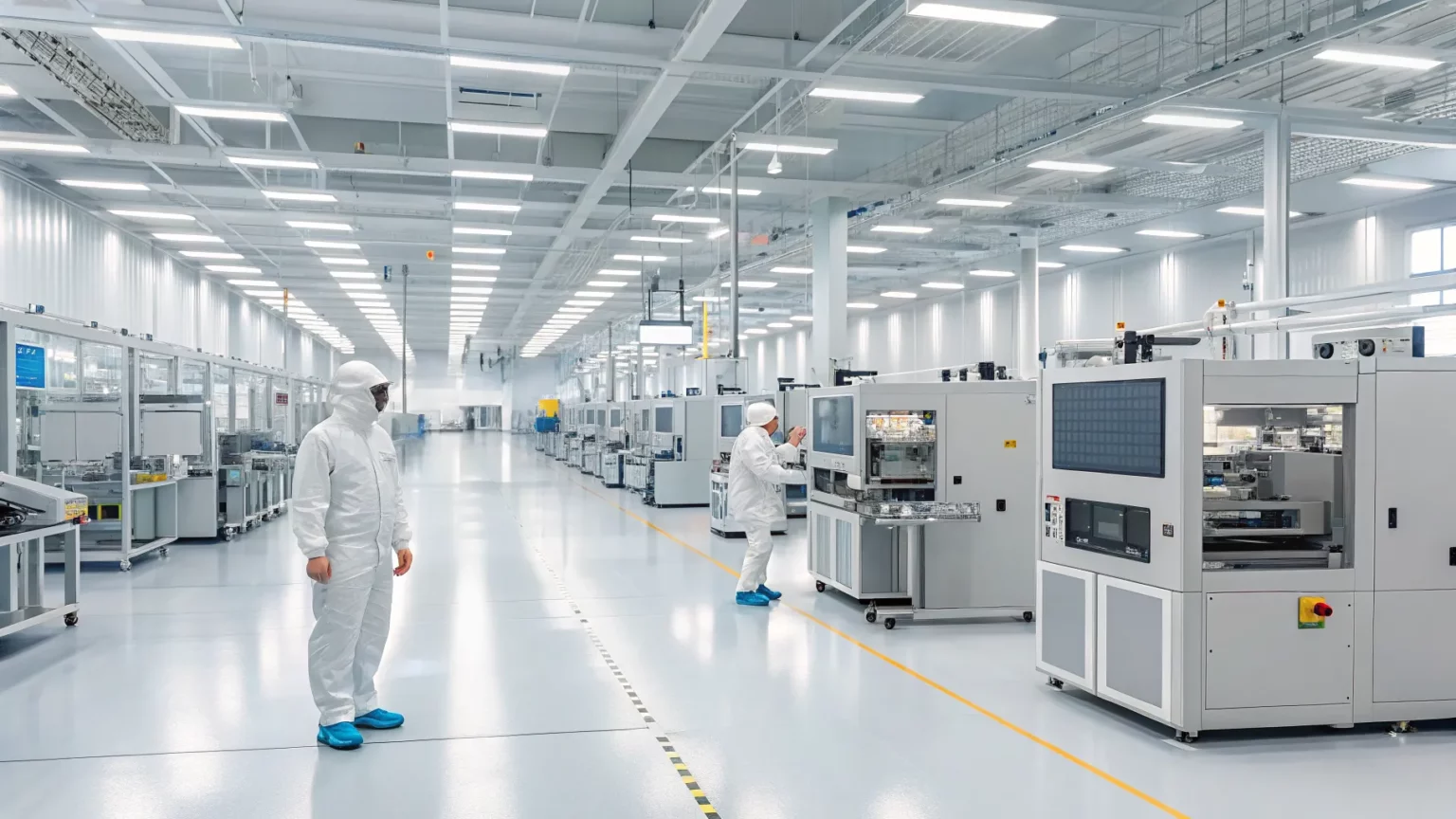
A leading semiconductor and data center specialist entered 2026 on strong footing after a standout 2025, signaling confidence in demand for chips and cloud infrastructure. The company, which serves hyperscalers and enterprise clients, framed the new year as an acceleration point for growth. The statement hints at expanding orders, tighter supply chains, and rising investments in artificial intelligence and high-performance computing.
“Coming off a fantastic 2025, this semiconductor and data center specialist kicked off 2026 with a bang.”
Market Context After A Breakout Year
Semiconductors sit at the heart of data centers, powering training and inference for AI models, storage, and networking. In 2025, demand from AI buildouts, cloud migrations, and video-heavy applications lifted orders across chips, accelerators, and interconnects. Customers struggled with delivery times earlier in the cycle, but supply visibility improved as new capacity came online.
Data center operators also raced to upgrade power and cooling to support more dense racks. That work tends to spill into the next year as projects move from planning to purchase orders. The company’s upbeat start to 2026 suggests that customers are advancing from pilots to scaled deployments.
What May Be Driving The Surge
Several industry forces likely support the company’s early momentum. AI training clusters continue to expand, while inference workloads spread across more services. Enterprises are modernizing private clouds and leaning on co-location partners to manage cost and speed. Content platforms need better video processing and content delivery. These needs translate into orders for high-end processors, memory, networking gear, and specialized accelerators.
- AI workloads: Expansion of model training and growing inference at scale.
- Cloud upgrades: Ongoing refresh cycles for compute and storage.
- Network needs: Faster interconnects to reduce bottlenecks across clusters.
- Power and cooling: Investments to handle higher rack densities.
Taken together, these factors point to a sustained build cycle rather than a one-off spike.
Signals From Customers And Partners
Cloud providers and large enterprises tend to commit to multi-quarter road maps for capacity. That supports steadier shipments and smoother forecasting. Suppliers that can pair high-performance chips with tuned software stacks often win share as buyers seek complete solutions. The company’s upbeat tone implies it may be benefiting from design wins secured last year now moving into volume.
Channel checks across the sector point to continued interest in Ethernet and InfiniBand upgrades, optical links, and advanced packaging. Even so, power availability and grid connections remain key gating items for many data center projects. Where utilities move faster, orders flow sooner.
Risks Temper Enthusiasm
Despite the strong start, risks remain. A pullback in tech spending, shifts in AI budgets, or delays in facility build-outs could slow shipments. Supply snags in substrates, memory, or networking components can also ripple through delivery schedules. Competition is intense as incumbents and new entrants vie for large AI clusters and edge deployments.



Pricing pressure could increase if more capacity comes online at once. Buyers are testing multiple chip options, which may fragment demand. Software compatibility and developer support will influence long-term stickiness.
What To Watch Next
Investors and customers will look for proof points in the first half of the year. Key indicators include order backlogs, lead times, and the mix of AI versus general-purpose compute. Announcements on new data center sites, power deals, and cooling innovations will also shape the pace of deployments.
If spending on AI inference grows faster than training, the product mix may tilt to accelerators optimized for efficiency and lower latency. That could favor suppliers with strong networking and memory bandwidth solutions. If training remains dominant, demand for top-tier compute and advanced packaging should stay firm.
The early message is clear: momentum from 2025 is carrying into 2026 for at least one major supplier. The coming quarters will show whether strong signals turn into sustained revenue growth, broader share gains, and a stable supply picture. For now, the sector enters the new year with rising expectations and a close eye on delivery and power constraints.