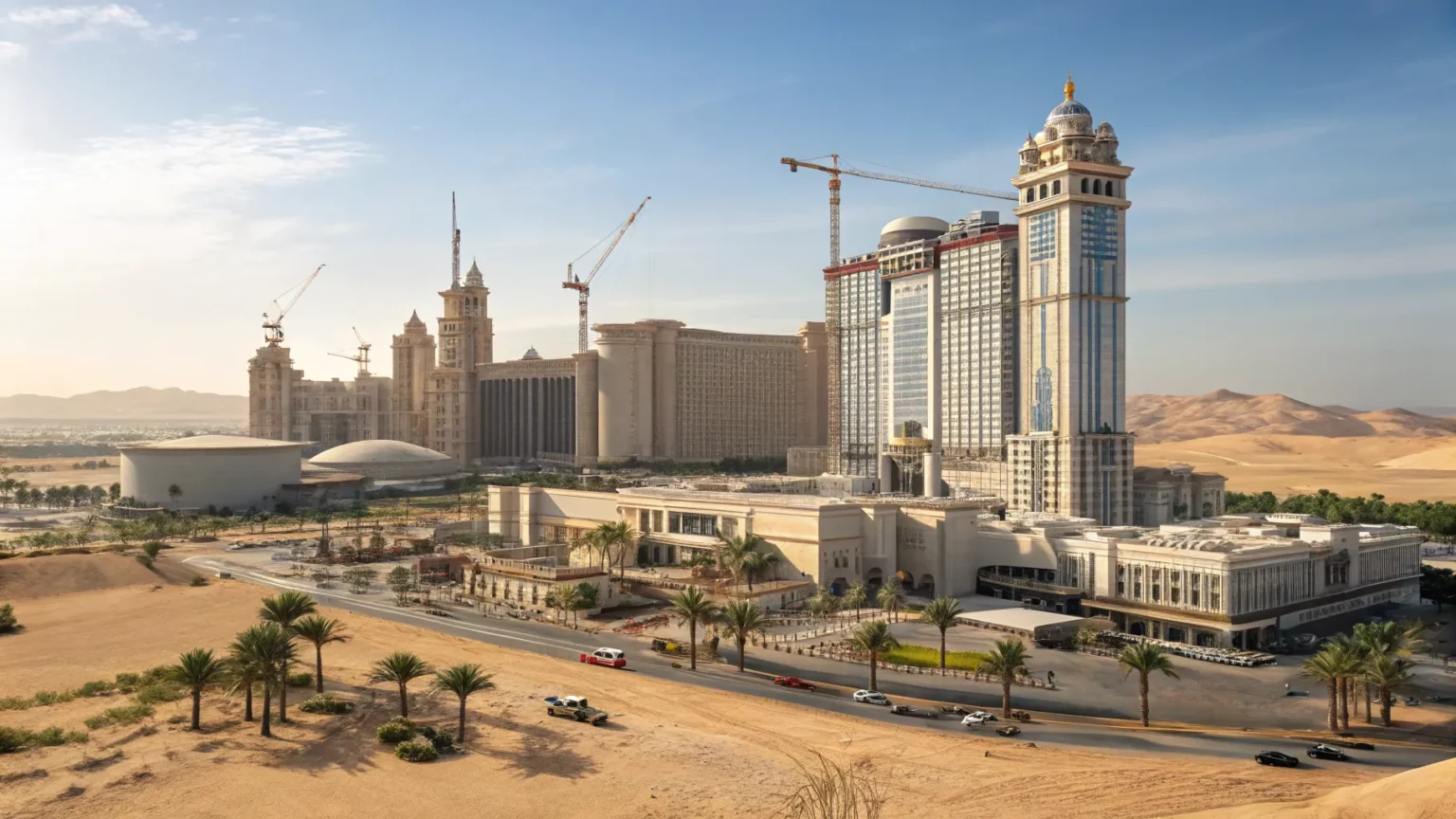
The United Arab Emirates is weighing a turn to large-scale gaming resorts, seeking to mirror the draw of Las Vegas and Macau as it competes for global tourists and high-end investors. Officials and industry figures have signaled growing interest in “integrated resorts” that combine hotels, entertainment, dining, and regulated gaming. The aim is to lift visitor spending and diversify the economy as Gulf states race to expand leisure sectors.
Plans are advancing in several emirates, with Ras Al Khaimah emerging as a test bed for a high-profile integrated resort. Dubai and Abu Dhabi are watching closely while the federal government builds a regulatory framework. Industry executives argue the move could create thousands of jobs and steady tax income during swings in oil prices.
Why the Model Matters
Las Vegas and Macau offer two playbooks. Las Vegas built a mix of conventions, shows, sports, and gaming that attracts a wide visitor base. Macau capitalized on high rollers from across Asia, turning gaming into a dominant revenue source. The UAE is studying how to balance these paths with local rules and culture.
“The UAE hopes to emulate Las Vegas and Macau.”
Supporters say the country already has many building blocks: world-class airports, a strong hotel pipeline, luxury retail, and a calendar of global events. Adding regulated gaming to destination resorts could extend stays and increase average daily spend.
Regulation and Social Safeguards
Any shift rests on regulation. The UAE has moved to set up a national authority to oversee commercial gaming and lotteries, signaling a cautious, rules-based approach. Licensing, taxation, and compliance standards would need to be clear, with strict controls on access and advertising.
Health advocates urge guardrails to limit harm. They call for age checks, self-exclusion tools, spending limits, and dedicated funding for addiction services. The debate also covers data sharing with public health researchers and transparent reporting by operators.
Projects, Timelines, and Economic Stakes
Ras Al Khaimah has drawn the most attention with plans for a flagship integrated resort on Al Marjan Island. Developers promote a mix of luxury rooms, entertainment venues, meetings space, and a gaming floor subject to approval. Investors are betting on the emirate’s quieter brand, beach access, and proximity to Dubai’s airports.
Analysts point to several benefits if projects proceed:



- Job creation in construction, hospitality, security, and technology.
- New streams of fee and tax revenue earmarked for infrastructure.
- Growth in conventions and sports tourism linked to resort amenities.
Skeptics question whether demand will match the hype, citing competition from Asia and North America, and asking if enough visitors will travel primarily for gaming. Backers reply that the UAE’s wider appeal—sun, safety, retail, culture, and flight connectivity—reduces risk by spreading income across many activities.
Regional Competition and Cultural Fit
The UAE is not alone in pursuing mega-resorts. Global operators are expanding in Singapore and the Philippines, while Japan has approved an integrated resort in Osaka. Closer to home, Gulf neighbors are building theme parks, concert halls, and sports stadiums. Few, however, are signaling permission for regulated casino floors, giving the UAE a potential edge if it proceeds.
Respect for local values remains central. Operators stress non-gaming attractions and private, tightly controlled gaming areas. Some hospitality brands already in Dubai have shown how to run large resorts without casino floors, preparing the ground for a gradual shift if licensing is granted.
What Success Could Look Like
Success would likely mean resorts where gaming is one draw among many, not the only purpose. It would include high occupancy outside peak seasons, healthy convention bookings, and stable revenue that funds public services. Clear metrics—problem-gambling rates, compliance audits, and tourism yields—would show whether the balance is working.
The country’s track record in large projects, from aviation to events, suggests the capacity to execute. But caution is visible: phased openings, pilot rules, and regular reviews are expected to limit shocks and build trust.
The next steps will signal how far and how fast the strategy moves. Watch for licensing details, construction milestones in Ras Al Khaimah, and any hints from Dubai or Abu Dhabi on timelines. If the regulatory path holds and public health protections are strong, integrated resorts could add a new pillar to the UAE’s visitor economy—one designed with lessons from Las Vegas and Macau, adapted to local rules and goals.