




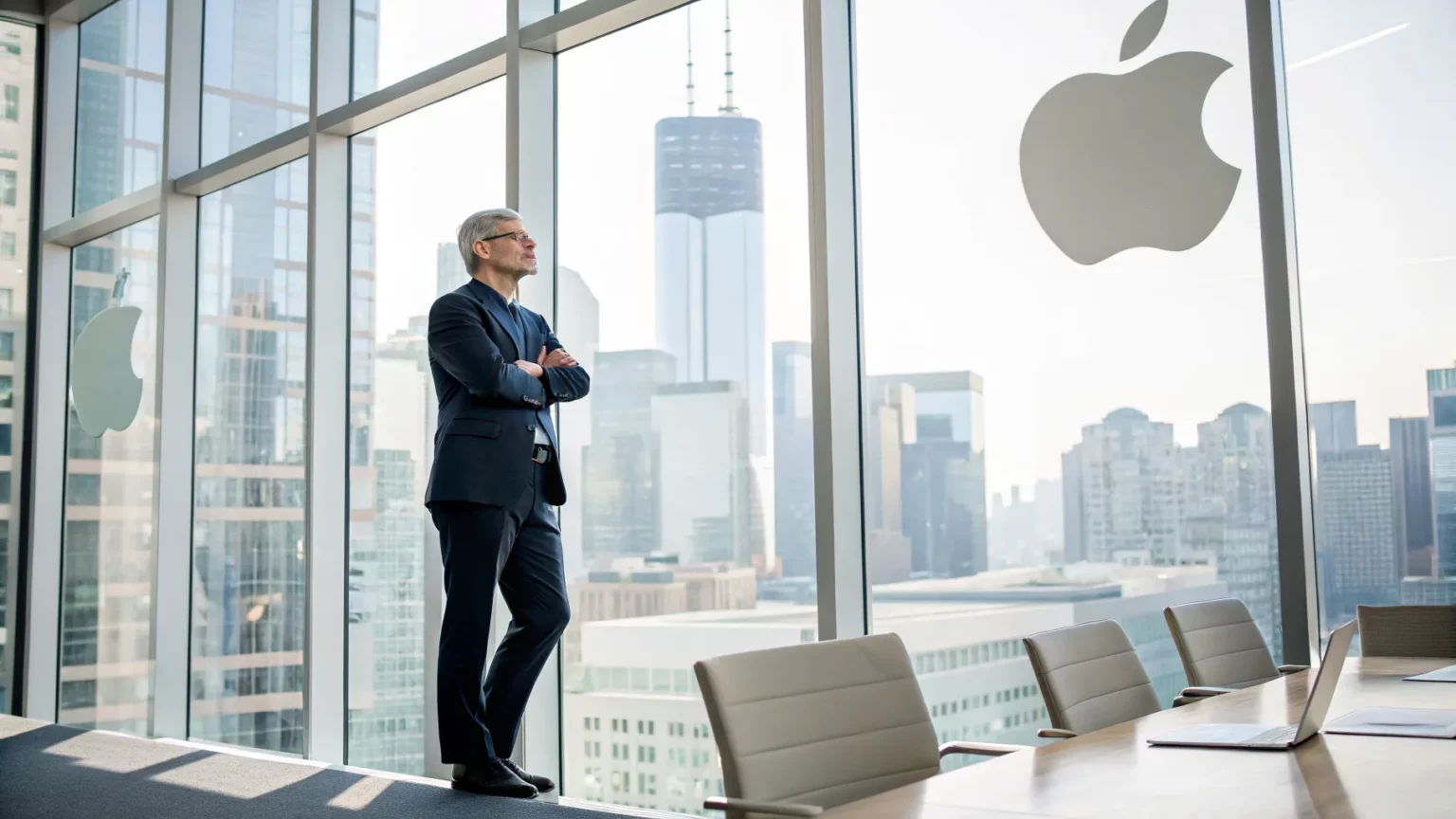
As Apple marked more than a decade under Tim Cook, the company’s direction has traced a clear message from its co-founder. The guidance, given in the final days of a leadership handoff in 2011, urged independence and conviction. That idea has framed Cook’s choices from the boardroom to the product line, steering the world’s most valuable tech company through growth and scrutiny alike.
“Tim Cook used Steve Jobs’s parting advice as a blueprint for how to lead Apple.”
The shift came as Apple faced a defining moment. Cook, then known for mastery of operations, stepped into a role shaped by Steve Jobs’s product vision. The question was whether Apple could keep innovating while scaling to historic size. Cook’s answer has been to pair tight execution with patient bets, while leaning on services and custom silicon to secure the company’s future.
A Leadership Handoff That Set the Tone
Cook became CEO in 2011, months before Jobs’s death. The transition drew comparisons to other founder-to-operator shifts in Silicon Valley. But Apple’s scale made this one unique. The company had a loyal base, premium pricing, and a supply chain built for precision.
Under Cook, Apple kept a steady cadence of hardware releases while building long-term programs that were less visible at first. That included chip design, privacy features, and subscription services. Each move tied back to control over the user experience and stable cash flow.
Public markets rewarded the strategy. Apple’s valuation surpassed $2 trillion in 2020 and later crossed the $3 trillion mark at times. The gains reflected confidence in predictable earnings and strong demand for devices tied to a growing ecosystem.
Products, Services, and the Power of Integration
Cook’s Apple shipped new device categories and extended the iPhone’s reach. Apple Watch became the top smartwatch brand. AirPods turned wireless audio into a mainstream habit. The company’s shift to Apple-designed chips, starting with the M1 in Macs, boosted performance and helped margins.
Services turned into a second engine. Revenues from the App Store, Apple Music, iCloud, TV+, and other offerings added recurring income. The mix reduced exposure to yearly device cycles. It also deepened customer lock-in, raising lifetime value per user.
- Hardware: iPhone remained core while Watch, AirPods, and Macs expanded the base.
- Silicon: Custom chips improved speed, battery life, and security across devices.
- Services: Subscriptions and cloud features drove steadier revenue.
Privacy Stance and Policy Risks
Apple leaned on privacy as a brand promise. App Tracking Transparency limited cross-app tracking, reshaping mobile advertising. Supporters praised the move as pro-consumer. Critics argued it advantaged Apple’s own ads and services.



Regulators scrutinized Apple’s control over payments and distribution. The App Store’s fees drew legal and policy challenges in the United States and Europe. Developers pushed for more choice. Apple argued the rules protect security and trust. Outcomes of ongoing cases and new laws could change the business model.
Supply Chain Strength, Then Strain
Cook’s operations background showed in scale and timing. Apple managed just-in-time logistics for hundreds of millions of devices each year. That discipline was tested by pandemic lockdowns and trade tensions. The company began shifting production of some products to India and Vietnam to reduce risk tied to any one country.
That diversification is slow and complex. It requires supplier development, workforce training, and logistics overhauls. But any gains could lower vulnerability to shocks and policy swings.
Debate Over Innovation
Apple’s critics say the company has played it safe under Cook. They cite reliance on the iPhone and incremental updates. Supporters point to the Watch, AirPods, Apple Silicon, and the entry into spatial computing with Vision Pro as proof of continued ambition.
The tension reflects different views of what counts as “new.” Cook’s approach favors tight integration, long-term bets, and polish over early hype. That has produced fewer surprises, but it has scaled into large, profitable franchises.
What the Advice Means Now
If Jobs urged Cook to lead on his own terms, the results show a distinct style. The company optimizes for control, privacy, and cross-device value. It moves carefully into new categories and doubles down once the pieces fit.
The next tests are clear. Artificial intelligence features must feel private and useful. The services unit needs growth without heavy regulatory blowback. Supply chains must stay resilient. And Apple has to prove that spatial computing can move from niche to mainstream.
For now, the blueprint seems consistent. Independent judgment, not imitation, guides decisions. The market will judge the pace of innovation. Users will judge the value they get for the price. Regulators will judge the fairness of the rules.
Apple’s path under Cook shows how a simple directive can shape strategy at scale. The coming years will show whether that message can carry the company through its next act.