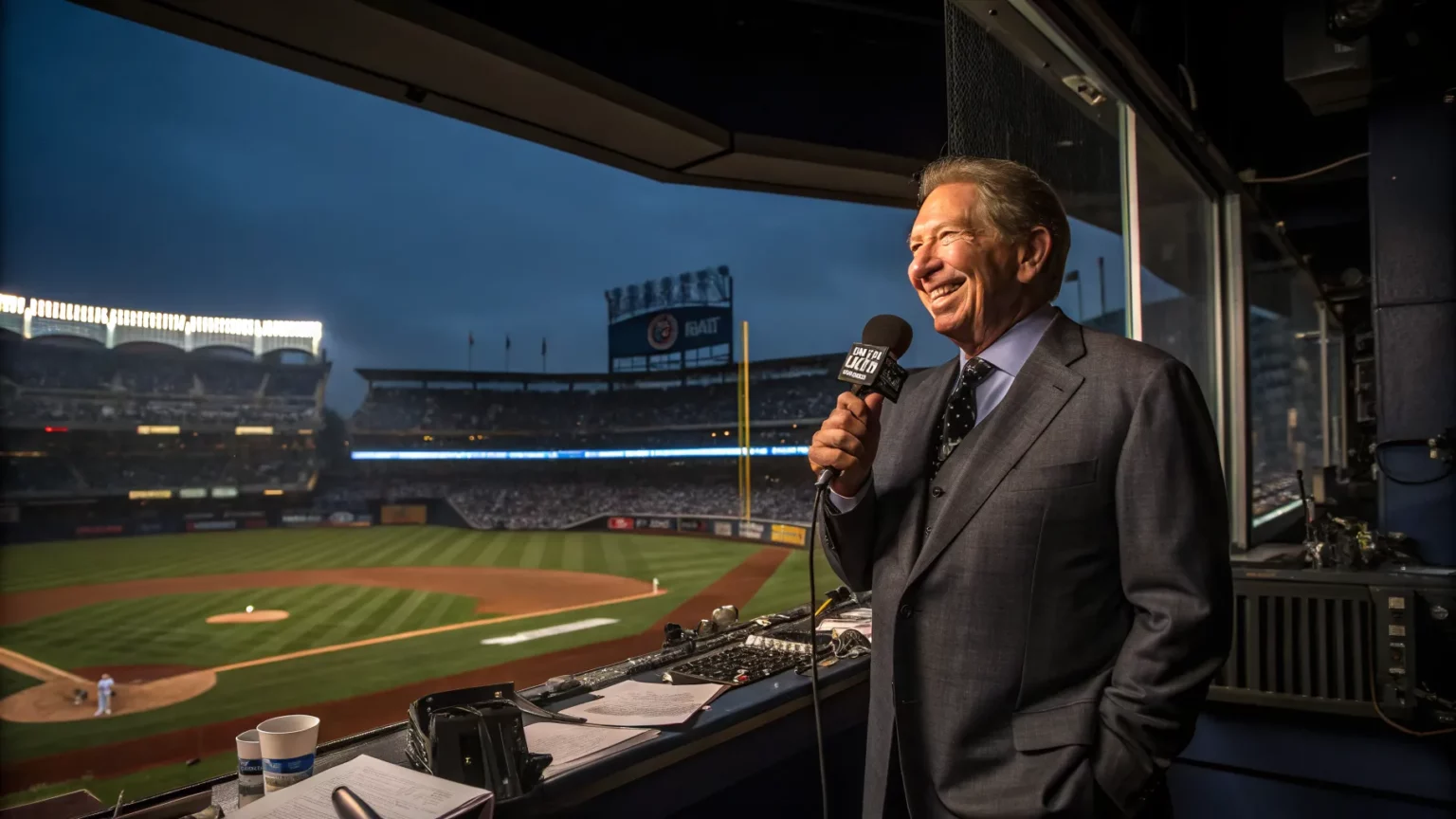
John Sterling, the unmistakable radio voice that stitched summer nights across New York, has stepped away after a run that began in 1989 and ended in 2024. He called the biggest moments of the Yankees’ modern history and turned home runs into theater. His exit closes a chapter that thousands of commutes, porch radios, and postseason nerves once depended on.
The longtime announcer, heard across the Yankees Radio Network, became as familiar as the pinstripes. Sterling’s run bridged stadiums, owners, and eras. The news carries weight for fans who grew up timing their evenings to his cadence and his flair for the dramatic.
Known for his signature home run calls, John Sterling became the Voice of the Yankees in 1989 and continued until his retirement in 2024.
A Voice That Framed Generations
Sterling arrived at the booth full-time in 1989, when Don Mattingly headlined the lineup and the Bronx was hungry for another title. Over the next three decades, the club won five World Series and redefined success. Sterling narrated it all, from the rise of Derek Jeter to late-October chills.
He partnered with analyst Suzyn Waldman for nearly two decades, forming a steady duo. Their exchanges became a companion piece to the action on the field. Fans knew the rhythm: a setup, a pause, and then a signature flourish as a fly ball began its arc.
Signature Calls That Became Ritual
Sterling’s style made radio feel bigger than the box score. His catchphrases were both soundtrack and stamp of authenticity. Listeners could tell the moment mattered by the lift in his voice.
- “It is high, it is far, it is gone!” — the classic blast-off.
- “An A-bomb from A-Rod!” — a nod to Alex Rodriguez’s power.
- “The Giambino!” — playful nicknames that stuck.
Critics sometimes sparred with his theatrics. Supporters loved that every at-bat felt like a chance for drama. Either way, his calls turned routine nights into memory keepers.
Why This Exit Matters Now
Sports radio is changing. More fans watch on streaming apps, scroll pitch-by-pitch feeds, and toggle between podcasts. Yet baseball still leans on voices that can paint the field without pictures. Sterling’s departure hits that tradition.
For the Yankees, the booth is part of the brand. The sound of the game has always been a handshake with the audience. Replacing a fixture is not just about a voice. It is about tempo, chemistry, and familiarity during rain delays and ninth-inning jams.



Balancing Legacy With the Future
Colleagues often point to his tireless schedule and showman’s timing. Fans, meanwhile, measure his career by moments: a late-night pennant chase, a subway ride home, a kid hearing “it is gone” for the first time.
There are lessons in his example. Radio can still make a three-hour game fly. Personality can cut through stats and screens. And the right phrase, said at the right second, can freeze time.
What’s Next for Yankees Radio
The booth will evolve, as it always does. A successor will bring a new tone and different habits. The task is delicate: honor the rhythm New Yorkers know while letting a fresh voice grow into the job.
Expect a period of adjustment for listeners. New catchphrases do not land on day one. Trust builds with innings, road trips, and rain-shortened wins. If history is a guide, the audience will meet the next era with curiosity and, soon enough, routine.
The Enduring Pull of the Call
Baseball is a daily sport. That is why the announcer matters. Sterling’s run showed how radio can turn repetition into ritual. The schedule is long, but the voice carries you through it.
As the team writes the next chapter, one truth holds: fans remember how it sounded. Sterling gave them a sound to keep. The booth now turns the page, but the echo of those summer nights will stick around like a final chorus.
The takeaway is simple. The Yankees will keep playing. Someone new will say who scored and how. But the imprint of three and a half decades—thousands of games and one booming call—will keep humming under every fly ball that keeps carrying.