



As space agencies reset priorities for planetary science, Venus is back in the spotlight for the first time in decades. NASA and the European Space Agency are preparing new missions to study a world so hostile that past landers failed within hours. Scientists say fresh data could answer basic questions about how Earth-sized planets form and why two neighbors took such different paths.
A Hostile Twin Next Door
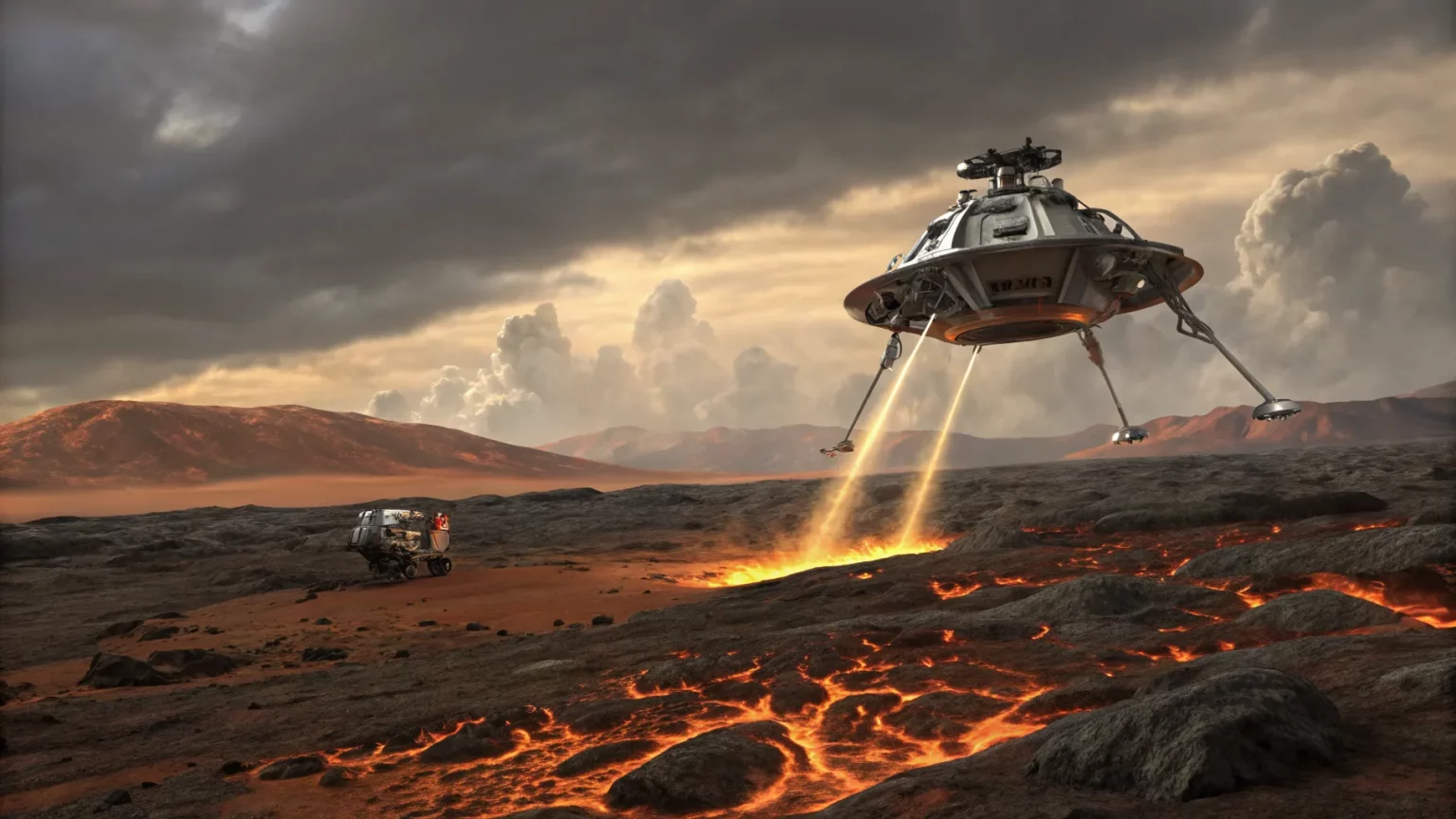
Venus’ surface is hot enough to melt lead, studded with volcanoes and shrouded in clouds of corrosive acid.
Venus is almost the same size as Earth, yet it is far more extreme. Surface temperatures average about 465 degrees Celsius. Pressure at the ground is roughly 92 times that on Earth, close to conditions found a kilometer under the ocean. Thick clouds, rich in sulfuric acid, seal in heat and hide the ground from view.
Radar mapping by NASA’s Magellan mission in the early 1990s revealed mountains, vast lava plains, and thousands of volcanoes. Recent studies suggest some of those volcanoes may still be active. In 2023, researchers reported changes in a volcanic vent consistent with an eruption, reviving interest in how Venus loses heat and reshapes its surface.
New Missions Gather Momentum
Three major missions are in development to probe the planet’s surface and atmosphere in the 2030s. NASA’s DAVINCI will drop a descent sphere through the thick air to sample gases and take images of rugged highlands. VERITAS will use radar and infrared mapping from orbit to detect past and present geologic activity. ESA’s EnVision plans high-resolution radar imaging and subsurface sounding to study tectonics and volcanism.
- DAVINCI: Measures noble gases and chemistry during descent.
- VERITAS: Global radar and thermal maps to track geologic change.
- EnVision: European orbiter focused on interior–surface–atmosphere links.
Private efforts are also advancing. Rocket Lab has outlined a small probe designed to sample cloud chemistry during a brief pass through the atmosphere. While limited in scope, such flights can test instruments and feed larger missions with early data.
Why Scientists Care
Venus is a natural test case for how climate works on rocky planets. By comparing Venus with Earth and Mars, researchers can study greenhouse effects, water loss, and long-term tectonics. If Venus once had oceans, as some models suggest, the planet may show how a wet world can turn into a hot, dry one.
The stakes extend to the search for life elsewhere. Telescopes now find Earth-sized planets around other stars. Understanding Venus helps scientists judge which of those worlds might be habitable and which are more like our harsh neighbor.
Engineering Against the Heat
Surviving near the surface is the hardest problem. Past Soviet Venera landers set records by operating for up to two hours before electronics failed. Modern missions will not attempt long-lived landers at first. Instead, they will rely on hardened components, short exposure times, and data relays from orbit.

Orbital radars can “see” through the clouds, but mapping the whole planet in high detail takes time. Teams plan to compare repeated passes to spot small changes in lava flows or ground swelling. If successful, those observations would confirm active geology and guide any future landing sites.
Competing Priorities and Delays
Budgets and schedules remain tight. NASA paused work on VERITAS in 2022 as the Jet Propulsion Laboratory handled staffing and cost pressures related to other missions. The program has since restarted planning, though launch dates will shift. ESA’s EnVision targets the early to mid-2030s, pending final funding and ride-share arrangements.
Despite delays, the scientific case has grown stronger. Methane and phosphine debates in the past few years, while unsettled, pushed Venus science into public view. Researchers now stress firm measurements of gases, aerosols, and isotopes to resolve those claims.
What New Data Could Show
Scientists expect several outcomes:
- Clearer records of volcanic activity and resurfacing rates.
- Precise measurements of water history through isotope ratios.
- Maps of tectonic features that hint at how the interior cools.
- Cloud chemistry profiles to test models of sulfur and heat balance.
Together, these findings could reveal whether Venus once held oceans, how fast it lost water, and whether the surface still changes today.
With multiple missions taking shape, the coming decade may close long-standing gaps in knowledge about Earth’s closest neighbor. Teams will watch for final launch dates, instrument readiness, and international coordination. If the new fleet delivers, Venus could shift from mystery to measured world, offering fresh clues about climate, geology, and the fate of rocky planets across the galaxy.