




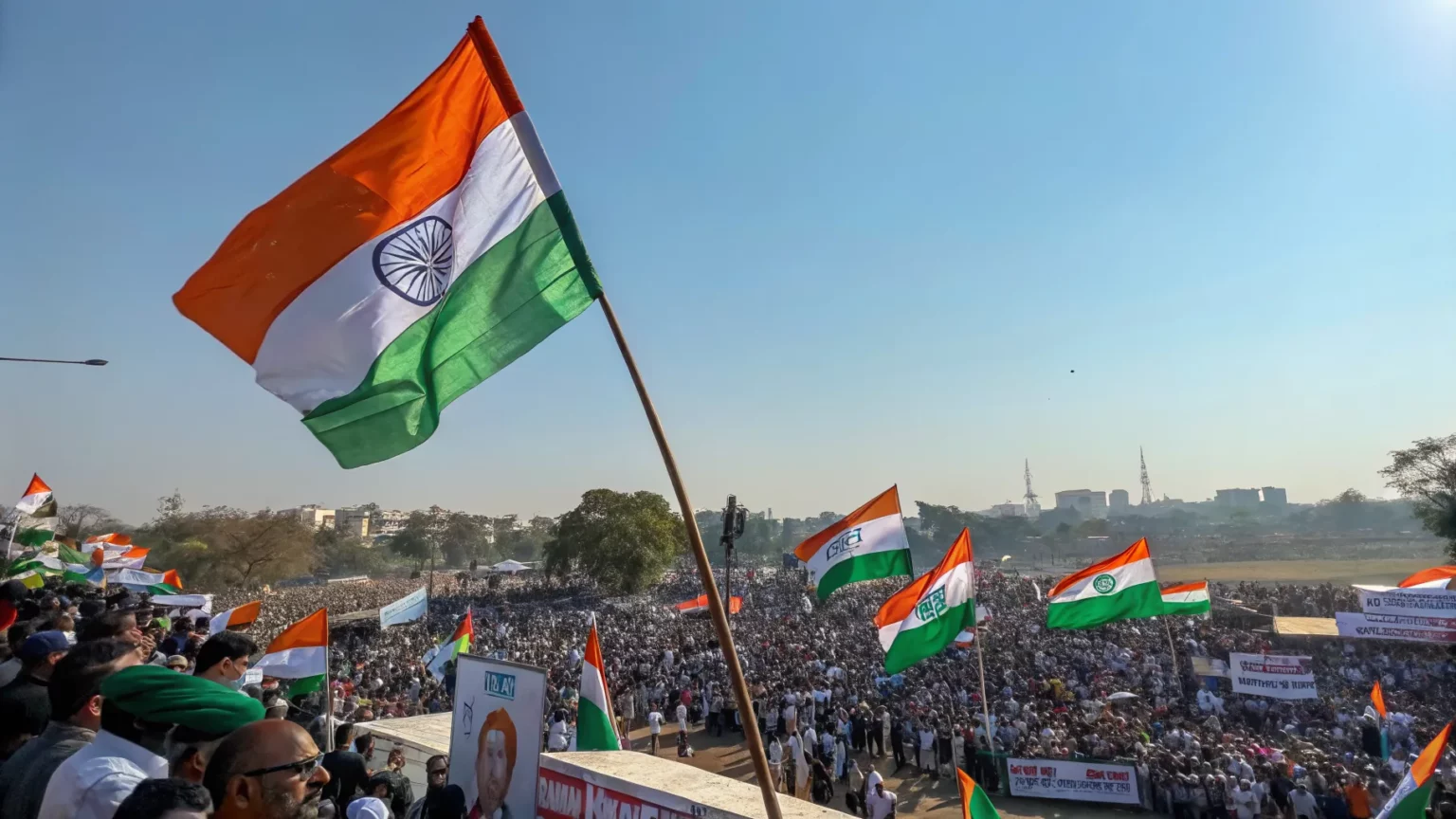
Prime Minister Narendra Modi’s reported victory in West Bengal has sharpened his long-stated ambition to build an India with little organized opposition, raising fresh debate over power, federalism, and democratic checks in the country. The outcome, described by allies as a breakthrough in a politically tough state, places national politics on a new edge as parties assess what comes next.
“With his triumph in West Bengal state elections, Prime Minister Narendra Modi has moved closer to his dream of an opposition-free India.”
West Bengal has been one of India’s most watched states, known for intense contests and a strong regional identity. A win there offers more influence in national decision-making and the upper house of Parliament, while signaling momentum for the ruling party in areas once seen as resistant.
Why West Bengal Matters
For decades, West Bengal politics has been shaped by fierce regional parties and a tradition of strong local leadership. The state’s high voter turnout and complex social mix often serve as a test of national parties’ reach and messaging. Breaking through in such a space can shift expectations across eastern India.
Modi’s movement has long promoted the idea of a “Congress-mukt Bharat,” a country with minimal opposition from the once-dominant national party. In practice, the phrase has grown to mean reducing resistance from any rivals at the state or national level. West Bengal adds symbolic weight to that goal, even as other states remain under opposition control.
Supporters See a Mandate for Central Reforms
Backers argue that successive wins enable faster execution of federal programs on welfare, infrastructure, and industry. They say policy coordination improves when the same party governs New Delhi and key states. Supporters also claim this reduces policy delays and political deadlock, which can slow investment and job creation.
- Alignment between state and center can speed project approvals.
- Unified leadership may expand welfare delivery and digital services.
- Predictable policy signals can encourage private capital.
Investors often watch state elections for signs of regulatory stability and land, labor, and logistics reforms. A strong result in West Bengal could shift some expectations on these fronts if new policies follow.
Critics Warn of a Narrowing Space for Dissent
Opposition figures and civil society groups caution that the push for an “opposition-free” country risks weakening debate, scrutiny, and local autonomy. They argue that strong state-level challengers help keep national policies accountable and better tailored to local needs.
Analysts note that India’s Constitution grants states significant authority over policing, health, and education. If political diversity declines, they say, regional priorities could receive less attention. They also point to the role of an assertive opposition in legislative committees, media discourse, and public-interest litigation.



Governance Test Ahead
The next test lies in translating rhetoric into results. West Bengal’s economy relies on services, agriculture, small industries, and trade with the Northeast and neighboring countries. Any change in state leadership will be judged on jobs, urban infrastructure, flood control, and public safety.
Education and health systems remain under pressure from population growth and uneven access. Addressing these will require budget discipline, administrative capacity, and cooperation with local bodies. Voters are likely to judge performance within the first year, especially on prices, employment prospects, and basic services.
What This Means Nationally
A stronger ruling party presence in large states can shape the Rajya Sabha through future state assembly compositions. That can ease the path for national legislation. It also affects coalition math, candidate selection, and campaign funding patterns ahead of the next general polls.
Still, India’s multi-party system is resilient. Regional parties continue to command loyalty through local networks and language, culture, and identity. Any push to reduce political competition will meet organized resistance in states where opposition leaders hold deep roots.
The reported West Bengal breakthrough offers momentum, but it also heightens scrutiny. If governance improves and livelihoods rise, supporters will see validation. If services stumble, critics will argue that concentration of power weakens accountability. Watch for early budget moves, cabinet appointments, and the treatment of dissent as signs of the direction ahead.