




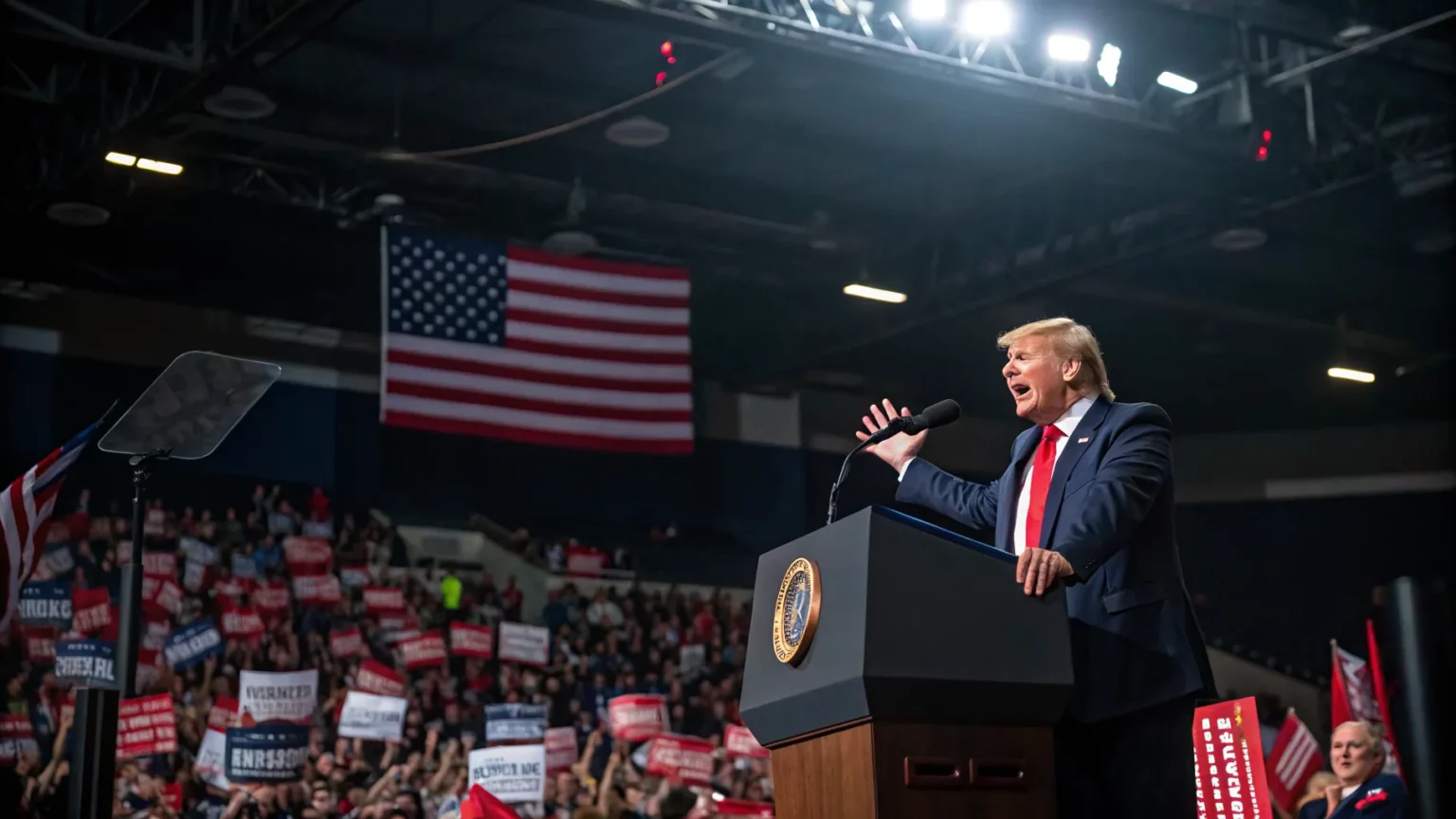
Former President Donald Trump has amplified an unverified claim that the Biden White House relied on “autopen” signatures to hide President Joe Biden’s alleged cognitive decline. The allegation surfaced in a recent social media post and quickly spread online, reviving a long-running debate over automated signatures and presidential capacity. The claim lacks evidence, yet it taps into election-year scrutiny of age, fitness, and the mechanics of the presidency.
The post suggests that machine-produced signatures replaced Biden’s own on official documents. It offers no proof, and the White House has not issued new guidance indicating a change in standard document practices.
What Is an Autopen and How It’s Used
An autopen is a device that reproduces a person’s signature using a programmed template. Presidents and other officials have used it for decades to handle large volumes of ceremonial or routine correspondence. These include holiday cards, condolence messages, and commendations.
Use of the device is not new. In 2011, President Barack Obama authorized an autopen to sign a short-term extension of certain provisions of the USA Patriot Act while traveling in Europe. A Justice Department legal opinion at the time said a president could direct the use of an autopen for official acts, provided the direction was clear and contemporaneous.
Past administrations, Republican and Democratic, have acknowledged the tool’s role in managing ceremonial mail. Official signatures on executive orders, nominations, and major bills are typically done in person, documented by the White House and Congress.
The Claim and the Evidence Gap
The recent allegation frames autopen use as a cover for diminished capacity. No documents are cited. No staff accounts are offered. No timeline is provided. The argument relies on an assumption that any automated signature signals hidden impairment rather than routine workflow.
- No verifiable documents have been presented to support the claim.
- Autopen use has documented precedent in many administrations.
- Ceremonial mail is the most common setting for automated signatures.
Legal and archival experts note that the authenticity of high-stakes presidential actions—such as executive orders and vetoes—is recorded through multiple channels. These include photo documentation, public ceremonies, and filings in the Federal Register. Automated signatures on such acts would draw swift challenge from Congress, the courts, or inside counsel.
Age, Fitness, and Political Narrative
The post arrives as voters weigh the fitness of older candidates. Age has become a core theme in campaign messaging. Claims that invoke medical decline, however, often lack verifiable sourcing and enter the political bloodstream through repetition rather than proof.


Medical privacy limits what any White House discloses. Annual physician summaries, not raw records, are usually released. That pattern has held across recent presidencies. In the absence of fresh, on-the-record evidence, sweeping claims about hidden incapacity tend to function as campaign rhetoric more than documented reporting.
Experts on Documentation and Transparency
Presidential historians describe autopen as a workload tool, not a secrecy device. Archivists point out that official acts have traceable records beyond a signature. Those records include drafting memos, legal reviews, and formal publication. If an administration tried to mask a president’s inability to sign critical documents, staffers across agencies would need to participate, raising the risk of leaks and legal exposure.
Election law scholars add that the legality of signatures stems from intent and authorization. If a president directs a signature—by hand or device—the legal act can stand. Courts and Congress would scrutinize any deviation on consequential matters.
How Misinformation Spreads
Unverified claims about health and signatures are sticky online because they are simple and dramatic. They are also hard to disprove conclusively in real time. Researchers have found that posts with emotional framing travel faster than dry corrections. That pattern benefits narratives that suggest secret cover-ups over routine bureaucracy.
Platforms have policies for labeling or reducing the reach of false content, but enforcement is uneven. As campaigns heat up, simple theories may outpace slow, document-based rebuttals.
What to Watch Next
Key indicators include official documentation of major presidential actions, on-the-record statements from White House counsel, and filings in the Federal Register. Independent fact-checks and congressional oversight can also help verify how signatures are authorized for specific documents.
For now, there is no public evidence that automated signatures were used to hide medical decline. The device’s historical use for routine correspondence is clear, and the legal framework for its limited official use is established. The latest claim serves more as a political test of what people are willing to believe than as a documented change in White House practice.
As the campaign cycle continues, expect more disputes about age and capacity. The most reliable guide will remain authenticated records, formal releases, and corroborated testimony, not viral posts.