



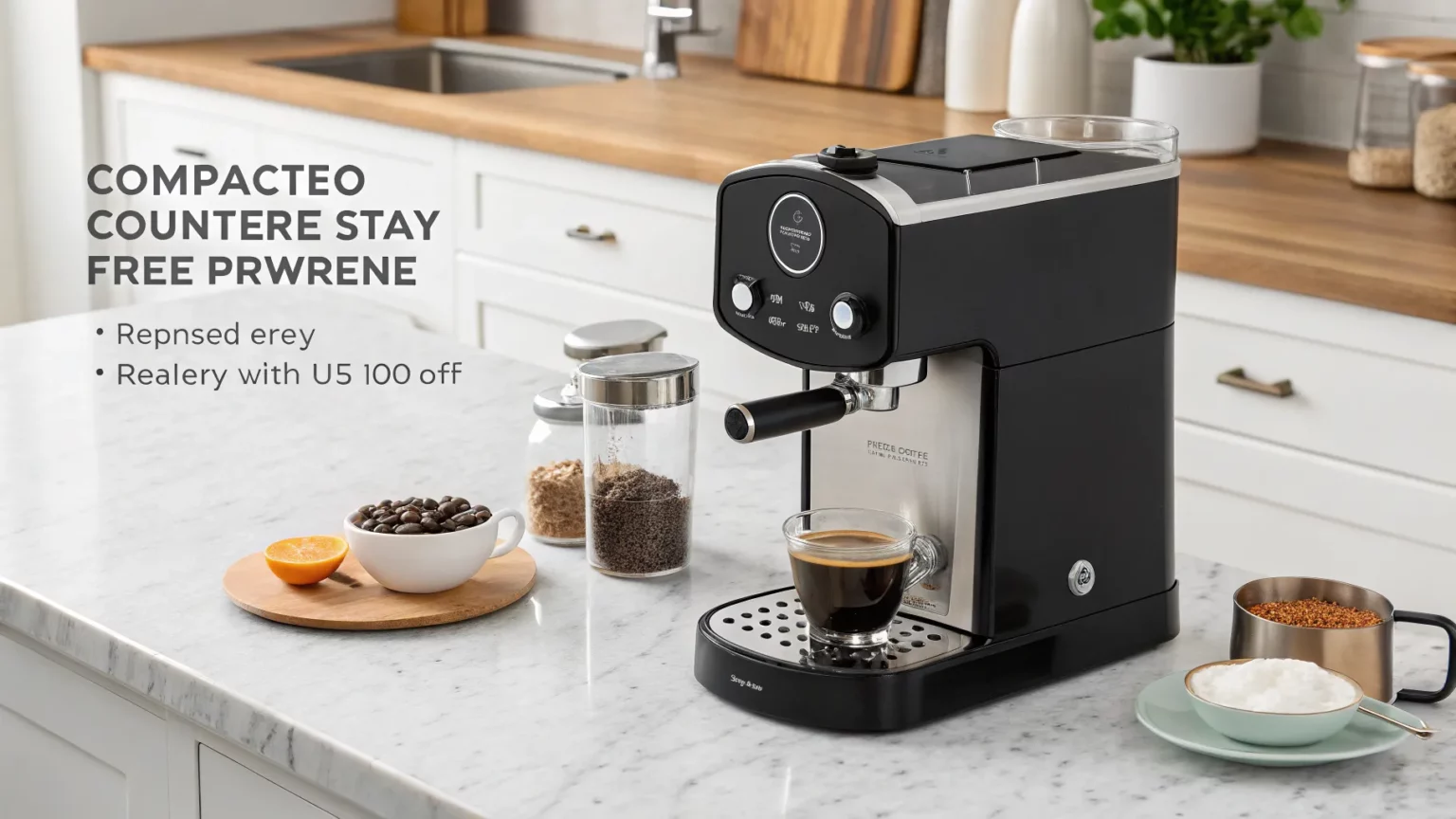
A compact, $100 countertop machine that promises one-touch espresso is drawing interest from home coffee drinkers. The device uses a puck without a wrapper, resembles a Keurig, and aims to make espresso fast and simple. Early demonstrations show a push-button process and a short wait before a shot flows. The pitch is clear: cafe-style results at home, with less mess and a smaller price tag than most espresso setups.
How The System Works
The brewer takes a preformed coffee puck and applies heat and pressure to extract a shot. There is no foil pod or capsule. The puck drops into a holder, the door closes, and the cycle begins. A presenter described the experience as:
You put the wrapper-less puck in the special $100 machine that resembles a Keurig, push a button, and your espresso is ready.
This design appeals to people who want speed and repeatable results. It also removes tamping and grind adjustments, which can be hurdles for beginners. The absence of a wrapper could reduce plastic or aluminum waste compared to traditional single-serve capsules.
Why It Matters Now
Single-serve coffee remains popular, with millions of households owning pod-based brewers. Espresso, however, has been a tougher nut to crack at home. Traditional machines need skill, a good grinder, and steady cleaning. Capsule systems offer a shortcut but rely on proprietary pods. A lower-cost, puck-based device could fill a gap between quick drip-style pods and full barista rigs.
Price is a key hook. Entry-level espresso machines often cost several hundred dollars, not counting a grinder. A $100 ticket, if it performs well, could expand the market and bring more people into espresso-style drinks like cappuccinos and americanos.
Convenience Versus Quality
The big question is taste. Espresso depends on grind size, dose, water temperature, and pressure. Preformed pucks fix many of those variables by design, which can help consistency but may limit customization. Enthusiasts may miss the control that comes with dialing in shots. Yet many shoppers value ease over experimentation.
Ease of cleaning also matters. Machines that handle spent pucks cleanly can encourage daily use. If the device can purge water lines and collect waste without splatter, it will please users who do not want a sink-side routine after every cup.
Environmental Questions
Wrapper-free pucks raise hopes for lower waste, but the details will decide the impact. Are the pucks compostable? Do they need special disposal? Will packaging used for freshness add back material? Capsule systems have faced years of criticism for single-use plastics and metals. A coffee puck that reduces packaging without hurting shelf life could win buyers who care about waste.



Cost Per Cup And Access
The long-term cost will depend on puck pricing and availability. If pucks cost as much as premium capsules, savings versus a cafe may be modest. If they are cheaper, daily users could see a real difference. Shelf space in grocery stores and reliable online supply will shape adoption. Partnerships with roasters, if they happen, could broaden flavor choices and freshness windows.
What To Watch Next
Early users will pay attention to build quality, pump pressure, heat stability, and the taste of milk drinks. Support and warranties will also matter at this price. Competing brands could respond with similar designs or with recyclable capsules and better milk systems.
- Shot quality compared with entry-level espresso machines
- Puck pricing and subscription options
- Waste and composting claims verified by third parties
- Durability after months of daily use
If the machine delivers reliable crema and balanced flavor, it could shift how people make espresso at home. If it falls short on taste, it may settle into a niche for convenience-first users. Either way, the push-button model is gaining steam. The next few months will show whether a $100 price and a wrapper-free puck can win over both newcomers and skeptics.