




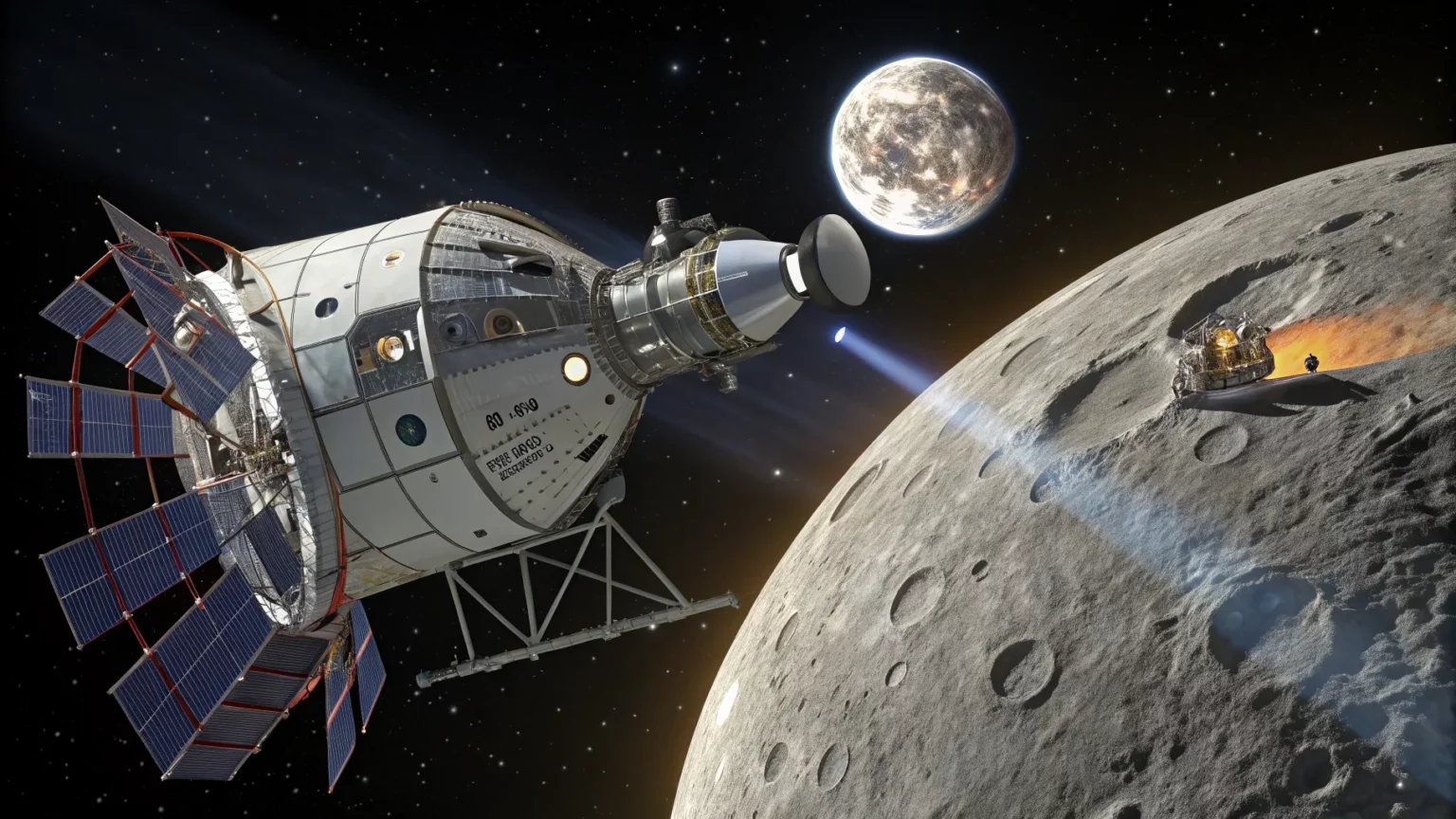
NASA’s Artemis III mission is framed as the step that will carry crews back to the lunar surface, sharpening focus on schedules, hardware, and safety reviews. The mission, planned after two earlier flights, is central to the agency’s plan to return humans to the Moon for the first time since Apollo.
The goal is to land near the lunar south pole, conduct science, and test systems needed for future voyages. NASA officials have set a cautious timeline after adjusting earlier target dates in 2024. The effort brings together government, industry, and international partners with the aim of building a sustained presence on and around the Moon.
Background and Goals
Artemis is a series of missions designed to return astronauts to the Moon and establish long-term operations. Artemis I, completed in 2022, flew an uncrewed Orion capsule around the Moon. Artemis II will be the first crewed flight to lunar orbit, now targeted for 2025 after safety-driven delays.
Artemis III is planned to follow with a crewed landing. NASA has said the mission will include the first woman and the first person of color to walk on the Moon. The south pole region is a priority for its water ice deposits, which could support future habitats and fuel production.
“Artemis III is the third in a series of missions that gets humans closer to returning to the surface of the moon.”
Schedule Adjustments and Readiness
NASA reset Artemis timelines in early 2024, citing the need to finish life-support testing, refine the heat shield, and validate recovery plans. The agency has emphasized that flight readiness will determine launch dates.
That cautious stance followed findings from Artemis I, where Orion performed well overall but called for upgrades to some avionics and thermal systems. Artemis II will test those fixes with a crewed flight around the Moon, a key gate before any landing attempt.
Hardware and Industry Partners
Artemis III requires an intricate chain of vehicles and support systems. The Space Launch System (SLS) will send Orion and its crew toward lunar orbit. A separate lunar lander will ferry astronauts to the surface and back.
NASA has contracted commercial providers for the lander and for a supporting refueling architecture in Earth orbit. The approach aims to speed development by using private-sector designs, while NASA sets safety and mission rules.


- Orion and SLS handle launch, lunar transit, and return.
- The lunar lander handles descent and ascent near the south pole.
- Refueling and staging steps occur in Earth orbit before departure.
Training, Science, and Safety
Astronaut training now includes extended lunar geology, operations in simulated suits, and night navigation. The south pole’s low sun angles create deep shadows and glare, which raise landing and mobility challenges.
Science plans target mapping ice, studying regolith properties, and testing tools for sample handling. Data could help plan power systems, dust control, and habitat placement for later missions.
Safety reviews focus on spacesuit readiness, lander redundancy, and abort options. Mission planners are building detailed timelines to reduce crew workload and leave margin for contingencies.
What Success Would Mean
A successful Artemis III would restart human surface exploration and anchor a steady cadence of lunar missions. It would send a signal to industry that deep-space operations can be done on a repeatable basis.
It could also shape international agreements. Partners contributing modules, robotics, and experiments would have a clearer path to future flights and to the planned Gateway station in lunar orbit.
Risks and Open Questions
Several efforts must align. The lander must complete flight tests. Orion systems must prove reliable with crew. Launch infrastructure must support the schedule.
Budget stability is another concern. Multi-year funding needs to match test results and flight rates. Any slip in one area can ripple across training, cargo, and science payload delivery.
Looking Ahead
NASA will move through key tests for Artemis II before setting a firm Artemis III date. Watch for updates on spacesuit milestones, lander flight demos, and refueling readiness.
If the program clears those hurdles, crews could soon return to lunar soil, gather new samples, and prepare for longer missions. The outcome will guide plans for lunar infrastructure and, eventually, attempts at crewed Mars missions.
The next year will show whether the technical pieces come together on time. The goal is clear, and each review, test, and fix is meant to bring a safe landing within reach.