



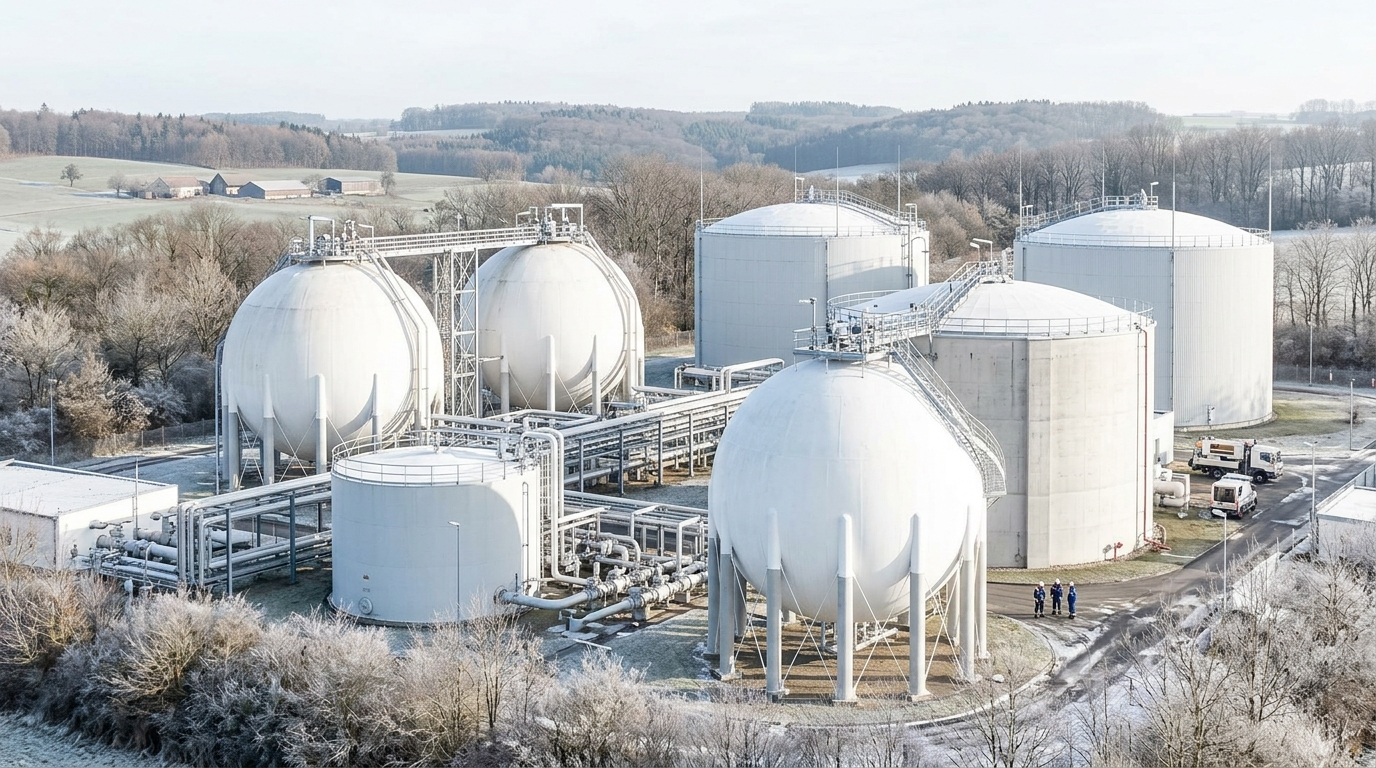
Germany could enter winter with gas storage sites only 60% to 70% full and still maintain adequate supplies, according to the country’s Economy Ministry. The assessment suggests Europe’s largest energy consumer may accept a narrow safety margin if imports are disrupted or cold weather lifts demand.
The ministry’s position offers an important signal for households, industry and energy traders. Storage levels help determine how well Germany can manage sudden supply losses during the heating season.
Adequate Supply With Limited Protection
Stored gas acts as a reserve when daily imports cannot meet demand. Germany draws on these stocks more heavily during winter, when homes and businesses require more energy for heating.
The Economy Ministry considers a starting level of 60% to 70% sufficient. However, that range would leave less room to absorb an extended cold spell, infrastructure failure or interruption to imported supplies.
Gas storage levels between 60% and 70% at the start of winter would be adequate, according to Germany’s Economy Ministry.
The word “adequate” does not mean risk-free. It indicates that officials believe available stocks, continued imports and demand controls could meet expected needs under normal or manageable conditions.
A lower starting level could also increase sensitivity to events outside Germany. Gas markets are connected across Europe, so supply trouble in one country can affect prices and available volumes elsewhere.
Energy Security Remains a European Issue
Germany is Europe’s top energy consumer. Its storage policy therefore has effects across the region, including on neighboring countries that share pipelines, trading hubs and emergency supply arrangements.
European governments have placed greater attention on storage since Russian pipeline deliveries fell sharply. Germany responded by seeking other sources, adding import capacity and encouraging lower consumption.

Those measures have reduced dependence on a single supplier. Yet replacement supplies can face their own risks, including strong global competition, transport constraints and price swings.
Several conditions will shape whether the ministry’s proposed range proves sufficient:
- The severity and length of winter weather
- The reliability of pipeline and seaborne gas imports
- Demand from factories, power generators and households
- Germany’s ability to share supplies with other European states
Industry Faces Price and Supply Concerns
Gas storage is not only a household heating issue. German manufacturers use the fuel for heat, power and production processes. Energy-intensive sectors are especially exposed to higher prices or supply limits.
Entering winter with a thinner reserve could place upward pressure on wholesale prices if forecasts turn colder. Traders may compete for additional supply, while storage operators could become more cautious about withdrawals.
There is also a counterargument. Filling storage sites to very high levels can be costly, particularly when gas prices rise during the injection season. Accepting a lower level may reduce purchasing costs if officials are confident that imports will remain available.
The policy therefore reflects a trade-off between affordability and security. Larger reserves offer stronger protection, while lower stocks may limit the cost of buying gas solely to meet a target.
Weather and Imports Will Test the Assessment
The ministry’s estimate gives Germany a planning range rather than a guarantee. A mild winter and steady imports could make 60% to 70% more than sufficient. A long freeze combined with a major supply failure could expose the limits of that buffer.
Storage data, weather forecasts and industrial demand will be key measures as winter approaches. Officials may also need to explain what emergency actions would follow if inventories decline faster than expected.
Germany’s judgment signals confidence that storage is only one part of energy security. Still, the proposed level leaves little comfort for unexpected shocks. The central question is whether reliable imports and controlled demand can compensate for the smaller reserve throughout the heating season.