



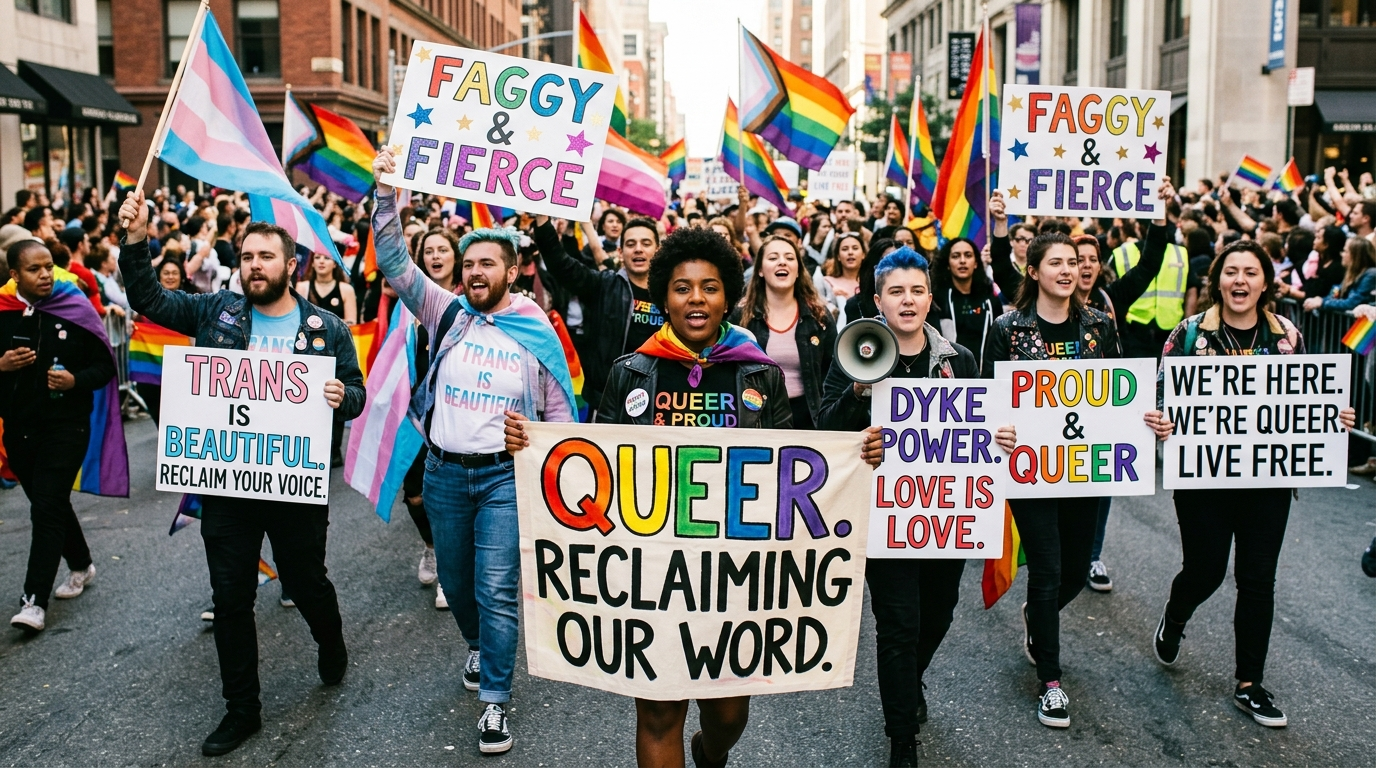
LGBTQ activists have turned language once used to shame them into a public statement of identity, resistance, and pride. The reclamation of “queer” reflects a long protest tradition built around taking control of hostile words.
The practice carries both political force and personal risk. A reclaimed term can unite a community, yet it may still cause pain for people who remember it mainly as an insult.
Turning an Insult Into a Public Identity
Language reclamation occurs when people adopt a slur once aimed against them. The act shifts some control from the speaker using the insult to the person targeted by it.
“LGBTQ activists have a long tradition of taking slights and slurs, like the word ‘queer,’ and using them as a form of protest and celebration.”
That change can serve several purposes. It may reject shame, build group identity, or challenge social rules about which identities can be named openly.
For LGBTQ activists, the tactic also fits a larger history of visible protest. Public use of a stigmatized word can deny opponents the silence that discrimination often depends upon.
How “Queer” Entered Activist Language
“Queer” historically meant unusual or strange. It later became a slur directed at people whose sexual orientation or gender expression did not match social expectations.
Activists increasingly adopted the term during the late 20th century. Its use became closely linked to direct-action politics during the HIV and AIDS crisis, when campaigners demanded faster public action and medical care.
The word also gained use as an inclusive label. Unlike terms tied to one identity, “queer” could describe people across several sexual orientations and gender identities. Scholars later used it in academic work examining sexuality, gender, culture, and power.



Reclamation changed the term’s public meaning, but it did not erase its earlier use. Context remains central to how the word is received.
Reclamation Does Not Create Full Agreement
LGBTQ communities do not share one opinion about reclaimed language. Some people use “queer” with pride. Others avoid it because of past harassment, violence, or discrimination.
Key factors often shape whether its use feels affirming or harmful:
- The identity and intent of the person using it
- The setting in which the word appears
- The listener’s age and personal history
- Whether people can choose their own label
A term used voluntarily within a community may carry a different meaning when spoken as an insult. Reclamation therefore does not grant universal permission to use a word without regard for context.
Language as an Ongoing Political Contest
The debate shows that words are not fixed. Their meanings change through repeated use, political struggle, and shifts in public attitudes.
Reclaimed language can make marginalized people more visible. It can also expose differences within a movement, including generational divides and competing views about identity.
The history of “queer” offers a clear lesson: communities can weaken an insult by claiming it, but they cannot remove every painful association. Future debates will likely focus on consent, context, and respect for individual preferences. The political value of reclamation will continue to depend on who speaks, who listens, and how the word is used.